
How to Choose a Skincare Routine for Aging Skin
Learn how to choose a skincare routine for aging skin with tips on sunscreen, retinoids, and avoiding irritation for effective anti-aging care.
Start by deciding what you mean by “anti-aging”
Aging skin is not one problem. It may mean fine lines, rough texture, uneven pigment, dryness, laxity, oiliness that has not gone away, or all of the above. A routine gets needlessly complicated when every concern receives a separate active immediately.
Cosmetics can hydrate the surface, temporarily make fine lines look softer, support a healthier barrier and improve the appearance of uneven tone over time. They cannot reliably reproduce the structural changes achieved by medical procedures, nor can a serum diagnose the reason pigmentation or irritation appeared.
If a new dark patch changes in size, shape or colour, if redness persists, or if breakouts, itching and scaling sound like a skin condition rather than ordinary sensitivity, book a dermatologist appointment. A routine guide is not a substitute for diagnosis.
The evidence behind routine ingredients is uneven. Retinoids and sun protection have the strongest practical support among the options in this brief; peptides and growth factors are interesting but less firmly established. Consumer skincare articles are not the same as named clinical trials or systematic reviews, so claims deserve proportionate expectations. [4][17]
First problem: buying an active before buying sunscreen
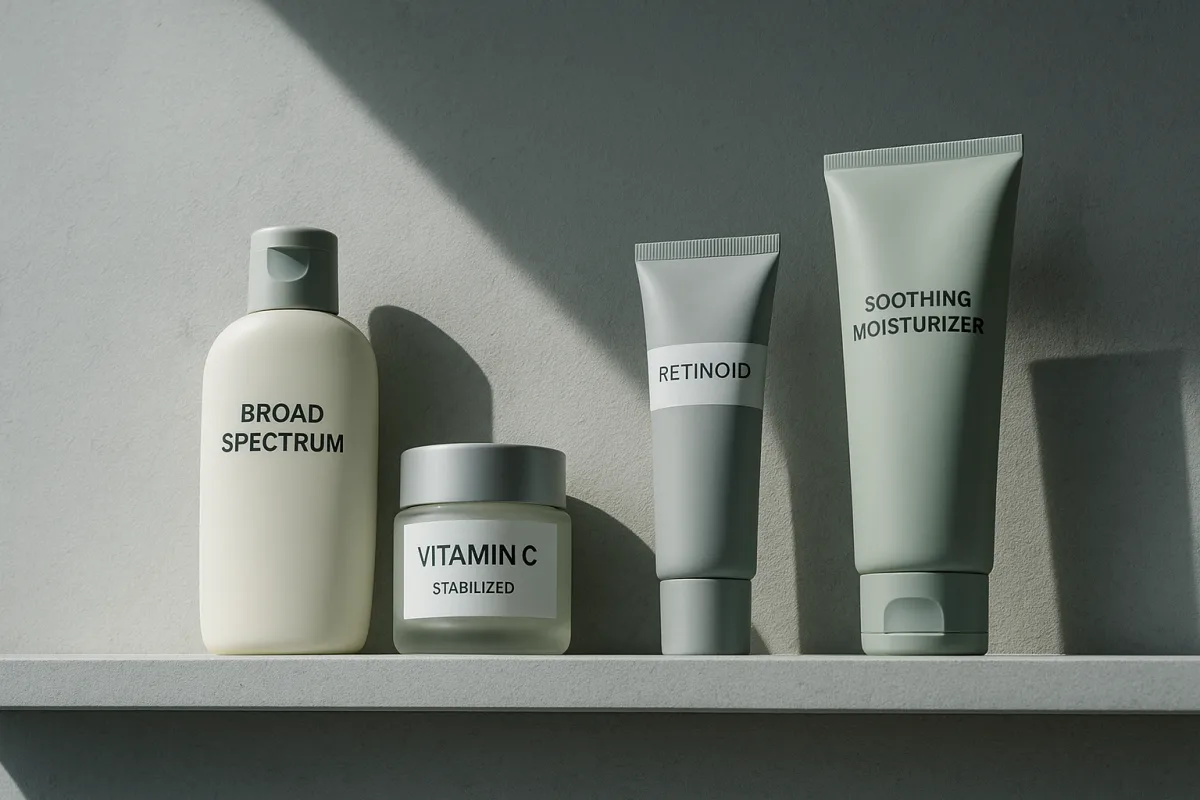
The unglamorous answer is sunscreen. A broad-spectrum formula protects against UVA and UVB exposure, and daily use is the most useful first step when the goal is reducing further UV-related visible aging. The briefing estimates UV exposure accounts for up to 80% of visible aging. [1][13]
Choose SPF 30 for ordinary daily exposure, or SPF 50 when you expect prolonged time outdoors. “Broad-spectrum” matters because an SPF number alone chiefly describes UVB protection. Apply it as the final morning skincare step, after moisturiser. [1][13]
The supplied research does not provide aging-specific evidence for an exact reapplication schedule, so I will not invent one. Follow the instructions on your chosen sunscreen and use protective clothing, shade and hats for extended exposure rather than assuming one morning application solves an outdoor day. [1]
Skipping sunscreen while investing in retinol, vitamin C and pigment serums is a costly mismatch. These formulas may improve aspects of skin’s appearance, but they do not make ongoing UV exposure irrelevant. The routine needs protection before it needs another corrective product.
Second problem: choosing the one active worth introducing first
For lines, texture and a general “I want to do something” concern, retinoids are the sensible place to start. They support collagen and elastin, and can improve the look of wrinkles and uneven texture with regular use, but irritation is common when people start too aggressively. [2][3]
Do not interpret “strongest evidence” as “start with the highest percentage.” Retinol is generally used at 0.3 to 1.0%, retinaldehyde at 0.05 to 0.1%, and prescription tretinoin at 0.025 to 0.05%. Each is a different retinoid, so percentages are not directly interchangeable. [2]
Begin with a lower-strength retinol or retinaldehyde product two or three evenings a week. Apply a modest amount to dry skin, then use a ceramide-rich moisturiser. Increase frequency gradually only if your skin remains comfortable, rather than escalating because the first week looked uneventful. [2][5]
COSRX Retinol 0.1% is listed in the brief at $18 for 20 g, placing it below the $25 budget threshold. Its low percentage makes it a logical category for a cautious retinoid beginner, although product price and size can change and it is not a promise of tolerance. [2]
Prescription tretinoin belongs in a dermatologist-led conversation. It is not simply the deluxe version of retinol, and it is not appropriate to self-select based on a desire for faster results. If you are considering prescription treatment or have persistent irritation, seek clinical advice.
Third problem: mistaking irritation for progress
Redness, stinging, flaking and tightness are not signs that an active is working better. They are signs to simplify. The common mistake is adding a retinoid, exfoliating acid, vitamin C and brightening serum in the same week, then being unable to identify the irritant. [18][19]
Use only one new active at a time. Give it time before adding another, and keep cleanser and moisturiser dull on purpose. A fragrance-free, gentle cleanser and a barrier-focused moisturiser make a retinoid routine more sustainable than a complicated sequence of exfoliating products. [5][18]
Ceramides at 0.5 to 2% are a useful ingredient-list target because they help reduce water loss and support the barrier. A formula containing ceramides, cholesterol and fatty acids in a 3:1:1 ratio is suggested in the brief for moisturising support. [2][5]
For very dry skin, pair barrier lipids with humectants such as hyaluronic acid, then consider squalane or shea butter in a richer night cream. Hyaluronic acid can make skin look temporarily plumper by increasing hydration, which is a cosmetic improvement, not evidence that it rebuilt lost facial volume. [3][5]
Fourth problem: treating exfoliation as mandatory
Exfoliation is optional, particularly when a retinoid is new. If roughness or dull-looking surface texture remains a concern after the basic routine is stable, use a gentle polyhydroxy acid or low-strength lactic acid no more than two or three times weekly. [2][18]
There is no consensus in the supplied research that one exfoliant type is best for aging skin. That uncertainty matters more than an influencer’s before-and-after. A lower-irritation option used occasionally is more rational than daily acids combined with retinoids. [2]
Keep exfoliation and retinoid use on separate evenings at first. This is a practical irritation-reduction strategy, not proof that layered actives never work. The brief specifically finds no direct evidence that combining multiple actives is more effective than introducing them sequentially. [2]
Fifth problem: wanting brightness and pigment help without a dozen serums
Vitamin C is the useful morning companion to sunscreen for people focused on dullness or uneven-looking pigmentation. L-ascorbic acid at 10 to 20% has evidence for antioxidant activity, support for collagen synthesis and gradual brightening, with 10 to 15% a reasonable starting range. [2][3]
Check for a stabilized formula and sensible packaging, because L-ascorbic acid can oxidize. The research brief does not provide a universal colour test or shelf-life rule, so rely on the manufacturer’s storage instructions and avoid treating a darkened, obviously changed serum as a bargain. [2]
Niacinamide at 5% is a more straightforward choice for oily or combination skin because it can support brightness while helping regulate sebum. It is also a gentler first active for people who are not ready for retinoid irritation, though “gentler” never means impossible to react to. [2][9]
For pigment concerns, tranexamic acid at 2 to 5% and peptides may be reasonable optional additions once the core routine is settled. The evidence supplied is stronger for tranexamic acid’s role in pigmentation than for broader aging claims, and peptide research remains emerging. [2][3]
Azelaic acid needs particularly careful marketing literacy. Cosmetic products commonly use 5 to 10%, while dermatological strengths are often 15 to 20%; the ideal concentration varies, and a product should not be presented as a self-directed answer to a suspected skin disorder. [2][9]
Sixth problem: choosing products for the skin you have now
Dry skin usually needs fewer actives and more barrier support. Look for hyaluronic acid, ceramides, squalane or shea butter, and use a richer moisturiser in winter or dry climates. A tight, flaky face rarely benefits from adding another exfoliating toner. [5][14]
Oily or combination skin may prefer lightweight, non-comedogenic textures, especially in humidity. Niacinamide at 5% is the most specifically supported option in this brief for sebum regulation, while a gel-cream moisturiser can supply hydration without the feel of a heavy balm. [2][8]
Sensitive skin should favour fragrance-free and alcohol-balanced formulas, slow introductions and simpler routines. Niacinamide, azelaic acid and green tea extract are suggested as gentler options, but sensitivity is individual. Patch testing and stopping a product after a reaction are more useful than forcing a trend. [8][19]
In hot, humid weather, lighter textures can be more comfortable; in cold or dry conditions, increase humectants and richer moisturisers. Climate changes how a formula feels and how much water skin loses, so seasonal adjustment is practical, not evidence that you need seasonal “anti-aging” launches. [14][26]
A routine that is deliberately not complicated
Morning should be short: a gentle hydrating cleanser, stabilized 10 to 15% vitamin C if you tolerate and want it, a barrier-supporting moisturiser, then broad-spectrum SPF 30. Use SPF 50 when prolonged exposure is expected. [2][5][13]
Evening can be equally restrained: cleanse, use your retinoid on two or three designated nights, and moisturise. If you wear substantial sunscreen or makeup, an oil balm followed by a gentle cleanser is suggested in the briefing, but double cleansing is not a requirement for every face. [5]
On non-retinoid evenings, use only moisturiser at first. Once your skin is settled, introduce a gentle exfoliant up to two or three times weekly if you still want one. Leave the neck out of neither sunscreen nor moisturiser, since it is frequently neglected. [18][20]
Give the routine months, not days, before judging modest cosmetic changes in texture, hydration or brightness. If your skin becomes persistently sore or inflamed, stop adding products and see a dermatologist. More concentration, more layers and a higher price are not reliable routes to better skin. [17][19]
Frequently Asked Questions
What is the first step in choosing a skincare routine for aging skin?
The first step is to decide what you mean by “anti-aging,” as aging skin concerns vary widely, including fine lines, rough texture, uneven pigment, dryness, or laxity. Avoid complicating the routine by addressing every concern at once; instead, focus on a manageable approach starting with daily broad-spectrum sunscreen to prevent further UV-related aging.
How do I start using retinoids for aging skin safely?
Begin with a low-strength retinol or retinaldehyde product applied only two or three nights per week to dry skin. Use a modest amount followed by a ceramide-rich moisturizer to support the skin barrier, and increase frequency gradually only if your skin remains comfortable, as irritation is common when starting too aggressively.
Why is sunscreen important in an anti-aging skincare routine?
Daily use of broad-spectrum sunscreen protects against UVA and UVB rays, which are estimated to cause up to 80% of visible skin aging. Sunscreen should be applied as the final step in the morning skincare routine, with SPF 30 for daily exposure and SPF 50 for prolonged outdoor time, to prevent further UV-related damage.
How can I avoid irritation when building an aging skin routine?
Introduce actives like retinoids slowly, starting with low concentrations and limited frequency, and always pair them with barrier-supporting moisturizers. Avoid using multiple new actives simultaneously, and pay attention to your skin’s response before increasing product strength or application frequency.
What ingredients should I prioritize for aging skin care?
Prioritize broad-spectrum sunscreen daily, retinoids at tolerable concentrations, and barrier-supporting ingredients like ceramides. Vitamin C at 10–15% in a stabilized L-ascorbic acid formula is also beneficial for morning use. Other supportive ingredients include niacinamide, hyaluronic acid, and gentle moisturizers tailored to your skin type and climate.
How we researched this
This article was assembled from 26 cited references.
Nothing here is based on hands-on testing. Where a figure or finding appears, it belongs to the source cited beside it, and the writing says so rather than implying otherwise. Every source is listed below so you can check it.
Sources
- Sun Safety Facts | Skin Cancer | CDC
- Top 10 Actives 2026: Working Concentrations for Mature Skin | My Glow Space
- Best Ingredients for Anti-Aging | Insider Beauty
- What Are Growth Factors and Why Are They So Buzzy In the Skincare World? Dermatologists Explain the Benefits
- The Best Skincare Routine for Mature Skin | Beauty of Skincare
- How to Combat Premature Aging in 2026
- How to Build a 2026 Skincare Routine That Actually Works - Naluda Magazine
- How to Choose the Best Anti-Aging Products for Your Skin Type
- Effective Skincare Ingredients You Should Know About - otsdermatology.com
- How to Choose an Anti-Aging Serum for You, According to Experts
- Mature / Aging Skin — Best Ingredients & Routine | Skincare Database
- Are You Using the Right Personalized Skin Care Ingredients? - ConsumerSearch.com
- Anti-Aging Skincare: Why Sun Protection Is the Most Important Step (2026) - Doctronic
- Seasonal Skincare Routine Guide: How to Adapt for Winter, Summer, and Humidity | lumino.skin
- Humidity and Skin Aging: How Climate Affects Your Skin | Anti Aging Care
- Mature Skin Routine | Dermatology
- Wrinkle creams: Your guide to younger looking skin - Mayo Clinic
- 7 Common Skincare Mistakes (and How to Fix Them) | Sola AI
- The Biggest Skincare Mistakes People Make in Their 30s+ - Derrow Dermatology
- Anti-Aging Skincare Mistakes to Avoid: What’s Actually Aging Your Skin Faster - Skin Care | Miami Beauty Area
- Korean Anti-Aging Skincare Guide 2026 | K-Beauty – Mirai Skin
- Announcing our 2026 woman&home skin awards winners!
- Best Anti-Aging Skincare Routine [2026 Guide] | The Exosome Edit
- Scouted: It's Official: NAD+ Has Made Its Way Into the Skincare Space
- Dermatologists Reveal the Ultimate Skincare Routine to Address Signs of Aging-From Wrinkles to Dark Spots
- Seasonal Skincare: Adjusting Your Routine Throughout the Year | Skincare Insights
Related Articles
Peach and Lily Skincare Review: Top Picks Revealed!
Discover Peach and Lily's top skincare picks reviewed by TheBeautyBreakdown. From the soothing Velvet biome ointment to the hydrating glass skin mist, find your perfect skincare match today!
Affordable Skincare Gems: Dr Dray's Reviews & Recommendations
Dr Dray reviews affordable gems like Olay's Complete Rich Moisturizing Cream and Tree Hut's Pre-Shave Foaming Polish, alongside pricier options like Josie Moran's body butters. She also shares insights on cleansing oils and a mineral sunscreen lip balm for a comprehensive skincare roundup.

Ultimate Guide to Clear Skin: Top Acne Treatments and Skincare Tips
Dr Dray explores top acne treatments like benzoyl peroxide wash, salicylic acid cleanser, and adapalene gel for clear skin. Learn about effective skincare tips and products to combat acne and post-acne marks.
Skincare Shopping Tips at Marshalls: Dr Dray's Recommendations
Dr Dray explores skincare and beauty products at Marshalls, discussing sunscreen, skincare tools, and bath products. She shares recommendations and shopping insights for a fun and informative shopping experience.