
How to Treat Hyperpigmentation: Safe and Effective Tips
Learn how to treat hyperpigmentation safely with effective ingredients, sun protection, and routines for lasting dark spot fading.

How to Reduce the Appearance of Dark Spots Without Overdoing Your Routine
First, stop giving dark spots new reasons to deepen
Dark spots are not a skincare emergency, but they are easy to aggravate. UV exposure, visible light, inflammation and repeated irritation can all sustain uneven pigment, which is why a strong corrective serum without sun protection is usually money poorly spent. [8][15]
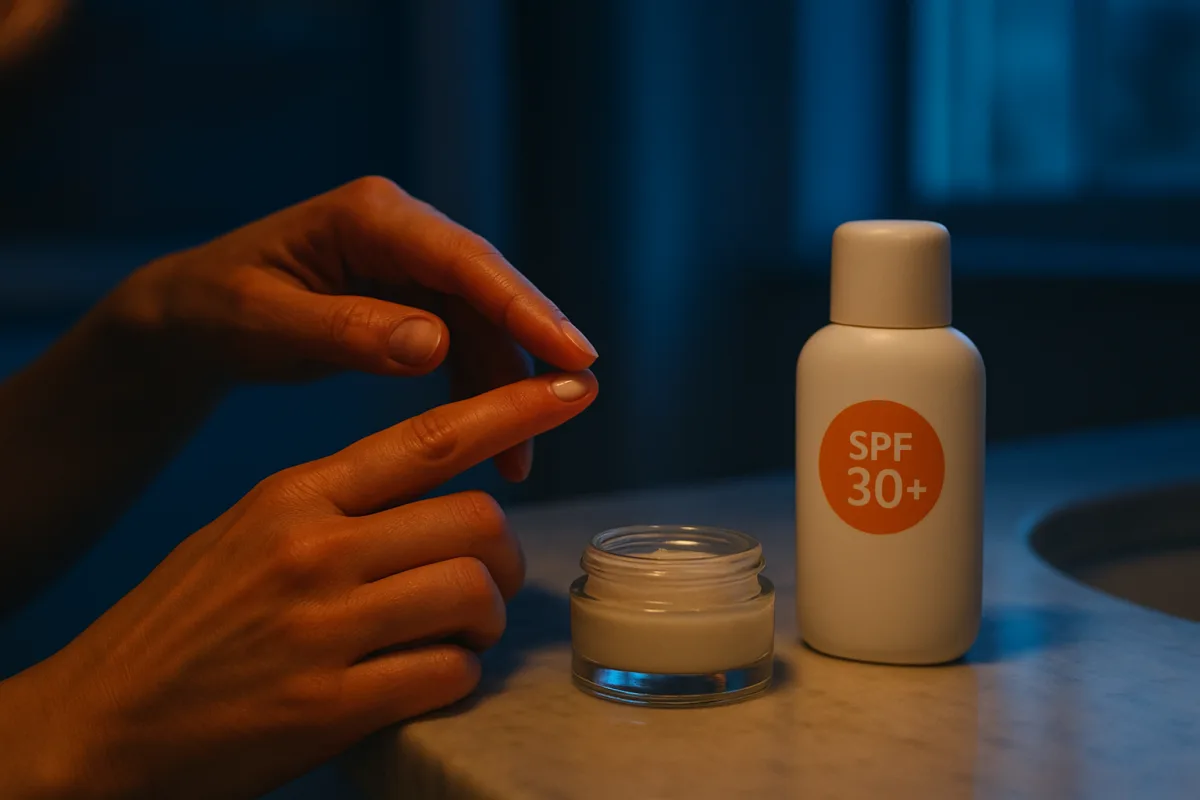
Broad-spectrum sunscreen is the non-negotiable first step. SPF 30 is the stated minimum in the research, but SPF 50+ is preferred for hyperpigmentation because it provides a larger margin of protection against UV exposure. [5][8]
Apply it every morning, including days when you are indoors near windows or outside only briefly. This is not exciting advice, but pigment-correcting ingredients are working against ongoing exposure if sunscreen is sporadic.
Tinted sunscreen deserves a closer look if melasma has been diagnosed by a clinician or if visible light seems relevant to your pattern of pigmentation. Iron oxides can help filter visible light, which may matter in melasma management. [5]
That said, the evidence for exactly how much iron oxides change hyperpigmentation outcomes is still incomplete. A tinted SPF 50+ is a sensible option, not a guarantee that spots will fade faster. [5]
Do not reserve sunscreen for summer. Dry weather can compromise the skin barrier and make irritation more likely, while UV protection remains necessary throughout the year. [12]
Then work out what you are actually trying to fade
“Dark spots” can describe marks left after inflammation, uneven tone, sun-related spots, or melasma. Those categories can overlap visually, but they do not necessarily respond identically to the same routine.
This is the point where skincare has limits. If you are unsure what the pigmentation is, or if it is changing, widespread, recurring or emotionally distressing, a dermatologist can assess it instead of having you cycle through increasingly aggressive products.
People with deeper skin tones, often described in research as Fitzpatrick types IV to VI, have a higher risk of post-inflammatory hyperpigmentation from irritation or procedures. [14] That does not mean effective options are off limits.
It means the margin for over-exfoliating is smaller. A stinging “active” routine may look productive on social media, but inflammation can be precisely what keeps discoloration visible.
High UV environments can also increase the prevalence and persistence of pigmentation concerns. [13] In practical terms, a routine that seemed tolerable during low-exposure months may need more careful sun protection, not automatically stronger actives.
Choose one active based on your tolerance, not the loudest claim
The useful question is not which ingredient is “best.” It is which ingredient you can apply consistently without provoking dryness, burning or peeling. There is no established universal layering formula for every brightening active. [3]
For sensitive or easily irritated skin, niacinamide is a reasonable starting point. It helps block melanin transfer between cells and is generally positioned as an adjunctive ingredient rather than a dramatic overnight spot corrector. [2]
That “adjunctive” role matters. Niacinamide can fit alongside sunscreen and a prescribed plan, but the supplied research does not support presenting it as a fast standalone answer for stubborn pigmentation.
Azelaic acid is another ingredient worth discussing with a dermatologist or pharmacist, particularly when you want an option that is not hydroquinone. A cited meta-analysis found 20% azelaic acid slightly reduced melasma severity more than 4% hydroquinone. [1]
That finding does not settle the argument. Relative performance can vary by person and type of pigmentation, and more direct head-to-head trials are needed before declaring either ingredient the universal winner. [1]
Tranexamic acid is commonly used in leave-on formulas at 2% to 5%, with particular interest for melasma because it may reduce signals that stimulate pigment-producing cells. [3] Long-term topical safety data for newer agents remains limited.
Alpha arbutin and kojic acid also target melanin formation and often appear in combination formulas. [4][5] They may be appealing on an ingredient list, but combination products make it harder to identify what is helping or what is irritating.
Vitamin C can be useful, but inspect the formula
For vitamin C, the concentration range with the clearest support here is 10% to 20% L-ascorbic acid, used once daily in the morning. Visible changes, when they happen, are generally expected over roughly 8 to 16 weeks. [7]
L-ascorbic acid is also unstable. It oxidises readily, which means a vitamin C product can become less useful before you finish it, especially if packaging lets in air or light. [7]
Formulas that pair L-ascorbic acid with vitamin E and ferulic acid are often designed to improve stability. [7] That is more meaningful than vague “brightening complex” language on the front of a bottle.
Do not add vitamin C simply because it is popular if your skin is already reactive from retinoids, acids or a prescription pigment product. More active ingredients does not automatically mean more fading. It can mean more inflammation. [15]
Retinoids are slow, so start like they are slow
Retinoids promote cell turnover and can support a gradual improvement in uneven pigment. Their downside is equally familiar: dryness, flaking and irritation are common when someone starts too frequently or at too high a strength. [9]
The research brief suggests beginning low, such as 0.025% tretinoin, two to three nights weekly and increasing only as tolerated. [9] Tretinoin is a medication in many places, so access and instructions should come from a qualified prescriber.
Expect a long runway. Retinoid-related visible improvement may take 12 to 24 weeks, substantially longer than the four to six weeks sometimes reported with hydroquinone. [9]
That timeline is a reason to simplify, not to panic-add acids after two weeks. If your skin is dry, sore or persistently peeling, reduce frequency and seek professional advice rather than pushing through.
Hydroquinone needs boundaries, not a casual approach
Hydroquinone inhibits tyrosinase, an enzyme involved in pigment production. Over-the-counter formulas may contain 2%, while prescription options can reach 4%; use is commonly limited to once or twice daily for up to three months. [6]
It has a longstanding reputation as a benchmark ingredient, but that does not make it risk-free or automatically superior. The azelaic-acid comparison noted above challenges the idea that hydroquinone is always the gold standard. [1]
Long-term or excessive use is associated with exogenous ochronosis, a potentially permanent darkening of the skin. The research brief flags risk after use beyond roughly three to four months. [6]
For that reason, hydroquinone is not an ingredient to leave in an indefinite, unsupervised routine. A dermatologist can advise whether it suits your situation, how long to use it, and when to stop or change course.
Acids can give quicker cosmetic change, but they are easy to misuse
Alpha hydroxy acids, including glycolic acid, exfoliate pigmented surface cells. Reported visible improvement can begin in four to six weeks, which is faster than many retinoid timelines. [1]
That quicker timeline is not permission to exfoliate nightly. Aggressive exfoliation can damage the barrier, trigger inflammation and make pigmentation more obvious, particularly in skin prone to post-inflammatory marks. [14][15]
If you choose an AHA, introduce it on a separate night from a retinoid rather than stacking both from day one. The supplied evidence does not establish a safe, universal routine for combining every brightening active simultaneously. [3]
Apply cautiously, monitor for stinging or persistent redness, and avoid treating discomfort as a sign that the product is “working.” In pigmentation care, tolerability is part of efficacy because irritation can undermine the cosmetic goal.
Build a routine you can follow for three months
A low-drama morning routine might be: gentle cleanse if needed, one chosen antioxidant or pigment-supporting serum, moisturizer if needed, then broad-spectrum SPF 50+ sunscreen. Vitamin C fits most naturally in this morning slot. [7]
At night, start with a gentle cleanser and moisturizer, then use one main active on the scheduled nights you can tolerate. Retinoids and exfoliating acids are not a sensible first-night combination. [9][15]
If you choose niacinamide, it can be the quieter supporting ingredient in either routine. Its role is less about rapid transformation and more about giving you an option that may be better tolerated than stronger pigment-focused actives. [2]
Track progress with monthly photographs taken in the same location, lighting and angle. Pigment changes are often modest week to week, and inconsistent lighting can make you abandon a routine that is gradually helping.
Avoid the mistakes that keep resetting progress
Skipping sunscreen, picking at spots, applying too many actives, incorrect layering and impatience are repeatedly identified as reasons discoloration can worsen or fail to improve. [15] The common thread is inflammation and inconsistent protection.
Do not start vitamin C, retinoid, AHA and hydroquinone in the same week. Combining vitamin C, retinol, AHAs and hydroquinone without a gradual plan can provoke irritation that worsens pigment. [15]
Also pay attention to application instructions. Applying strong products to very dry skin can increase irritation, while seasonal dryness may make a previously tolerated product feel harsher. [12][15]
If a product causes burning, prolonged redness, cracking or a noticeable worsening of marks, stop using it and consult a dermatologist. A stronger routine is not necessarily a smarter one.
Know what time and money can realistically buy
Most topical routines require at least four to 12 weeks for visible change, and substantial fading commonly takes several months. [1] Marketing that suggests a dark spot will disappear in days is selling a cosmetic fantasy.
Professional options such as chemical peels, lasers and microneedling may produce faster changes than topical care, but they cost more and commonly require multiple sessions. [16] They also need careful selection, especially for people at greater risk of post-inflammatory hyperpigmentation. [14]
The supplied research does not provide reliable price ranges for over-the-counter brightening products, prescriptions or individual professional procedures. It would be misleading to invent neat numbers, since pricing varies by formulation, prescriber, clinic, location and number of sessions.
For a practical starting point, spend first on sunscreen you will apply generously and consistently. Then add one evidence-backed active at a time, give it months rather than days, and involve a dermatologist before escalating to stronger treatments or procedures.
Frequently Asked Questions
What is the safest way to treat hyperpigmentation at home?
The safest approach is to start with one pigment-focused active ingredient that your skin can tolerate without irritation, such as niacinamide for sensitive skin. Introduce actives gradually and avoid layering multiple strong ingredients simultaneously to prevent dryness, burning, or peeling. If pigmentation worsens or recurs despite a gentle routine, consult a dermatologist rather than escalating home treatments.
How long does it take to see results when treating hyperpigmentation?
Meaningful fading of dark spots often takes several months, typically at least 8 to 12 weeks before judging effectiveness. For example, hydroquinone may show results in 4–6 weeks, retinoids in 12–24 weeks, and vitamin C in 8–16 weeks. Patience and consistent use are important.
Which active ingredients are best for different types of hyperpigmentation?
Hydroquinone (up to 4%) is a common choice but should be limited to 3–4 months due to risks. Retinoids promote cell turnover and suit longer-term use with slow introduction. Vitamin C at 10–20% can brighten skin but requires stable formulations. Azelaic acid shows promise, especially for melasma, sometimes outperforming hydroquinone. Niacinamide is gentler and often used adjunctively, especially for sensitive skin.
How should I layer skincare products to avoid irritation when treating dark spots?
There is no universal layering formula; the key is to apply one active ingredient consistently without provoking irritation. Avoid combining multiple strong actives like vitamin C, retinol, AHAs, and hydroquinone at once. Gradually introduce products and monitor skin response to prevent inflammation that can worsen pigmentation.
Why is sunscreen important in treating hyperpigmentation?
Broad-spectrum sunscreen with SPF 50+ is essential every day to prevent UV exposure that deepens dark spots. Tinted sunscreens containing iron oxides can also help filter visible light, which may worsen melasma. Sunscreen protects skin throughout the year, including indoors near windows and during dry weather, reducing the risk of new or aggravated pigmentation.
How we researched this
This article was assembled from 17 cited references.
Nothing here is based on hands-on testing. Where a figure or finding appears, it belongs to the source cited beside it, and the writing says so rather than implying otherwise. Every source is listed below so you can check it.
Sources
- What Is Best for Hyperpigmentation? Ingredients & Treatments - ScienceInsights
- Azelaic Acid vs. Niacinamide: Which Is Better for Dark Spots?
- How to Treat Hyperpigmentation: The Complete Honest Guide (2026) | Beauty Hygiene
- Dark Spot Skincare 2026 Guide: Brightening Ingredients and Sunscreen Care – Global Beauty News | Skincare, Cosmetics and Beauty Industry Updates
- Dark Spot Correctors: Which Ingredients Actually Work? (2026) - Doctronic
- What Ingredients Help Fade Dark Marks Safely - acneadvocate.com
- The Science of Dark Spots — And How to Actually… | WellSourced
- How to Treat Hyperpigmentation
- How to Treat Hyperpigmentation Safely: A Step-by-Step Guide
- Hyperpigmentation Treatment: How to Fade Dark Spots, Melasma, and Uneven Skin Tone | NicerSkin
- Summer Skin Treatments That Work (2026) | ScanSkinAI
- Hyperpigmentation Can Get Worse in Dry Weather. Here's How to Manage
- Why Hyperpigmentation Is So Common in New Orleans (And the Best Treatments That Actually Work) - Dermatology Clinic New Orleans | Skin Specialists | Etre Cosmetic Derm
- Best Treatments for Hyperpigmentation & Dark Spots | SpaLens
- 8 Skincare Mistakes That Worsen Hyperpigmentation – Dr. Su
- The Cost of Hyperpigmentation Treatment in 2026
- Hyperpigmentation Treatment Market Size Report 2026-2033
Related Articles
How to Fix Dark Circles Under Eyes: Causes and Treatments
Learn how to fix dark circles under eyes with skincare, routines, and lifestyle tips tailored to different causes and skin types.

Best and Worst Collagen Supplements: Expert Review by Dr. Vanita Rattan
Dr. Vanita Rattan reviews the best and worst collagen supplements, emphasizing marine collagen, vitamin C, and essential ingredients for skin health. Avoiding plant-based collagens, she recommends evidence-based products for optimal skincare results.

Dr. Vanita Rattan's K-Beauty Product Reviews: Skincare Tips for Skin of Color
Dr. Vanita Rattan reviews popular K-beauty products, highlighting a brightening serum and cautioning against a harsh cleansing oil and toner pad with essential oils. She emphasizes the importance of avoiding comedogenic and fragranced products for skin of color, advocating for mineral sunscreen over chemical options. Her insightful analysis guides viewers towards effective skincare choices.
How to Treat Uneven Skin Texture: Effective Skincare Tips
Learn how to treat uneven skin texture with targeted actives, routines, and product tips for smoother, healthier skin.