
How to Treat Uneven Skin Texture: Effective Skincare Tips
Learn how to treat uneven skin texture with targeted actives, routines, and product tips for smoother, healthier skin.
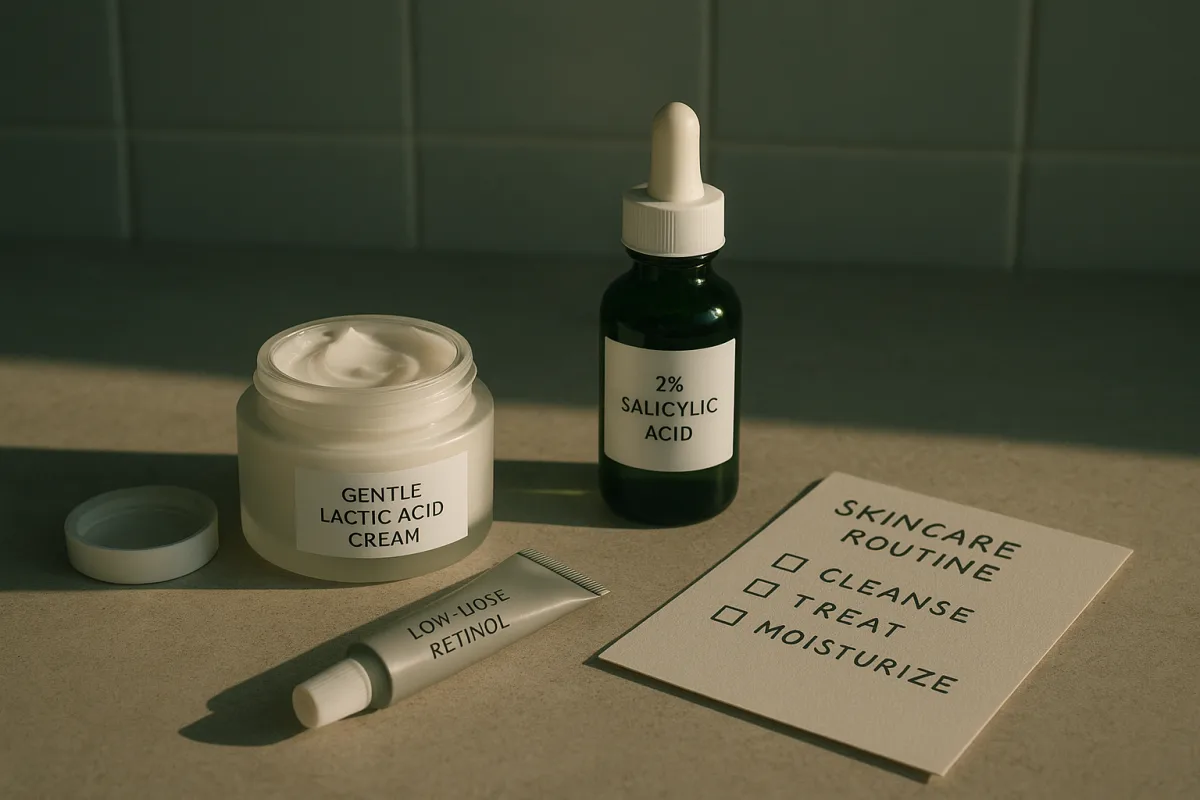
First, work out what “uneven texture” means in your mirror
Uneven texture is a description, not a diagnosis. It may mean dry, flaky patches; visible pores and congestion; tiny bumps; roughness after breakouts; or depressed marks that change the way light reflects off skin. Each calls for a different approach. [19][23]
Topical skincare can improve the look and feel of surface roughness, dehydration and pore congestion. It cannot reliably erase deep pitted scarring, and it is not a substitute for medical assessment of persistent acne-like eruptions, itching, pain or sudden changes.
The unglamorous first check is irritation. Tightness, stinging when applying bland moisturiser, unusual peeling, or redness after every active are not signs that a product is “working.” They are signals to reduce the routine rather than add another exfoliant. [14]
For one to two weeks, use a gentle cleanser, moisturiser and sunscreen if your skin is actively irritated. This pause is not wasted time. Barrier support with ceramides and hyaluronic acid can make dehydrated, rough-looking skin feel smoother by reducing water loss. [2][20]
Solve the surface problem before buying stronger actives
If your skin feels rough but is not especially oily or congested, an alpha hydroxy acid, or AHA, is the logical first category. Glycolic and lactic acids loosen dead surface cells, which can make the surface look more even. [21][23]
Lactic acid is the more forgiving choice for dry or reactive skin because it exfoliates while supporting hydration. That does not make it irritation-proof, especially if you are also using retinoids, strong cleansers or physical scrubs. [21][22]
Use an AHA one night weekly at first. If skin remains comfortable after two to three weeks, normal and oily skin may work up to two or three applications weekly, while dry or sensitive skin should generally remain at one or two. [2][5]
If your skin reacts easily, look for polyhydroxy acids, including gluconolactone or lactobionic acid. PHAs are larger molecules and are generally positioned as gentler exfoliating options, though “gentle” still requires a patch test and a restrained schedule. [2][20]
Do not assume a higher acid percentage is necessarily better for texture. The research brief does not establish one ideal concentration or frequency for every face, and individual tolerance varies substantially. The best routine is the one skin can tolerate consistently.
If the bumps are clogged pores, choose salicylic acid instead
When texture looks like blackheads, clogged pores or small, non-inflamed bumps in oilier areas, 2% salicylic acid is more relevant than an AHA. It is a beta hydroxy acid, or BHA, that works in pores as well as on the surface. [2][19]
Start with a 2% salicylic acid leave-on one or two times a week, preferably at night. Increase only if your skin is calm, then keep the rest of the routine deliberately plain: gel cleanser, light moisturiser and daily sunscreen suit many oily skin types. [2][18]
Some acne-prone people report tolerating daily BHA, but the brief identifies that as anecdotal rather than a settled evidence-based target. Daily use is not a badge of good skincare, and a flaky, sore face does not look smoother. [2][14]
Avoid adding a grainy scrub to a salicylic-acid routine. There is no strong evidence in the brief showing that physical exfoliation outperforms chemical exfoliation for uneven texture, while stacking both increases the practical risk of overdoing it.
If you prefer physical exfoliation, keep it brief, light-handed and infrequent: two to five minutes, one to three times weekly is the guidance cited for these products. Do not use one on the same day as an acid or retinoid. [4][5]
Add a retinoid only after the basics are boring
Retinoids are among the better-supported cosmetic ingredients for uneven texture because they encourage epidermal cell turnover over time. Retinol at 0.25% to 0.5%, retinaldehyde and adapalene are all used for this purpose. [1][22]
Retinaldehyde is often described as more biologically active than retinol, with one commonly repeated estimate placing it at 11 times as active. That number does not mean it will produce 11 times the visible improvement, and direct comparisons across diverse skin types remain limited. [1]
Begin with a pea-sized amount of 0.25% retinol or a comparable gentle retinoid twice weekly at night. Apply it to dry skin, follow with moisturiser if needed, and hold that frequency for several weeks before considering an increase. [22][23]
Retinoid results are slow and usually modest. Expect smoother-looking texture only after consistent use over months, not days, and reduce frequency if you develop persistent stinging, peeling or redness. More applications will not necessarily get you there faster. [22]
Do not layer a retinoid with glycolic acid, lactic acid, salicylic acid or a scrub in the same routine. BeautyWorldNews and Boots both flag this combination as a common source of unnecessary sensitivity, and the brief advises alternating days or times. [15][16]
A simple schedule is more useful than a crowded shelf: retinoid on two non-consecutive nights, exfoliant on one separate night, then moisturiser-only nights between them. If that sounds too slow, remember that skin irritation is the main way ambitious routines become counterproductive.
Address uneven-looking tone without mistaking it for texture
Pigment can exaggerate texture because darker marks and uneven colour make pores, flakes and old blemish marks more visible. Niacinamide at around 4% may help improve the appearance of uneven tone and pores, with less exfoliating force than an acid. [3][20]
Azelaic acid at 10% to 15% is another option for people whose texture comes with visible redness or uneven tone. It can be introduced on alternate nights, but it still belongs in the one-new-active-at-a-time rule. [2][18]
Tranexamic acid at 2% to 5% is used in cosmetic routines for uneven-looking pigmentation. It is not an exfoliant, so it may fit better than another acid when your routine already includes a retinoid or salicylic acid. [3][18]
Vitamin C is usually positioned in the morning, while retinoids belong at night. However, combining vitamin C with acids or retinoids can be irritating for some people, so separate them rather than treating every active as universally compatible. [7][15]
Sunscreen is the part that makes the routine viable
Daily broad-spectrum sunscreen matters more when you are deliberately increasing turnover with retinoids and exfoliating acids. These ingredients can increase sensitivity, and sun exposure can worsen the uneven-looking pigmentation that makes texture appear more obvious. [3][18]
Use sunscreen as the final morning step and apply enough to cover the face and neck. The brief does not identify a single best formula, so choose one you will actually wear daily, whether that is a fluid, lotion or moisturising cream.
During heatwaves, reconsider rather than automatically intensify. Woman and Home flags a hyperpigmentation risk when strong actives, including vitamin C, AHAs and retinol, are pushed through high-heat periods, particularly when sun exposure and irritation increase. [13]
A practical approach is to reduce active nights two or three weeks before a predictable seasonal shift, then reassess. Evidence does not establish one perfect seasonal timetable, but climate-aware adjustments are more sensible than forcing a winter routine through hot, humid weather. [9][10]
Build the routine around your skin type, not a trending ingredient
For oily skin, salicylic acid, a gel cleanser and an oil-free moisturiser are the most coherent combination in this brief. Resist stripping cleansers, because a squeaky-clean finish can coexist with irritation and a rougher-looking surface. [2]
For dry skin, use a cream cleanser, a ceramide- and hyaluronic-acid-rich moisturiser, and a restrained lactic-acid schedule. Dryness can make texture more visible immediately, so hydration may deliver a quicker cosmetic improvement than escalating acids. [2][21]
For combination skin, a balanced cleanser and lactic acid are reasonable starting points, particularly when the cheeks feel dry but the T-zone becomes congested. You can apply a pore-focused product only where you need it rather than treating every area identically. [2]
For sensitive skin, fragrance-free cleansing, barrier-focused moisturiser and PHAs are the cautious route. Skip the temptation to “power through” burning or persistent redness, and seek professional advice if sensitivity does not settle after simplifying. [2][14]
Peptides are often included in firming products because they are associated with collagen-support signalling. The brief notes limited evidence on whether combining peptides with other actives specifically improves texture, so consider them optional rather than a core corrective step. [1][20]
Know when an in-office option is worth discussing
If your concern is entrenched textural scarring rather than surface roughness, a dermatologist or qualified clinician can discuss procedures. Microneedling is generally considered usable across skin tones and typically costs about $200 to $700 per session, with three to six sessions often suggested. [17][23]
Microneedling downtime is commonly one to three days. That price is per session, not a complete course, so a three-session plan may cost $600 to $2,100 before consultation fees, aftercare or location-specific charges. [17]
Chemical peels range from roughly $100 to $300 for light peels, $300 to $700 for medium peels, and $1,500 to $4,000 or more for deep peels. Light peel courses may involve three to six sessions, while downtime spans about two days to two weeks. [17]
Peels are not automatically the best choice for every complexion. The brief specifically flags pigmentation risk in darker skin tones, so this is a conversation for an experienced clinician, not a salon menu selection based on a before-and-after photograph. [17]
Laser pricing is substantially higher: approximately $2,500 to $5,500 for CO2 laser, $1,800 to $4,000 for erbium laser, and $1,200 to $2,500 for Fraxel-type treatment. Multiple sessions may be needed, and ablative approaches can require three to 14 days of downtime. [17][23]
There are not enough head-to-head studies to declare professional treatments categorically superior to carefully structured topical routines over the long term. Procedure choice should depend on the type of texture, skin tone, downtime tolerance, budget and a clinician’s assessment.
Frequently Asked Questions
What are the best ingredients to treat uneven skin texture?
For oily or clogged skin, 2% salicylic acid is effective at clearing pores. For dry or sensitive skin, lactic acid or polyhydroxy acids (PHAs) offer gentler exfoliation while supporting hydration. Retinoids like retinol (0.25–0.5%) can gradually improve surface smoothness, and ingredients such as niacinamide, azelaic acid, and peptides also help refine texture and tone.
How often should I use acids for uneven skin texture?
Start with an alpha hydroxy acid (AHA) once a week and increase gradually if your skin tolerates it. Normal and oily skin types may use acids two to three times per week, while dry or sensitive skin should limit use to once or twice weekly. PHAs are a gentler option and still require patch testing and cautious frequency.
Can retinoids improve uneven skin texture?
Yes, retinoids can improve uneven texture by enhancing cell turnover. Begin with a low concentration of retinol (0.25–0.5%) applied on alternate nights and expect gradual improvement over several months rather than rapid changes.
How do I start a skincare routine for rough skin?
Begin with a gentle cleanser, moisturizer, and broad-spectrum sunscreen, especially if your skin is irritated. Support the skin barrier with ceramides and hyaluronic acid to reduce dehydration and roughness before introducing active exfoliants like AHAs or retinoids slowly and one at a time.
What should I avoid when treating uneven skin texture?
Avoid layering multiple exfoliating acids, retinoids, vitamin C serums, or physical scrubs simultaneously, as this can cause irritation that worsens roughness and uneven tone. Also, do not skip daily broad-spectrum sunscreen, particularly when using exfoliating acids or retinoids, to prevent pigmentation issues.
How we researched this
This article was assembled from 23 cited references.
Nothing here is based on hands-on testing. Where a figure or finding appears, it belongs to the source cited beside it, and the writing says so rather than implying otherwise. Every source is listed below so you can check it.
Sources
- The 5 Best Skincare Ingredients of 2026, According to Dermatologists | JLOS Beauty
- Essential Products for Textured Skin in 2026
- The 2026 Skincare Routine for Uneven Skin Tone
- How Often to Use Physical Exfoliants | Dermatology
- How Often Should You Exfoliate Your Body? It Depends
- I'm in Awe-This Easy-to-Use Tool Leads to Super-Smooth Skin in Seconds
- Vitamin C in Skincare — The Complete Science Guide (2026) | Evident Reviews
- What's the Best Skin-Care Routine?
- PDRN Seasonal Skincare Guide — Adapt Your Routine for Every Season | PDRN Care
- Skincare for Different Climates: A Woman's Guide | yourskin.care
- Climate Skincare: Humid, Dry, and Altitude Routines | Orlena Skin
- How Seasonal Changes Affect Your Acne (And When to Switch Products) | Teen Acne Solutions
- The heatwave hyperpigmentation mistake you could be making
- Skincare Mistakes & Over-Treatment: Repair Guide
- The Skincare Ingredients Dermatologists Never Layer Together and Why Your Routine Suffers
- Skincare ingredients to mix and those best kept apart - Inspire Me - Boots
- Chemical Peels vs Microneedling: Which Fixes What? | Facial Finders
- Skincare Routine for Uneven Skin Tone: A Simple AM & PM Guide | Ava Fit Care
- Uneven Skin Texture: Causes, Symptoms & Care | The Derma Co
- K-beauty for Rough & uneven texture — ingredients, routine & what to avoid | KoreaPlus
- Lactic Acid: The Gentle, Hydrating Exfoliator Adored By Experts And Sensitive Skin-Sufferers Alike
- How much retinol, Vitamin C and acids does your skin really need? Dermatologists explain - CNA Lifestyle
- How to Improve Rough and Uneven Skin Texture - Maple Clinic
Related Articles
How to Layer Products for Acne-Prone Skin Correctly
Learn how to layer products for acne-prone skin with the right order, timing, and active ingredient use to avoid irritation and maximize results.
Benefits of Hyaluronic Acid: Hydration and Skin Improvement
Discover the benefits of hyaluronic acid for skin hydration, molecular weight effects, and how to use it for smoother, plumper skin.
How to Choose a Skincare Routine for Aging Skin
Learn how to choose a skincare routine for aging skin with tips on sunscreen, retinoids, and avoiding irritation for effective anti-aging care.
How to Choose a Face Mask for Oily Skin
Learn how to choose a face mask for oily skin with tips on ingredients, usage, and avoiding irritation for a balanced, shine-free complexion.