
How to Fix Dark Circles Under Eyes: Causes and Treatments
Learn how to fix dark circles under eyes with skincare, routines, and lifestyle tips tailored to different causes and skin types.
Start by identifying what you are trying to improve
“Dark circles” is a catch-all term, not a single skin problem. The brownish cast under one person’s eyes may be excess pigment, while another person is seeing blue-purple vessels through thin skin or a shadow from a hollow tear-trough area. [13][18]
Look in daylight before buying anything. Brown or grey-brown darkness is more consistent with pigmentation, while blue, violet, or reddish tones can reflect visible vascular structures beneath thin under-eye skin. A darkness that changes dramatically with overhead lighting is often at least partly a shadow. [10][12][18]
Age, inherited facial anatomy, skin tone, and skin thickness all matter. As skin becomes thinner, underlying vessels may become more noticeable. Loss of volume around the eye can deepen a hollow and create a shadow that topical skincare cannot physically fill. [13][15][18]
This distinction is the point at which many routines fail. A caffeine gel may make temporary puffiness look less obvious, but it is unlikely to substantially change brown pigment. Likewise, a pigment serum cannot rebuild lost volume or erase a structural shadow. [1][2][5]
If you have had dark circles since childhood, they may be strongly influenced by anatomy, genetics, or baseline pigmentation. That does not mean skincare is pointless, but it does mean the realistic goal is a modest improvement in brightness and hydration, not an airbrushed under-eye area. [11][13][18]
Rule out the things skincare should not diagnose
A sudden change around the eyes is not a cue to add stronger actives. Mayo Clinic and Cleveland Clinic both list causes of under-eye darkening that extend beyond cosmetic habits, including allergies, fatigue, dehydration, aging, and inherited anatomy. [13][18]
Persistent itchiness, scaling, burning, or recurrent swelling can signal irritation or another issue requiring clinical assessment. Stop applying new eye products and speak with a dermatologist rather than trying to “brighten” inflamed skin with acids, retinoids, or fragranced creams. [13][18]
The same applies to concerns about iron or vitamin B12. Diet quality and hydration can support overall skin appearance, but a suspected deficiency needs proper medical evaluation. Do not use dark circles alone as a diagnosis or treat yourself with supplements based on social media advice. [10][18]
If the issue looks brown, make sun protection the non-negotiable step
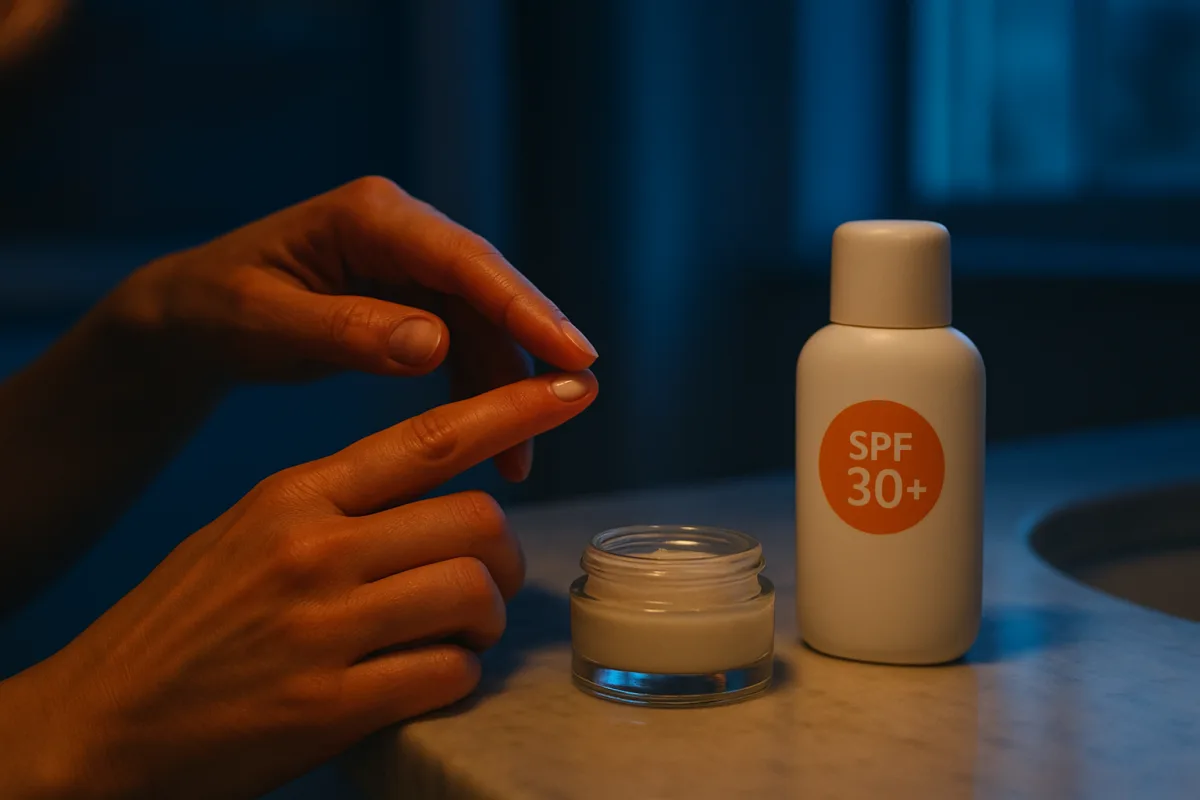
Pigmentation is easily undermined by unprotected sun exposure. If your goal is to reduce the appearance of brown under-eye darkness, use broad-spectrum SPF 30+ every morning and apply it carefully around, not into, the eyes. [1][4][5]
This is not the glamorous step, but it is the one that keeps a brightening routine from working against itself. Sun exposure can deepen existing pigment, and skipping sunscreen while using pigment-focused actives makes little practical sense. [4][16]
Choose a sunscreen you can tolerate around the orbital bone, then use enough to form an even film without getting product into your eyes. If a formula stings, do not keep forcing it, because rubbing teary eyes adds mechanical irritation. [9][16]
Season matters here. Cold, dry weather can make the under-eye area look crepier and more shadowed through dehydration, while summer increases ultraviolet exposure. The brief supports adjusting moisturiser texture in winter and maintaining consistent sunscreen in sunnier months, not chasing a new active every season.
Choose one pigment-focused active, not five
Vitamin C is a sensible first option when brownness and dullness are the main concerns. Sources covering pigmentation commonly cite concentrations of 10 to 20%, but higher is not automatically better around the eyes, where stinging can derail the routine. [1][4]
A vitamin C product may make skin look a little more radiant within three to seven days, largely because hydration and surface reflectance can improve quickly. A visible reduction in established dark pigmentation, if it occurs, generally takes consistent use over eight to 12 weeks. [1][6]
Kojic acid is another pigment-focused option, typically discussed at 1 to 4%. It can be useful on paper for uneven tone, but it is also a poor choice for anyone who tends to react to active products, especially if they are already using exfoliants or retinoids. [4][5]
Niacinamide, tranexamic acid, and hydroquinone also appear in discussions of pigmentation-focused care. The evidence base and access differ between them, and hydroquinone in particular is a conversation for a dermatologist because its suitability, strength, and local availability vary. [1][4][5]
Do not buy separate vitamin C, kojic acid, tranexamic acid, and retinol products and stack them beneath both eyes on day one. There is limited direct evidence for the long-term safety or superior performance of combining every popular dark-circle active in one eye routine.
If the area looks blue, purple, thin, or crepey
Blue-purple darkness may be more about visible vessels beneath thin skin than excess melanin. In this case, pigment serums may offer less visible benefit than you expect, because they do not change the basic transparency of under-eye skin. [10][12][18]
Retinol is often recommended because it can support skin renewal and may improve the look of fine lines and thin, crepey texture over time. That is a slow cosmetic effect, not an instant fix for vascular darkness, and tolerability is the limiting factor. [1][2][5]
There is no concentration in the research brief that can be responsibly declared best for an under-eye retinol product. Prescription retinoids may work faster for some people, but they are not automatically more tolerable, and a dermatologist should guide that decision. [5]
If you use an over-the-counter retinol eye product, introduce it gradually and watch for burning, flaking, redness, or persistent dryness. Those are not signs that it is “working.” They are signs to reduce use, stop, or seek advice, because inflammation can worsen the appearance of pigmentation. [4][16]
Caffeine is better framed as a temporary de-puffing and appearance-supporting ingredient than a structural correction. It may be worth trying if your under-eyes are most swollen or congested in the morning, but do not expect it to erase genetically prominent vessels or hollows. [1][2][3]
If darkness is really a shadow, reset expectations
Hollows beneath the eyes can read as dark circles even when the skin itself is not particularly discoloured. No topical product can replace volume or alter bone structure, although hydration can temporarily make fine texture look smoother and less reflective. [12][15]
This is where skincare marketing gets slippery. An eye cream can moisturise, temporarily plump the surface, and make concealer apply more evenly. Those are worthwhile cosmetic effects, but they are not the same as correcting a structural depression under the eye.
For persistent hollows, a dermatologist or qualified eye-area specialist can explain medical and procedural options, their risks, and whether you are a candidate. This is especially important around the eye, where swelling, anatomy, and procedure choice need professional assessment. [12][15]
Build a routine your under-eyes can tolerate
In the morning, cleanse only if you need to, then use one chosen brightening or de-puffing product, moisturiser if the area feels dry, and SPF 30+ sunscreen. Keep the routine boring enough that you can repeat it for 12 weeks. [1][4][9]
At night, use a gentle moisturiser and, if you have chosen one, introduce your retinol or pigment-focused product cautiously. Avoid applying multiple potent products in the same session until you know how your skin responds, because layering guidance is not settled. [4][5]
For either routine, use roughly a pea-sized amount total for both eyes, not a pea-sized amount per eye. Dot it along the orbital bone and tap lightly with your ring finger. Do not drag product across the lower lid or rub it into the lash line. [8][9]
Eye-area formulas are usually designed with this thinner, more reactive skin in mind. That does not make every eye cream necessary, but it is a reason not to automatically repurpose a strong facial acid, exfoliant, or fragranced treatment under the eyes. [9][16]
Patch testing and slow introduction are more useful than an elaborate ingredient calendar. If a product causes recurring sting or redness, discontinue it. A darker-looking under-eye area after starting an active may be irritation-related, not a purge or a sign to push through. [4][16]
Address puffiness and daily contributors without overselling them
Sleep will not change inherited anatomy, but inadequate sleep can make the eye area look duller and more congested. Aim for at least seven hours consistently before deciding that a product has failed. [10][13][18]
If you wake up puffy, try sleeping with your head slightly elevated and use a cold compress briefly in the morning. Under-eye patches can provide cooling and hydration, but their results are temporary cosmetic effects, not a lasting correction for pigment or hollows. [3][17]
Keep rubbing, aggressive massage, and abrasive tools away from the eye area. The skin is delicate, and repeated friction can aggravate irritation and uneven tone. Gentle application is not precious beauty etiquette, it is risk management. [9][16]
Advanced peptides and red or near-infrared LED devices are sometimes marketed for dark circles. The research brief treats both as supportive rather than primary options, with uncertain direct benefit for darkness itself. Consider them optional, not the foundation of a routine.
Finally, take progress photos in the same window light every four weeks. Under-eye darkness changes with sleep, allergies, hydration, and lighting, so a daily mirror check is a poor way to judge modest, gradual results.
Frequently Asked Questions
How can I tell what type of dark circles I have?
Look at your under-eye area in daylight to assess the color and characteristics. Brown or grey-brown darkness usually indicates pigmentation, while blue, violet, or reddish tones suggest visible blood vessels under thin skin. Shadows that change with lighting may be caused by hollows or facial anatomy. Understanding this helps determine the appropriate treatment approach.
What skincare ingredients help reduce brown under-eye circles?
For pigment-related dark circles, evidence supports using broad-spectrum SPF 30+ daily and gentle brightening actives like 10 to 20% vitamin C or 1 to 4% kojic acid. Other helpful ingredients include retinol, niacinamide, caffeine, tranexamic acid, and hydroquinone. Consistent use over 8 to 12 weeks is typically needed to see meaningful improvement.
How should I apply eye creams to avoid irritation?
Use only a pea-sized amount total for both eyes and apply by gently tapping rather than rubbing, preferably with your ring finger. Introduce one active ingredient at a time to monitor tolerance, as irritation can worsen pigmentation, especially in melanin-rich skin. Avoid overuse or layering multiple strong actives simultaneously.
Can sleep and diet affect dark circles under eyes?
Yes. Getting at least seven hours of sleep and elevating your head during sleep can reduce puffiness and improve the appearance of dark circles. Addressing dietary gaps, especially iron and vitamin B12 deficiencies, with a clinician’s guidance may also help, rather than self-prescribing supplements.
When should I see a dermatologist for dark circles?
Seek medical advice if you notice sudden one-sided darkness, swelling, pain, itching, a rash, or any persistent change that differs from your usual under-eye appearance. These symptoms may indicate underlying health issues and are not conditions that topical serums can resolve.
How we researched this
This article was assembled from 18 cited references.
Nothing here is based on hands-on testing. Where a figure or finding appears, it belongs to the source cited beside it, and the writing says so rather than implying otherwise. Every source is listed below so you can check it.
Sources
- How to Lighten Under Eyes: What Actually Works - ScienceInsights
- 19 Best Treatments for Dark Circles, According to Derms | NBC Select
- The 13 Best Under-Eye Patches for Brightening and Hydrating, According to Dermatologists
- Can skincare fade pigmentation, and which ingredients actually work?
- Dark Circle Treatments | Dermatology
- How Long Does Dark Spot Corrector Take to Work? 2026 Guide – Live Tinted
- Mela B3 Eyes with Melasyl™ | La Roche Posay
- Eye cream for dark circles and the right way to use it - Tata 1mg Capsules
- How to Apply Eye Cream and Ingredients to Look For
- Dark circles under the eyes: Causes and treatments
- I've Had Dark Circles Since Birth-These Are the Only Eye Creams That Make a Difference
- Under-Eye Dark Circles Treatment | EyePlastics
- Dark circles under eyes Causes - Mayo Clinic
- Dark Circles Under Eyes: Causes, Treatments, and What Actually Works | NicerSkin
- Under-Eye Hollows & Dark Circles: What Works | LovMedSpa
- 6 Mistakes That Make Dark Circles and Puffiness Worse – Be Clinical
- How to Get Rid of Dark Circles Under Eyes
- Dark Circles Under The Eyes: Causes & Treatment
Related Articles

How to Treat Hyperpigmentation: Safe and Effective Tips
Learn how to treat hyperpigmentation safely with effective ingredients, sun protection, and routines for lasting dark spot fading.

How to Introduce New Skincare Products Safely
Learn how to introduce new skincare products safely with patch testing, gradual use, and tips to avoid irritation and track reactions.
How to Treat Uneven Skin Texture: Effective Skincare Tips
Learn how to treat uneven skin texture with targeted actives, routines, and product tips for smoother, healthier skin.
Best Ingredients for Skin Hydration
Discover the best ingredients for skin hydration, how to use humectants and moisturizers for effective water retention and skin barrier support.