
How to Choose Face Oil for Dry Skin: A Practical Guide
Learn how to choose face oil for dry skin, including types, application tips, and best oils for sensitive or acne-prone dry skin.
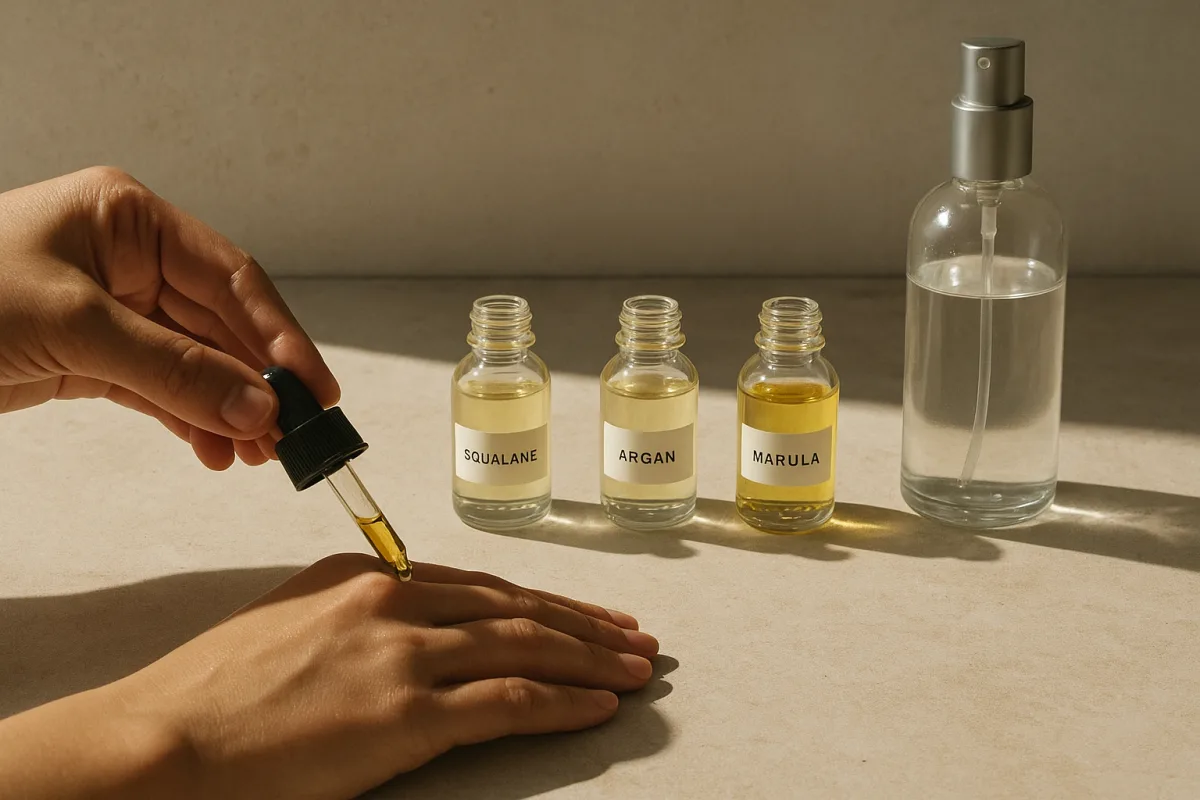
First, work out whether your skin needs water, oil, or both
The problem with “dry skin oils” is that they are often sold as hydration. They are not hydration in the literal sense. A facial oil supplies lipids and forms an emollient, partially occlusive layer that helps slow water evaporation from skin. [26][29]
If your face feels tight after cleansing, looks dull, or develops flaky patches beneath makeup, start with a humectant or water-containing moisturiser. Then add oil as the final layer, while your skin is still slightly damp. [26][27]
Putting oil directly onto fully dry skin is one of the common mistakes highlighted in face-oil guidance. It can leave you shiny without addressing the lack of water underneath, particularly in centrally heated rooms or low-humidity weather. [24][25]
This distinction matters because dry skin and dehydrated skin can overlap, but they are not interchangeable marketing terms. If you have persistent scaling, itching, cracking, a rash, or pain, that is no longer a product-selection puzzle. See a dermatologist.
Then choose the weight your skin can actually tolerate
For conventionally dry, non-acne-prone skin, oils higher in oleic acid are the logical category to investigate. Oleic acid-rich oils tend to have a richer, more cushioning feel and can be useful when your usual cream feels insufficient. [13][14]
Marula oil is reported at roughly 70 to 78 percent oleic acid, argan at 43 to 49 percent, avocado at 60 to 75 percent, and olive at 55 to 80 percent. Those numbers explain why these oils are generally placed in the richer, dry-skin camp. [13][14]
That does not make oleic acid a universal answer for every person with dry skin. Heavy oils can feel congesting, and some people who are both dry and breakout-prone find them too much, especially when applied daily or in generous amounts. [11][13]
Squalane is the safer middle ground. It is widely used because it feels lighter than many plant oils, spreads easily, and is often positioned for sensitive skin as well as dryness. Its job is still emollience and reducing water loss, not adding water. [3][11]
Jojoba is another lighter option often suggested where humidity is high or skin clogs easily. In climates above about 60 percent humidity, the brief recommends lightweight, non-comedogenic-leaning choices such as squalane and jojoba rather than immediately reaching for a dense oil. [22][23]
If your skin is dry but acne-prone, do not assume that “natural” means low-risk. Use the smallest amount, choose a simpler formula where possible, and patch test before committing to nightly use. A dermatologist is the right person to ask about ongoing acne or inflammation.
Do not let rosehip’s reputation replace the ingredient logic
Rosehip seed oil deserves a more nuanced recommendation than it usually gets. It contains roughly 44 to 50 percent linoleic acid, while grapeseed oil is reported at about 58 to 78 percent, making both generally lighter options than oleic-acid-heavy oils. [13][14]
Linoleic-acid-rich oils are often recommended for oily or acne-prone skin, which seems to conflict with rosehip’s frequent appearance on dry and mature-skin lists. That conflict is real, not something a “best oils” list can tidy away. [6][13]
Rosehip may still suit some dry-skinned people because formula, texture, antioxidant content, and individual tolerance matter alongside fatty-acid profile. But there is no strong comparative clinical evidence showing that rosehip is categorically better for dry skin than squalane, argan, or marula. [11][12]
Good Molecules Pure Cold-Pressed Rosehip Seed Oil costs about $10 for 30 ml, making it the low-cost option in this group. It suits someone who wants a lightweight plant oil and is willing to patch test, rather than someone seeking the richest possible finish. [7]
That price is worth noting because face oil pricing can become detached from function quickly. The research brief places quality oils from about $10 for Good Molecules Rosehip to $195 for Furtuna Skin Biphase, generally in 30 to 60 ml bottles. [7][8]
A $195 Furtuna Skin Biphase may appeal to someone specifically wanting a premium bifacial formula, but its price alone is not evidence that it will outperform a basic squalane for dry skin. Long-term head-to-head evidence across diverse users is limited. [8][11]
Match the oil to the weather before changing your entire routine
Your favourite oil in January may be excessive in July. In dry climates below about 30 percent humidity, richer and more occlusive choices such as marula or argan make practical sense, especially when cold weather and indoor heating leave skin feeling rough. [22][24]
A randomized crossover trial on acute temperature fluctuations supports the broader point that changing environmental conditions can affect skin health. It does not, however, prove that any named face oil prevents or fixes weather-related skin changes. [21]
During humid or warm periods, scale back rather than layering the same winter amount out of habit. A lighter oil, fewer applications, or simply returning to moisturiser alone may be more comfortable and less likely to leave an unwanted film. [19][23]
There is no clear consensus on an ideal application frequency. Nightly use can be reasonable for some dry skin, while others will prefer a few evenings weekly or only during cold spells. Greasiness, makeup pilling, and new clogged bumps are practical signals to reduce use. [25][27]
Compare the named options by formula category, not the bottle aesthetic
The Ordinary 100% Squalane is approximately $25 for 30 ml and suits dry, sensitive-leaning, or congestion-conscious skin looking for a straightforward lightweight emollient. Its appeal is the single-ingredient format, not a claim that it provides deeper hydration than every blend. [1][3]
Herbivore Lapis Blue Tansy + Squalane Balancing Facial Oil combines squalane with blue tansy and is positioned as a balancing oil. It may suit dry skin that prefers a lighter-feeling blend, but the research brief does not provide a price, so it cannot be fairly ranked on value. [2]
Kiehl’s Midnight Recovery Concentrate is another established dry-skin option in the brief. It suits someone who prefers a treatment-style oil blend rather than a plain carrier oil, but no price or detailed ingredient concentration was supplied in the research materials. [3][5]
Sonya Dakar Organic Omega Oil is a flaxseed-based oil priced at $140 for 1.7 oz. It suits a buyer seeking a larger, premium oil format and an omega-focused plant-oil blend, not someone looking for the most economical first experiment. [4]
Good Molecules Pure Cold-Pressed Rosehip Seed Oil, at about $10 for 30 ml, suits a cautious budget trial of a lighter, linoleic-acid-rich plant oil. It is not automatically the best pick for very dry, cold-weather skin simply because rosehip has a strong beauty reputation. [7][13]
These products are not equivalent, and neither are their claims. A plain squalane offers a predictable emollient profile, while blends add botanicals, fragrance components, or other oils that may improve the sensory experience but also add variables for reactive skin. [2][11]
Use enough to feel comfortable, not enough to create a slick
Two to four drops is the common practical range for the face. Warm the oil between your palms, then press it over moisturiser rather than vigorously rubbing, concentrating first on the areas that feel tight or look flaky. [26][27]
Start with two drops at night for several uses. If your skin still feels comfortable in the morning, there is no prize for using more. If it feels greasy, your sunscreen pills, or you notice new congestion, step back to one drop or pause. [25][26]
Apply it after water-based serums and moisturiser, because oil is usually the sealing layer. The research brief found no detailed evidence-based protocol for combining multiple oils or for pairing oils with every active, so keep experimentation deliberately boring. [26][27]
That means introducing one oil at a time and avoiding a simultaneous overhaul involving exfoliating acids, retinoids, and multiple fragranced blends. If irritation develops, discontinue the new product. Persistent irritation, swelling, or worsening breakouts warrant professional advice rather than more product layering.
Frequently Asked Questions
How do I choose the right face oil for dry skin?
Start by determining if your skin needs water, oil, or both. If your skin feels tight or flaky, use a water-based moisturizer first, then apply oil as a final layer on slightly damp skin. Choose lighter oils like squalane if you have sensitive or congestion-prone skin, and richer oils high in oleic acid (e.g., marula, argan, avocado, olive) if your skin is conventionally dry and not acne-prone. Consider climate and season, using richer oils in cold, dry conditions and lighter oils in humid weather.
What face oils are best for dry and sensitive skin?
Squalane is recommended as a first choice for dry, sensitive, or congestion-prone skin because it is a light emollient that mimics skin sebum and absorbs quickly. It feels lighter than many plant oils and is less likely to cause irritation or breakouts. Other oils like jojoba can also be suitable as lighter options.
Can face oils hydrate dry skin effectively?
Face oils do not hydrate skin by adding water; instead, they provide lipids that form an emollient barrier to reduce water loss. To effectively address dry skin, oils should be applied over a water-containing moisturizer on slightly damp skin. Applying oil alone on dry skin may leave it shiny without improving hydration.
How should I apply face oil on dry skin?
Apply two to four drops of face oil over a water-based moisturizer while your skin is still slightly damp. Gently press the oil into the skin to help seal in moisture. Avoid applying oil directly onto fully dry skin, as this can trap dryness and lead to a greasy appearance.
Which face oils are good for dry but acne-prone skin?
For dry skin that is also acne-prone, lighter oils such as squalane are safer choices because they are less likely to clog pores. Heavier oils rich in oleic acid (like avocado or olive oil) may feel too rich and can contribute to breakouts if used daily or in large amounts.
How we researched this
This article was assembled from 29 cited references.
Nothing here is based on hands-on testing. Where a figure or finding appears, it belongs to the source cited beside it, and the writing says so rather than implying otherwise. Every source is listed below so you can check it.
Sources
- Best Face Oil for Dry Skin (2026), GlowNoFilter
- HERBIVORE - LAPIS Blue Tansy + Squalane Balancing Facial Oil | Ulta Beauty
- 7 Best Face Oils for Dry Skin in 2026, According to Experts
- Sonya Dakar Natural Face and Body Oils - FREE Shipping Over $75+ – SONYA DAKAR
- 10 Best Face Oils Of 2026, Ranked By Formula - Doctiplus
- 7 Best Face Oils for Mature Skin to Target Dryness and Wrinkles | Allure
- GOOD MOLECULES - Pure Cold-Pressed Rose Hip Seed Oil – Korea Cosmetics BN
- The best face oils for dry skin in 2026 (and how to actually choose one) – izé
- The Best Face Oils for Dry and Mature Skin | Beauty of Skincare
- The 5 Best Facial Oils for Dry Skin in 2026 – Kalahari Rose
- Facial oil guide: the science of face oils, comedogenicity, and how to choose | MedSpot
- Best Face Oils for Dry Skin: What Actually Works (and Why) – Caraline Skincare
- Linoleic vs Oleic: The Fatty Acid Ratio That Decides If an Oil Breaks You Out | The Dew Report
- Linoleic Acid vs. Oleic Acid - Which Is Better? | Skincare Lab
- Blue Orchid Face Treatment Oil Hydrating & Revitalizing Face Oil | CLARINS®
- Undaria Algae Body Oil by OSEA Review | SkinCarePrice
- BYOMA Hydrating Recovery Oil | Shoppers Drug Mart
- Your Face-Oil Soulmate Exists-12 Options for All Skin Types, Backed by Derms and Editors
- Why Your Skincare Should Change With the Seasons · Lie
- A Comparative Analysis of Seasonal Skincare Trends Using Social Network Analysis
- Acute effects of temperature fluctuations on skin health: A randomized, crossover trial - ScienceDirect
- Normal Skin in Different Climates | Dermatology
- Wellness Wednesday: why humidity changes how a natural oil behaves on your skin - Utama Spice
- Can Dry Air Cause Dry Skin? What Low Humidity Actually Does - DrBeautiology
- Face Oil Breaking You Out? 6 Common Mistakes | Gya Labs
- How to Use Face Oil the Right Way | Loved01 – Lovedº1
- How to Use Facial Oil: How, When, and Which Oil to Choose | More Natur – More Natural
- Clarins Blue Orchid Face Treatment Oil 30ml | MYER
- Can Face Oil Dry Out Skin? Learn the Truth About Hydration
Related Articles
How to Choose a Face Scrub for Sensitive Skin Safely
Learn how to choose a face scrub for sensitive skin with gentle ingredients, proper exfoliation frequency, and what to avoid to prevent irritation.
How to Choose Face Wash for Combination Skin: Key Tips
Learn how to choose a face wash for combination skin with tips on ingredients, pH, and routines to balance oily and dry areas effectively.
How to Choose a Face Mask for Oily Skin
Learn how to choose a face mask for oily skin with tips on ingredients, usage, and avoiding irritation for a balanced, shine-free complexion.
How to Choose a Facial Sunscreen: SPF, Ingredients & Tips
Learn how to choose a facial sunscreen with the right SPF, broad-spectrum protection, and ingredients suited for your skin type and daily needs.