
How to Choose a Face Scrub for Sensitive Skin Safely
Learn how to choose a face scrub for sensitive skin with gentle ingredients, proper exfoliation frequency, and what to avoid to prevent irritation.
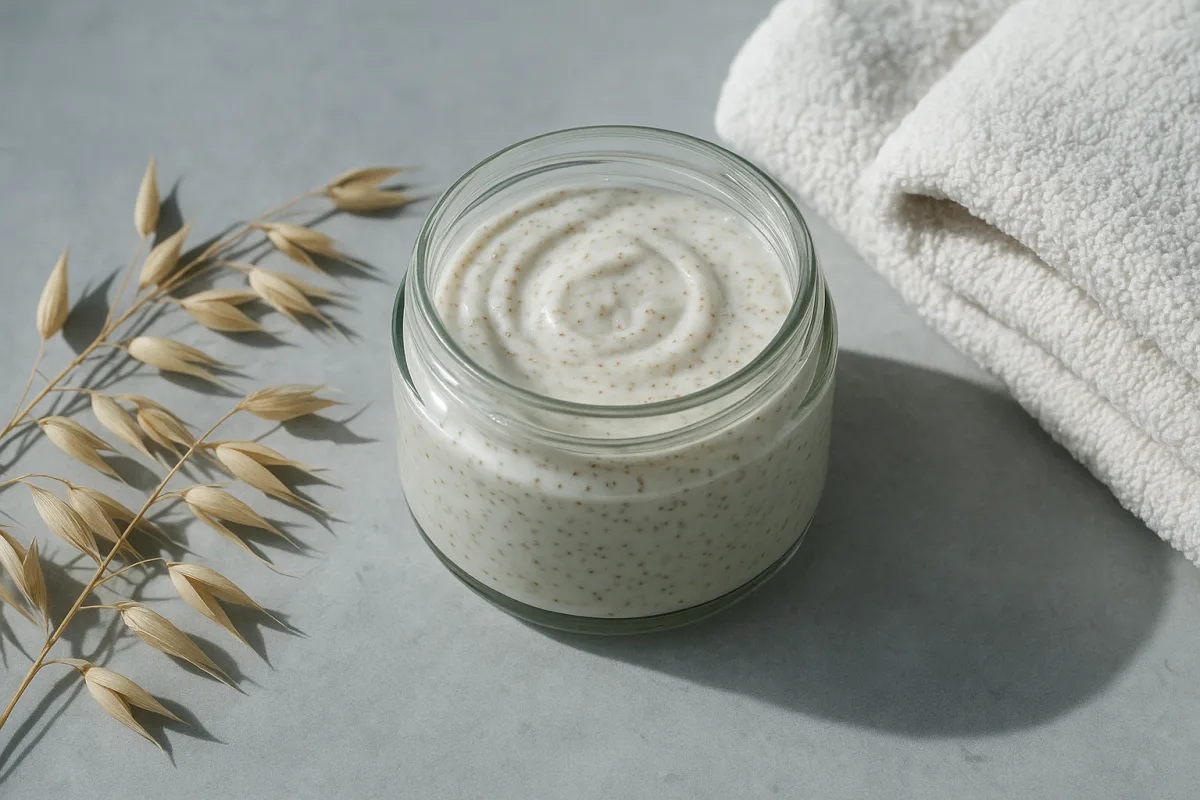
Choosing a Face Scrub for Sensitive Skin
Start by asking whether your skin can tolerate a scrub today
Sensitive skin is not a challenge to overcome with more exfoliation. It is a reason to be selective, because rubbing away at already irritated skin can worsen discomfort and interfere with the barrier that keeps water in and irritants out. [7][12]
Do not use a scrub on skin that feels raw, stings when water touches it, is visibly irritated, or has recently reacted to a product. The Estetica and DermatHub both list exfoliating irritated skin among common mistakes that increase irritation. [7][12]
That advice is deliberately unglamorous. A scrub is a cosmetic product meant to smooth the skin’s surface temporarily, not a treatment for persistent facial inflammation, rash-like changes, painful bumps or unexplained peeling.
If those symptoms are recurring, see a dermatologist rather than trying to identify the cause through ingredient experimentation. “Sensitive skin” can describe a feeling, but it is not enough information to self-diagnose a skin condition.
The first problem: most physical scrubs are too aggressive
The word “natural” tells you almost nothing about whether a scrub suits sensitive skin. Ground walnut shells, apricot pits and coarse salt may sound wholesome, but irregular, sharp particles can create excessive friction on facial skin. [2][7]
Skip scrubs made with walnut shell or apricot-pit powder. Marie Claire’s guide to lactic acid and DDG Beauty’s sensitive-skin guidance specifically flag harsh physical exfoliants and recommend gentler alternatives instead. [2][15]
Sugar deserves the same caution on the face. Healthline notes that sugar crystals can be abrasive, particularly as their uneven edges are rubbed across thinner facial skin, so a body sugar scrub is not automatically a face scrub. [14]
What you want instead is a rounded particle with minimal scratchiness. DermatHub identifies smooth jojoba beads, rice bran and colloidal oatmeal as gentler physical exfoliants than angular particles, which are more likely to cause micro-tears. [7]
Jojoba beads are a practical ingredient-list shorthand because they are typically smooth and spherical. Finely milled rice powder is another reasonable option, provided the formula does not pair it with aggressive rubbing instructions or a long list of irritating extras. [1][7]
There is a claimed particle-size target of 100 to 250 microns for gentle physical exfoliation. A source cited in the research brief says particles above 250 microns raise the risk of micro-tears, while those below 80 microns may clog follicles. [6]
Treat that size range as a useful formulation benchmark, not as a shopping filter you can reliably apply at home. Most skincare labels do not disclose particle measurements, and the available figure comes from an industry source rather than a controlled facial-skincare trial. [6]
The sensible workaround is to favor products that plainly identify rounded beads, finely milled powder or colloidal oatmeal, then use almost no pressure. A gentle ingredient can still become a harsh exfoliant if it is worked into the skin like sandpaper.
The second problem: “scrub” may also mean acids and enzymes
Some face scrubs combine physical particles with chemical exfoliants. That is not inherently wrong, but it means the formula can be doing more than the texture suggests, and sensitive skin usually benefits from keeping the overall exfoliating load low. [1][2]
Lactic acid is the mild alpha hydroxy acid, or AHA, most consistently identified in the supplied research as an option for sensitive skin. It exfoliates chemically rather than by relying only on friction, and Marie Claire describes it as a gentler, hydrating-leaning alternative within the AHA category. [15]
Gluconolactone is a polyhydroxy acid, or PHA, included among gentle exfoliating ingredients in the research brief. Papain, an enzyme derived from papaya, is another ingredient commonly used in gentler exfoliating formulas. [1][2]
The limitation is important: the available sources do not establish a universally safe concentration of lactic acid, gluconolactone or papain for every sensitive-skinned person. An ingredient’s presence does not tell you its percentage, pH, delivery system or combined irritation potential.
For glycolic acid, there is a clearer line in this brief. DDG Beauty advises avoiding high concentrations, defined here as 10 percent or more, when choosing exfoliation for sensitive skin. [2]
That does not mean every formula below 10 percent is automatically suitable, or that every lactic-acid product is gentle. It means high-strength glycolic acid is a poor starting point when your goal is conservative, low-friction exfoliation.
Avoid layering a scrub containing acids or enzymes with other exfoliating products in the same routine. The Estetica and DermatHub both identify stacking multiple actives as a common route to irritation and barrier damage. [7][12]
In practical terms, do not use an acid cleanser, an exfoliating scrub and a separate peel in one session. You do not get three times the cosmetic benefit, but you can get substantially more irritation.
The third problem: the rest of the formula can undo the gentle exfoliant
A scrub is not gentle simply because it contains rice powder or jojoba beads. Check the complete ingredient list, especially the cleanser base and fragrance components, before trusting the front-label claims.
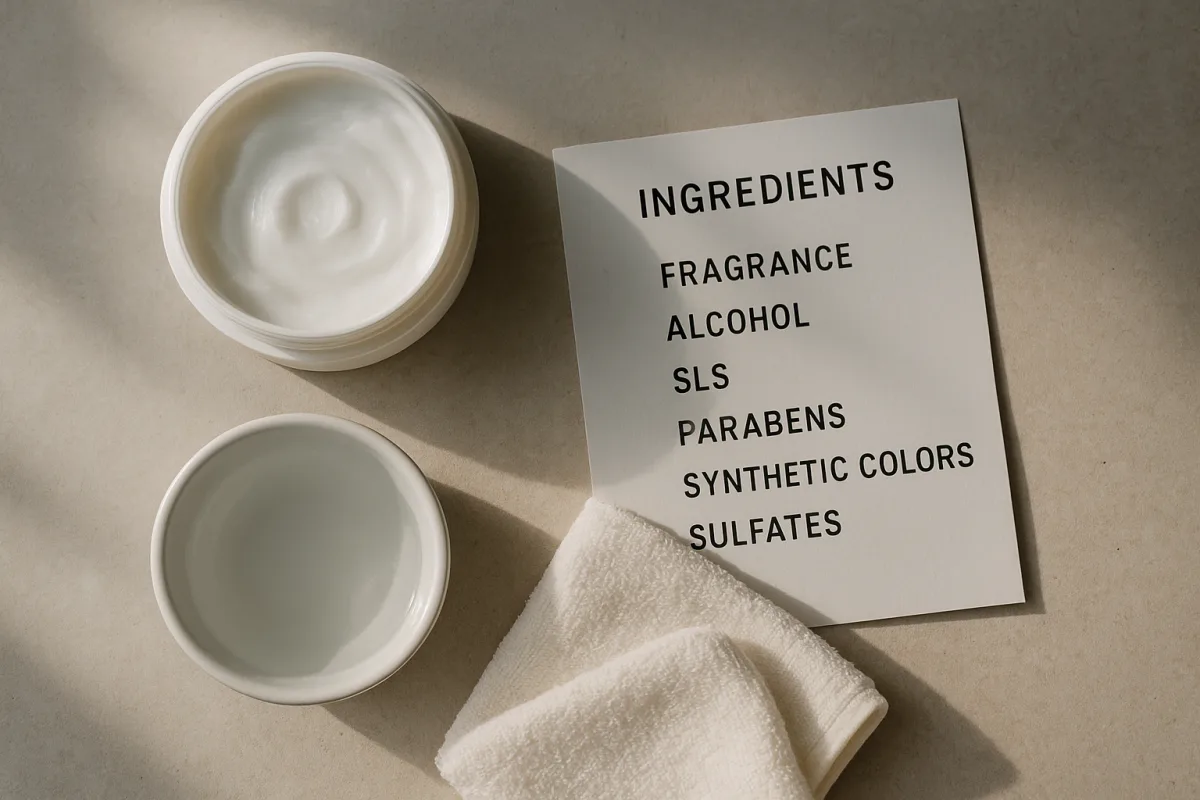
Easypara advises people with sensitive skin to avoid harsh foaming agents such as sodium lauryl sulfate, or SLS, and sodium laureth sulfate, or SLES. These surfactants can be irritating for some users, particularly in a product already designed to exfoliate. [3]
Fragrance is another unnecessary variable when the aim is low irritation. The Estetica and AHAVA guidance in the research brief both identify fragranced products as a common issue for sensitive skin routines. [12][13]
Also look for pH information if a brand provides it. The supplied guidance places a face-scrub pH of 4.5 to 5.5 near the skin’s normal acidic environment, while alkaline products around pH 9 to 11 may disrupt barrier function. [10][11]
Do not assume that “pH balanced” means a specific, verified number. If the brand does not disclose testing or a pH range, treat the phrase as marketing rather than evidence that the product falls within 4.5 to 5.5.
The fourth problem: using a suitable scrub too often
Even a well-chosen scrub can become the wrong product when it is used daily. DermatHub and Prevention recommend exfoliating once or twice a week to reduce the risk of over-exfoliation and barrier damage. [7][9]
Start at once weekly rather than twice weekly. That is not because once-weekly use guarantees tolerance, but because sensitive skin gives you less room to distinguish a useful cosmetic smoothing effect from accumulating irritation.
Use a small amount on wet skin and keep contact brief. Do not leave a rinse-off scrub sitting on the face as though it were a mask, since leaving exfoliating products on too long is another mistake linked with irritation. [12][13]
Use light fingertips, not a cleansing brush, washcloth or vigorous circular massage. The research points toward reducing physical trauma, and pressure is the part of a physical-exfoliation routine you can control regardless of the formula. [7]
Follow with a simple moisturizer you already know your skin tolerates. This guide cannot promise that a moisturizer will prevent a reaction, but avoiding additional exfoliating actives immediately afterward keeps the routine easier to interpret.
If a product causes persistent burning, increasing redness or a reaction that does not settle after rinsing, stop using it. Do not try to “push through” sensitivity or compensate with more scrubbing at the next use.
How to assess two example products without treating them as endorsements
Burt’s Bees Gentle Face Scrub for Sensitive Skin is listed by Kohl’s as dermatologist-tested and formulated with aloe vera. The retailer listing says it is free from parabens, phthalates, petrolatum and SLS, which may suit someone specifically avoiding SLS. [4]
The supplied research does not verify a current 2026 price or package size for Burt’s Bees Gentle Face Scrub for Sensitive Skin. It also does not provide its particle shape, particle size, pH or full active-exfoliant concentration, so those details still need checking on the package.
Cleure Exfoliating Scrub combines fine pumice with lactic acid and says it excludes nut and salt exfoliants. Its product information presents it as mild enough for daily use, but that claim should not override the more cautious once- or twice-weekly guidance for sensitive skin. [5][7][9]
The supplied research likewise provides no verified 2026 price or size for Cleure Exfoliating Scrub. It may suit a person looking for a scrub with lactic acid but without nut or salt particles, provided they introduce it conservatively rather than following a daily-use claim. [5]
Neither example should be treated as a medical solution, or as automatically safe because of “sensitive skin” language. Retailer and brand descriptions are useful for identifying exclusions and featured ingredients, but they are not substitutes for a full ingredient-list check.
A quick ingredient-list decision process
First, reject formulas with walnut shell, apricot pit, coarse salt or sugar high on the ingredient list. That is the fastest way to avoid the rough, angular physical exfoliants most at odds with sensitive-skin guidance. [2][7][14]
Second, favor a simple exfoliating system: rounded jojoba beads, finely milled rice powder, colloidal oatmeal, papain, lactic acid or gluconolactone. More exfoliating ingredients do not necessarily mean better results, especially when the skin is easily irritated. [1][2][7][15]
Third, look for avoidable irritants, including SLS, SLES and fragrance. Finally, check whether the brand gives a credible pH range, ideally 4.5 to 5.5, rather than relying on vague claims about gentleness. [3][10][11]
There is no supported seasonal rule in the available research saying sensitive skin needs a different scrub in summer, winter or a particular climate. Choose based on your current tolerance, ingredient list and frequency, not an unsupported calendar-based schedule.
Frequently Asked Questions
How do I choose a face scrub for sensitive skin?
Choose a face scrub with gentle, rounded exfoliating particles like jojoba beads, finely milled rice powder, or colloidal oatmeal. Avoid scrubs with coarse, jagged particles such as walnut shells, apricot pits, or sugar crystals, which can be too abrasive. Also, look for products with a pH between 4.5 and 5.5 and avoid added fragrance and harsh foaming agents like SLS or SLES to reduce irritation risk.
What ingredients should I avoid in a face scrub if I have sensitive skin?
Avoid scrubs containing rough physical exfoliants like ground walnut shells, apricot pits, coarse salt, and sugar crystals, as these can cause micro-tears and irritation. Also, steer clear of high concentrations of glycolic acid (10% or higher), strong foaming agents such as sodium lauryl sulfate (SLS) and sodium laureth sulfate (SLES), and added fragrances, which may increase sensitivity.
Can I use a face scrub with acids on sensitive skin?
Yes, but only mild chemical exfoliants such as lactic acid, papain (papaya enzyme), or gluconolactone are recommended. Avoid scrubs built around high concentrations of glycolic acid (10% or more), as they can be too harsh for sensitive skin.
How often should I exfoliate sensitive skin with a scrub?
Exfoliate sensitive skin once or twice weekly at most. Avoid using a scrub if your skin is currently irritated, stinging, visibly inflamed, or has recently reacted to a product, as exfoliating under these conditions can worsen irritation.
What types of exfoliating particles are safe for sensitive skin?
Safe exfoliating particles for sensitive skin are smooth and rounded, such as jojoba beads, finely milled rice powder, and colloidal oatmeal. These particles minimize friction and reduce the risk of micro-tears compared to angular or coarse particles like walnut shells or apricot pits.
How we researched this
This article was assembled from 15 cited references.
Nothing here is based on hands-on testing. Where a figure or finding appears, it belongs to the source cited beside it, and the writing says so rather than implying otherwise. Every source is listed below so you can check it.
Sources
- Ultimate List of Best Face Scrub Ingredients for Sensitive Skin
- How to Exfoliate Sensitive Skin Safely: A Complete Guide
- How to choose the right face scrub for your skin type - Easypara
- Burt's Bees Gentle Face Scrub for Sensitive Skin
- Gentle Exfoliating Face Scrub for Sensitive Skin | Cleure
- Why Does My Scalp Scrub Make My Roots Itch More—and What Physical Exfoliants Are Truly Gentle
- Physical Exfoliants for Sensitive Skin | Dermatology
- Best Physical Exfoliants for Sensitive Skin | Glow Vetted
- How Often Should You Exfoliate Your Face? Dermatologists Explain
- Understanding Ph Levels in Skincare Products - SkinRoutineFoundry
- Skincare pH Guide: Why pH Matters and How It Affects Your Skin | NicerSkin
- Common Mistakes With Skincare for Sensitive Skin (and How to Fix Them) - The Estetica
- Avoid Irritation From Dead Sea Masks on Sensitive Skin – AHAVA USA
- Sugar Scrub for Face: Side Effects and Why You Should Avoid It
- Lactic Acid: The Gentle, Hydrating Exfoliator Adored By Experts And Sensitive Skin-Sufferers Alike
Related Articles
How to Choose Face Wash for Combination Skin: Key Tips
Learn how to choose a face wash for combination skin with tips on ingredients, pH, and routines to balance oily and dry areas effectively.
How to Choose a Lip Scrub: Ingredients and Usage Tips
Learn how to choose a lip scrub with the right ingredients and usage tips for smooth, soft lips without irritation or damage.
How to Choose a Face Mask for Oily Skin
Learn how to choose a face mask for oily skin with tips on ingredients, usage, and avoiding irritation for a balanced, shine-free complexion.
How to Choose a Gentle Cleanser for Sensitive Skin
Learn how to choose a gentle cleanser with skin-friendly pH and safe ingredients to avoid irritation and support sensitive skin health.