
How to Choose Face Wash for Combination Skin: Key Tips
Learn how to choose a face wash for combination skin with tips on ingredients, pH, and routines to balance oily and dry areas effectively.
Start with the problem, not the label
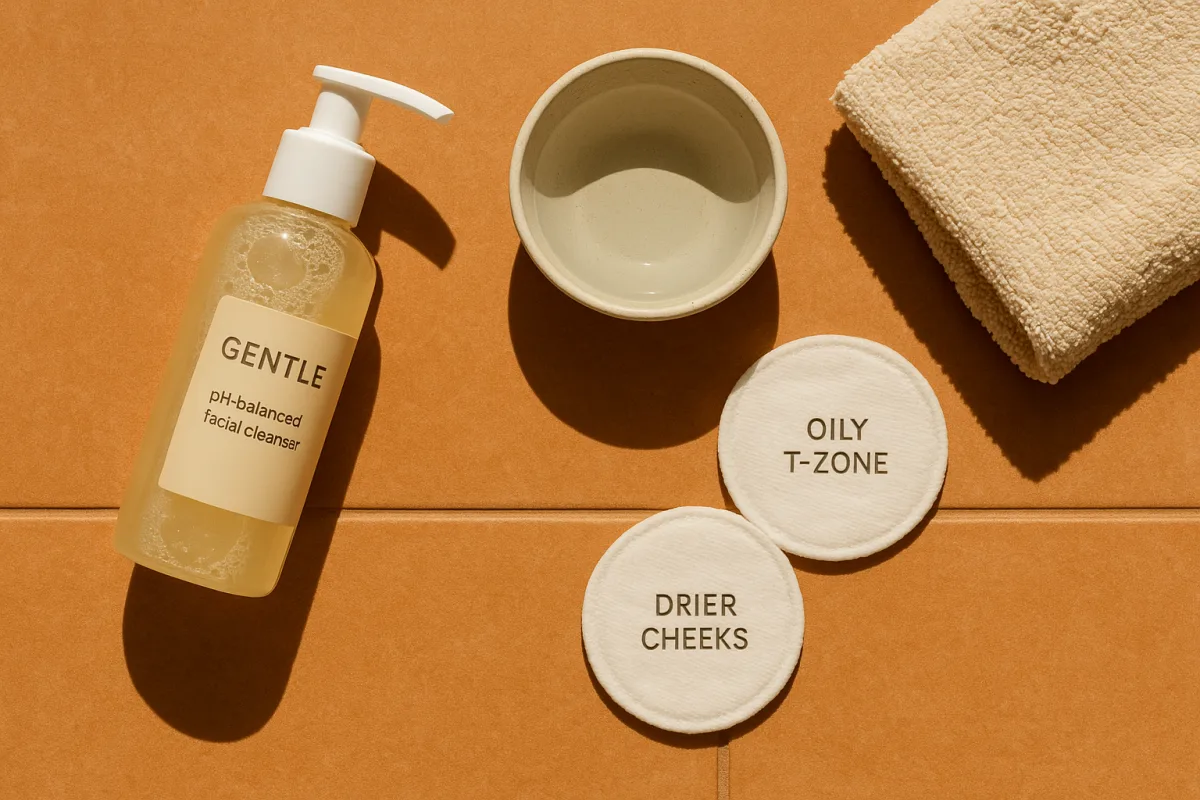
Combination skin is not a mysterious third category between dry and oily. It generally describes an oilier T-zone, meaning the forehead, nose and chin, with cheeks that are normal, less oily or dry. [1]
That mismatch is why a face wash marketed simply for “oil control” can leave part of your face uncomfortable. Conversely, a rich cleansing formula that feels fine on dry cheeks may leave the central face feeling greasy or inadequately cleansed.
The practical goal is modest: remove sunscreen, makeup and daily oil without making the drier areas feel stripped. A cleanser cannot permanently rebalance skin type, shrink pores or solve every difference between facial zones.
If you have persistent redness, scaling, painful lesions, sudden changes in oiliness, or a rash that stings with ordinary products, that is not a face-wash-selection puzzle. See a dermatologist rather than escalating cleansers or assuming combination skin is the answer.
First hurdle: finding a cleanser that does not leave cheeks tight
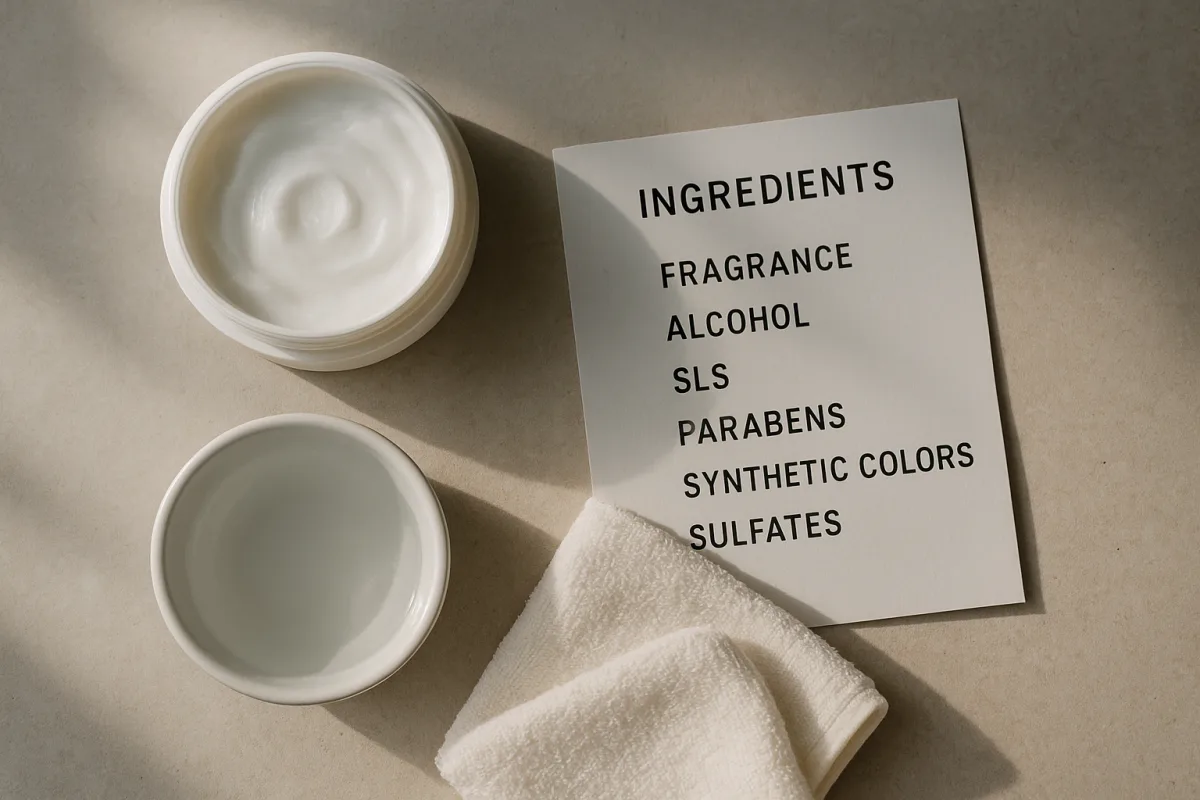
The ingredient list matters more than “combination skin” on the front label. The brief consistently flags harsh surfactants such as sodium lauryl sulfate, high levels of alcohol and heavy fragrance as common sources of unnecessary stripping or irritation. [7][20]
A better starting point is a wash built around gentler surfactants, including sodium cocoyl isethionate or cocamidopropyl betaine. These are cleansing agents, not headline actives, but they matter because the surfactant system determines much of how a wash feels after rinsing. [5][8]
Avoid treating every unfamiliar ingredient as a problem. “Alcohol” is not a useful verdict without context, and the available sources do not establish a concentration threshold at which fragrance or essential oils reliably irritate combination skin.
That means there is no evidence-based rule such as “avoid fragrance after the fifth ingredient.” If fragranced products repeatedly sting or leave you itchy, choose a fragrance-free alternative. If they do not, the label alone cannot diagnose sensitivity.
Check pH, but do not turn it into a purity test
A pH-balanced cleanser is worth seeking out, especially if your skin often feels squeaky after washing. Cleveland Clinic and The STEM Professor place skin-friendly cleanser pH in the approximate 4.5 to 5.5 range, close to skin’s naturally acidic surface. [9][23]
That acidic surface is often called the acid mantle. In cosmetic terms, choosing a cleanser in this range is a barrier-supportive precaution, not a guarantee that it will eliminate dryness, oiliness or irritation.
Look for a stated pH on the brand page or packaging if it is available. Do not assume that “gentle,” “clean,” “barrier care” or “dermatologist tested” confirms the number, because those phrases do not disclose formula pH.
The evidence also has a limit worth stating plainly. The research brief found no trials showing that pH-balanced cleansers work differently for combination skin specifically than for other skin types. It is a sensible selection criterion, not a personalized treatment.
Next hurdle: deciding whether you need salicylic acid
If your T-zone tends to feel congested or noticeably oily, a cleanser containing salicylic acid at 0.5% to 2% is one option identified in the brief. [5][8] That is the useful label range to look for.
Salicylic acid is an exfoliating ingredient. In a cleanser, it is generally used to help with the surface buildup and oil that can make the central face look or feel congested, but a wash-off product is not a quick fix.
The brief does not provide clinical evidence establishing the best salicylic-acid percentage for combination skin, nor does it provide a reliable timetable for visible results. More is not automatically better, particularly when cheeks already feel dry.
Do not stack an exfoliating cleanser with multiple leave-on exfoliants just because the nose is oily. Source Vitál specifically identifies overuse of exfoliating and acne-focused cleansers as a common mistake for combination skin. [22]
A more restrained approach is to choose a gentle daily wash first. If you add a salicylic-acid cleanser, watch what happens to the cheeks, corners of the nose and skin around the mouth over several weeks rather than judging it after two washes.
Hydration ingredients belong in the conversation too
Combination skin does not need to earn hydration by becoming flaky. Hyaluronic acid, ceramides and panthenol are among the ingredients the brief identifies as useful in formulas for combination skin. [5][8]
Hyaluronic acid is a humectant, meaning it helps bind water in a cosmetic formula. Ceramides are skin-identical lipid components often included in barrier-focused products, while panthenol is commonly used for its humectant and soothing cosmetic properties.
In a rinse-off cleanser, these ingredients can make a formula more accommodating, but do not expect them to perform like a leave-on serum or moisturizer. Contact time is short, and the brief provides no trials showing a particular cleanser concentration changes dry cheeks.
Niacinamide is another ingredient listed as relevant at 2% to 5%. [5] That range is more useful than vague claims about a “niacinamide complex,” but a cleanser label does not always disclose its percentage.
If a brand will not state concentration, do not guess from ingredient order. Ingredient lists are not a reliable calculator for the percentage of every component, especially once ingredients appear below the one-percent line.
The washing step where combination skin often goes wrong
Twice-daily cleansing, morning and night, is the standard starting recommendation in the brief. [10] It gives you a consistent way to remove overnight oil in the morning and sunscreen, makeup and daily grime at night.
But twice daily is not a command to scrub harder or cleanse repeatedly after every hint of shine. Payot’s guidance specifically cautions that over-cleansing can compromise comfort and encourage the stripped, tight feeling many people mistake for “deep clean.” [21]
Use lukewarm water, massage briefly with fingertips, and rinse thoroughly. Aggressive rubbing, cleansing brushes and repeated passes through the same dry cheek area add friction without evidence that they improve the particular needs of combination skin.
After cleansing, apply moisturizer to the whole face. Skipping moisturizer is listed as a common combination-skin mistake, likely because people focus on the oily T-zone and then leave the drier parts unsupported. [22]
If your cheeks tighten after a twice-daily routine, the first change is usually not a harsher “balancing” wash. Consider a milder cleanser, a less frequent morning cleanse, or a more supportive moisturizer, then reassess gradually.
Should you use two cleansers on different zones?
The idea is understandable: an oil-control wash on the nose and a creamy wash on the cheeks sounds precise. Some consumer guidance recommends differentiating care by facial zone, and Source Vitál flags using one approach for the entire face as a frequent mistake. [22]
Still, this is where the evidence gets thinner. The research brief found no clinical trials showing that two cleansers, simultaneous cleansing or multi-cleansing by zone is more effective or safer for combination skin.
There is nothing inherently wrong with carefully rinsing a salicylic-acid cleanser from the T-zone while using a gentler formula elsewhere, provided your skin tolerates it. Just treat this as an anecdotal adjustment, not a proven upgrade.
Start simpler. Use one mild, pH-appropriate cleanser across the face, moisturize afterward, and change only one variable at a time. That makes it easier to tell whether the issue is the cleanser, frequency or another product.
Make the formula fit the weather you actually live in
A cleanser that works in July may feel wrong in January. Guidance from HOIA Home Spa notes that winter commonly brings drier skin and calls for gentler, more hydrating cleansing. [17]
DermatHub similarly notes that summer and high humidity can increase apparent T-zone oiliness, while arid conditions can increase the need for hydration. [18] This is useful because “combination” is not necessarily fixed in intensity across the year.
In cold or dry conditions, prioritize mild surfactants and hydrating support such as ceramides, panthenol or hyaluronic acid. Skip the urge to use an acid cleanser every day solely because it worked during a more humid period. [5][17]
In warm, humid weather, an oilier T-zone may make a 0.5% to 2% salicylic-acid cleanser worth considering if your skin tolerates it. [5][8] Keep the rest of the routine gentle so oil control does not become whole-face dehydration.
Make transitions gradually. The sources support seasonal adaptation, but not abrupt routine overhauls. Introduce one new cleanser or frequency change at a time, especially when you already use leave-on acids, retinoids or fragranced products.
What the current price range actually buys
The 2026 retail examples in the brief run from Sebamed’s pH 5.5 Gentle Facial Cleanser, sold in a 150 ml size for about $6.50, to La Roche-Posay’s 400 ml cleanser at about $22. [12][16]
Sebamed’s named formula is positioned for oily and combination skin and explicitly emphasizes pH 5.5. [11][12] It suits the shopper whose priority is a straightforward pH-focused cleanser rather than a strong exfoliating or heavily fragranced formula.
La Roche-Posay’s 400 ml option is the higher-priced size reference in the brief, at approximately $22. [16] The research provided does not establish its exact active concentrations, pH or suitability beyond the combination-skin face-wash category, so do not fill in those blanks from branding.
Bioré’s Balancing Face Wash, also sold as the Blue Agave Balancing Pore Cleanser in a 6.77 oz format, is another named combination-skin product in the source set. [13][14] The brief does not provide a current price or full ingredient analysis, so it cannot be ranked responsibly against the others.
Price alone does not identify the best choice. Compare cost per volume only after checking the surfactants, pH claim, fragrance, acid content and whether the product leaves your cheeks comfortable after a week or two of ordinary use.
Read past the claims on the front
“Balancing” has no standardized promise. Use the back label to answer a more concrete set of questions: Is the cleanser pH 4.5 to 5.5? Does it use mild surfactants? Is salicylic acid disclosed at 0.5% to 2% if that is what you want? [5][8][9]
Also check for the things your skin has already disliked. If a cleanser containing heavy fragrance, sodium lauryl sulfate or substantial drying alcohol has repeatedly left you tight or stingy, there is little reason to keep trying versions of the same format. [7][20]
Finally, be realistic about timing. The supplied research identifies ingredients and sensible routine choices, but it does not name controlled clinical studies demonstrating a predictable number of days to “balance” combination skin with a face wash.
Cosmetic improvement, when it happens, is usually gradual and limited: less post-cleanse tightness, a more comfortable T-zone or fewer occasions when you feel compelled to wash again. Anything beyond that deserves skepticism, not a bigger cleanser budget.
Frequently Asked Questions
How do I choose a face wash for combination skin?
Choose a low-stripping cleanser that balances removing oil and impurities from the T-zone without drying out the less oily or dry cheeks. Focus on ingredient lists rather than marketing labels, avoiding harsh surfactants like sodium lauryl sulfate, high alcohol, and heavy fragrances. Seasonal adjustments to your cleanser may also help, using lighter formulas in summer and more hydrating ones in winter.
What ingredients should I look for in a face wash for combination skin?
Look for gentle surfactants such as sodium cocoyl isethionate or cocamidopropyl betaine, which cleanse without excessive stripping. Ingredients like niacinamide (2–5%), hyaluronic acid, ceramides, panthenol, and salicylic acid (0.5–2%) can support balanced skin. Avoid harsh surfactants, high alcohol content, and heavy fragrances that may irritate or dry out the skin.
Is pH important when selecting a face wash for combination skin?
Yes, choosing a face wash with a pH around 4.5 to 5.5 is beneficial because it supports the skin’s natural acid mantle and barrier function. However, pH alone does not guarantee improved dryness or oiliness, and terms like “gentle” or “dermatologist tested” do not confirm pH levels. Look for the stated pH on packaging or brand information when available.
Should I use salicylic acid in a face wash for combination skin?
If your T-zone feels congested or oily, a cleanser containing salicylic acid in the range of 0.5% to 2% can be helpful. Salicylic acid is identified as a useful ingredient for managing oiliness and congestion in combination skin, but it is not necessary for everyone.
How often should I wash combination skin with a face wash?
A good starting point is cleansing twice daily, morning and night, to remove sunscreen, makeup, and excess oil. If your cheeks feel tight, sting, or become flaky, consider reducing the frequency or using a gentler formula. Avoid over-cleansing to maintain the skin barrier.
How we researched this
This article was assembled from 23 cited references.
Nothing here is based on hands-on testing. Where a figure or finding appears, it belongs to the source cited beside it, and the writing says so rather than implying otherwise. Every source is listed below so you can check it.
Sources
- The Best Kiehl’s Cleansers For Combination Skin - Kiehl's
- Best Face Washes for Combination Skin: Top Picks
- Best Cleansers for Combination Skin: Balanced Picks — NeedSkincare
- K-Beauty Experts Agree-This Is the Most Important Step In a Glow-Boosting Skincare Routine
- Combination Skin — Best Ingredients & Routine | Skincare Database
- Combination Skin Guide: Routine & Ingredients
- Best Face Wash for Combination Skin: Tested and Reviewed
- Best Face Wash for Combination Skin | Balanced Cleansers
- How Ph Balance Affects Skin Health and Skincare Products | The STEM Professor
- How Often Should You Wash Your Face? 12 Qs About Skin Type, More
- Nettoyant visage doux Sebamed – the health boutique
- Buy Sebamed PH 5.5 Gentle Facial Cleanser For Oily & Combination Skin 150 Ml - Face Wash And Cleanser for Unisex 33794099 | Myntra
- Biore Blue Agave Balancing Pore Cleanser 6.77oz – Locatel Health & Wellness Online Store
- Bioré Balancing Face Wash, PH Balanced Face Cleanser, Combination Skin Care, 6.77 oz - Walmart.com
- How to Wash Your Face Properly, According to Experts | Who What Wear
- Tested: The Best Gentle Face Wash for Combination Skin (2026)
- How to Transition Your Skincare Routine Between Seasons - HOIA homespa
- Seasonal Care for Combination Skin | Dermatology
- Best Face Wash for Combination Skin: How to Pick One and How to Use It
- Master the Art of Balancing: Best Face Washes for Combination Skin – Balance Skin Science
- Cleansing Without Stripping: The Common Mistake of Combination Skin – Payot
- Common Mistakes to Avoid When Caring for Combination Skin – Source Vitál Apothecary
- What Is Your Skin’s pH and Why Does It Matter?
Related Articles
How to Choose a Face Scrub for Sensitive Skin Safely
Learn how to choose a face scrub for sensitive skin with gentle ingredients, proper exfoliation frequency, and what to avoid to prevent irritation.
How to Choose a Face Mask for Oily Skin
Learn how to choose a face mask for oily skin with tips on ingredients, usage, and avoiding irritation for a balanced, shine-free complexion.
How to Choose a Face Serum for Your Skin Type and Needs
Learn how to choose a face serum based on your skin type, key ingredients, and usage tips for effective skincare results.
How to Choose a Gentle Cleanser for Sensitive Skin
Learn how to choose a gentle cleanser with skin-friendly pH and safe ingredients to avoid irritation and support sensitive skin health.