
How to Apply Eye Cream: Best Practices and Tips
Learn how to apply eye cream properly, including amount, placement, and technique for best results and to avoid irritation.
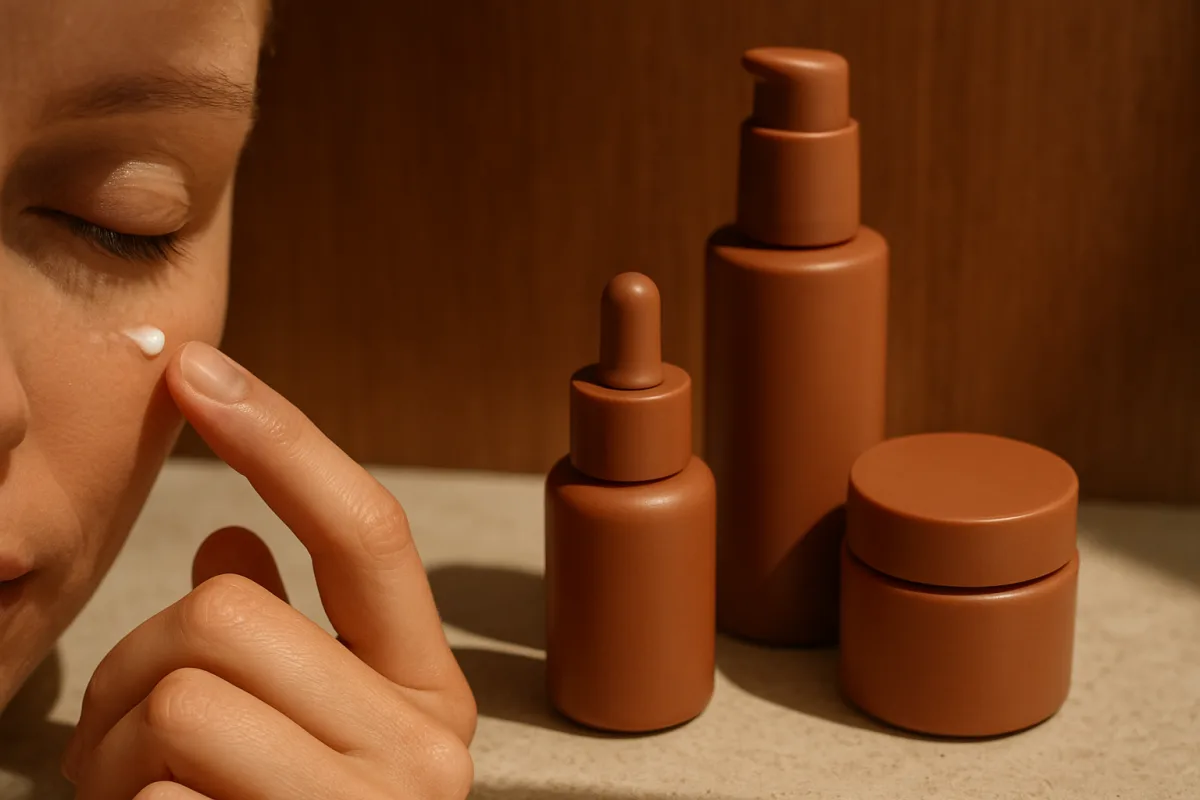
First problem: deciding how much to use
Eye cream is easy to overapply because the packaging makes a small amount look inadequate. It is not. The skin around both eyes needs a thin, even film, not a visible layer that remains wet or slippery.
Popular application advice often says a pea-sized amount, approximately 0.25 ml, for both eyes. But other guidance recommends closer to a rice grain, about 0.1 ml total, particularly when using a concentrated formula. [1][3][12]
Start at the lower end: one rice-grain-sized amount shared between both eyes. Put it on the back of a clean hand, divide it between two ring fingers, then place tiny dots rather than depositing one blob beside each eye. [1][3]
If the area still feels tight after the product settles, use marginally more next time. Do not jump immediately to several dots per eye. HealthOnWorld lists too much product among the common application errors linked with irritation and puffiness. [12]
This matters more with richer creams and active formulas. An overloaded layer can migrate with warmth and blinking, reach the lash line, interfere with makeup, or leave the eye contour looking temporarily swollen. That is a cosmetic application problem, not proof that the product is “working.”
Next problem: knowing where eye cream actually belongs
The target is the orbital bone, the firm rim surrounding the eye socket. It is not the waterline, eyelid margin or the space directly beneath your lower lashes, unless a product specifically says it is suitable there. [2][6]
Begin near the inner under-eye area, but keep product outside the immediate lash line. Then place small dots along the bone beneath the eye and around the outer corner, working outward toward the temple. [2][6]
Dermathub and NicerSkin advise maintaining roughly 5 mm of space from the lash line. That gap is practical: products can travel as they warm on skin, and cream that migrates into the eye can sting or make eyes water. [6][15]
For the upper eye area, stay on the brow bone rather than spreading cream across the movable lid. If a product’s own directions explicitly permit eyelid use, follow them. Otherwise, do not assume that “for eyes” means safe for every part of the eye contour. [6][15]
If cream repeatedly gets into your eyes despite careful placement, use less and move the dots farther down the orbital bone. Persistent burning, redness, scaling or swelling is a reason to stop that product and speak to a dermatologist or eye-care professional.
Then comes the part most people overdo: spreading it
Use the ring finger. Healthline’s dermatologist-guided advice recommends it because this finger tends to apply less force than the index finger, which makes it a sensible default for thin, easily irritated eye-area skin. [4]
Tap the dots gently into place. Think contact rather than massage: press, lift, move a few millimetres, repeat. Yes Skin specifically advises against rubbing or pulling, which can irritate the area and leaves you applying more force than necessary. [13]
The research brief flags an often-missed caution around pressure. HealthOnWorld reports concerns about pressure above 20 grams, but this is not a measurement anyone can realistically perform at a bathroom mirror. [12]
The usable instruction is simpler: if your skin visibly shifts, wrinkles under your finger or turns pink from application, the touch is too firm. Let the product do the spreading. Your finger does not need to “work it in.”
Do not use a vigorous circular massage to chase puffiness or dark circles. The supplied sources support gentle tapping, not a defined massage technique, and they do not establish that prolonged manipulation improves the results of an eye cream. [2][4][10]
There is also no research-backed number of seconds for tapping. Stop once the product is evenly distributed and mostly absorbed. Claims that you need exactly 30 seconds, one minute or a particular number of pats are more ritual than evidence. [4][10]
Where eye cream fits in a morning routine
Apply it on clean skin. The sequence supported by Men’s Health and Good Housekeeping is cleanser, serum, eye cream, moisturizer, then sunscreen in the morning. [7][8]
After cleansing, apply any face serum first and give it a brief moment to settle. Eye cream goes next, before moisturizer, so you can place it precisely rather than trying to apply it over a richer, more slippery layer. [7][8]
Follow with moisturizer across the face, taking care not to drag it through the eye cream you have just applied. Then use sunscreen as the final morning skincare step, including the eye contour only if the sunscreen is suitable for that area. [8]
The purpose of this order is mostly practical, not magic. It helps lighter formulas go on before heavier ones, while sunscreen remains the final protective film. The sources do not provide direct comparative trials proving this order produces better eye-cream results. [8]
Allow each layer to stop feeling wet before applying the next, especially if concealer is coming afterward. That may reduce pilling, but the supplied research does not specify an exact waiting period, so do not treat a countdown timer as necessary.
At night, check what else you are applying
At night, cleanse first, then apply any designated treatment such as retinol before eye cream, according to the routine order cited by Men’s Health and Good Housekeeping. [7][8]
Retinol eye products deserve particular restraint. Marie Claire’s dermatologist-informed guide describes retinol eye creams as evening products, and the broader guidance consistently treats retinol as an active requiring cautious use rather than something to apply generously. [17]
Use the same small amount and orbital-bone placement with a retinol eye product. More product does not mean more line-smoothing potential, but it can mean more irritation, especially when the formula is placed too near lashes or layered heavily. [12][17]
Do not add a separate retinol eye cream on top of a strong retinoid face treatment without checking both labels and considering your tolerance. The brief does not provide a comparative study establishing the best layering arrangement for every retinoid combination.
If stinging, persistent dryness or visible irritation develops, pause the product rather than trying to push through. A dermatologist can advise on an appropriate routine if you have ongoing eyelid irritation, eczema-like symptoms, marked swelling or another possible medical issue.
Match the technique to the formula, not the marketing
A lightweight eye serum and a dense eye cream use the same placement and gentle tapping method, but their texture changes how much you need. Serums generally spread and absorb faster, so an especially small amount is usually enough. [6][16]
A gel formula marketed with caffeine is often chosen by people concerned about the look of morning puffiness. Apply it in the same sparse dots, not as a thick cooling mask, and judge the cosmetic effect realistically rather than expecting a lasting structural change. [15]
A richer cream may suit an eye area that feels dry, but it is also more likely to pill beneath makeup if overapplied. Use less than you think, press it in gently, and let it settle before concealer. [1][12]
No source in this brief identifies a named peer-reviewed clinical study showing that a particular tapping pattern changes eye-cream efficacy. Most of the available evidence here is dermatologist guidance and practical skincare advice, not strong comparative clinical research.
That limitation matters because eye creams are cosmetics. Hydration can temporarily make fine lines look softer and a gel may make the area feel refreshed, but visible changes are generally modest and gradual, not equivalent to a medical treatment.
If your eye cream pills, stings or seems to do nothing
Pilling usually starts with too much product or too many layers applied before the previous one has settled. Cut the eye-cream amount back to a rice grain for both eyes, tap rather than rub, and simplify the layers around it. [3][12][13]
If your eyes water or sting, first check placement. Product too close to the lashes is a common mistake, and the 5 mm buffer recommended by Dermathub and NicerSkin is a sensible correction. [6][15]
If the skin feels dry despite cream, more product is not automatically the answer. Consider whether the formula is too light for your comfort, whether another active is irritating the area, or whether weather has changed your overall barrier needs. [11][12]
Season and environment can affect skin moisture and barrier function, according to PDRN Care. But there are no precise evidence-based rules for changing eye-cream frequency or dose by season, so adjust gradually based on how your skin behaves. [11]
Finally, do not interpret dark circles, pronounced puffiness, one-sided swelling, pain, or sudden changes around the eyes as a skincare-shopping problem. Those can have causes an eye cream cannot assess. A dermatologist or appropriate clinician is the right next step.
Frequently Asked Questions
How much eye cream should I use?
Start with about a rice grain-sized amount total for both eyes, roughly 0.1 ml. If the skin still feels dry after absorption, you can increase slightly, but avoid using a pea-sized amount or more initially as excess product can cause irritation, pilling, or puffiness.
Where exactly should I apply eye cream?
Apply eye cream on the orbital bone, which is the firm rim around the eye socket, keeping at least 5 mm below the lash line. Begin near the inner under-eye area and place small dots along the bone toward the outer corner and temple, avoiding the lash line and eyelid unless the product specifically states it is safe there.
What finger is best for applying eye cream?
The ring finger is recommended for applying eye cream because it naturally applies the gentlest pressure, reducing the risk of damaging the delicate skin around the eyes.
Should I massage or tap eye cream into skin?
Use gentle tapping motions with the ring finger to spread the product evenly until it is absorbed. Avoid rubbing, dragging, or massaging the skin, and do not spend extended time applying; light pats until the cream is no longer visibly sitting on the skin are sufficient.
When in my skincare routine should I apply eye cream?
In the morning, apply eye cream after serum and before moisturizer, finishing with sunscreen. At night, apply retinol or other treatments before the eye cream unless the product instructions advise otherwise.
How we researched this
This article was assembled from 17 cited references.
Nothing here is based on hands-on testing. Where a figure or finding appears, it belongs to the source cited beside it, and the writing says so rather than implying otherwise. Every source is listed below so you can check it.
Sources
- How to Apply Eye Cream: A Complete Guide – Botā
- Exactly How to Apply Eye Cream, According to Dermatologists
- How Much Eye Cream Should You Use? – Elyse Skin
- How to Apply Eye Cream and Ingredients to Look For
- How to Apply an Eye Cream The Right Way | Dermacare
- How to Apply Eye Serum | Dermatology
- How to Apply Eye Cream in 3 Steps, According to Dermatologists
- This Is the Order You Should Apply Your Skincare, According to Dermatologists
- What Does Eye Cream Do? Learn 6 Eye Cream Benefits | CeraVe
- How to Apply Eye Cream: A Step-by-Step Guide | Dermstore
- PDRN Seasonal Skincare Guide — Adapt Your Routine for Every Season | PDRN Care
- Eye Area Care: Common Mistakes Everyone Makes - HealthOnWorld.com
- Eye Cream Application Mistakes | Yes Skin
- 6 Kesalahan yang Sering Dilakukan Saat Pakai Eye Cream - KlikDokter
- Eye Cream Guide: Do You Really Need One? | NicerSkin
- I Always Thought Eye Cream Was Unnecessary Until I Tried These Lighter, Fast-Absorbing Alternatives
- The 12 Best Retinol Eye Creams to Target Fine Lines, According to Dermatologists
Related Articles
Best Time to Apply Moisturizer: When and How to Do It Right
Learn the best time to apply moisturizer for optimal hydration and how to layer it properly in your skincare routine.

How to Apply Face Oil: Best Practices and Tips
Learn how to apply face oil correctly, including layering order, amount, and timing for glowing, hydrated skin in your skincare routine.
How to Layer Serums: Correct Order and Application Tips
Learn how to layer serums properly with tips on order, wait times, and amounts for effective skincare routines.