
Best Time to Apply Moisturizer: When and How to Do It Right
Learn the best time to apply moisturizer for optimal hydration and how to layer it properly in your skincare routine.
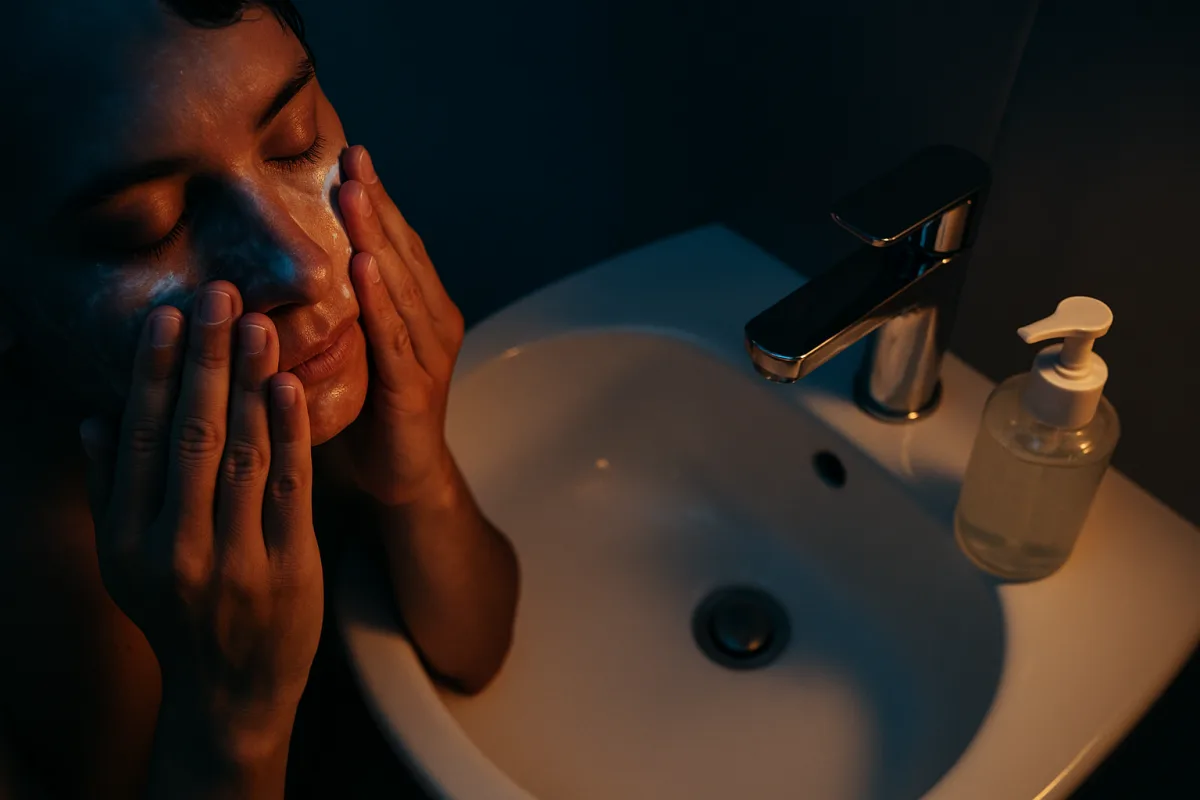
The best time is immediately after washing
The useful answer is short: moisturize right after cleansing, while skin still feels lightly damp. “Immediately” does not mean racing against a stopwatch with a towel in one hand. It means making moisturizer the next meaningful step in your routine.
A practical window is about three to five minutes after washing, showering, or rinsing your face. After that, the water sitting in the outermost skin layer begins to evaporate, and the very dryness you were trying to avoid becomes more likely. [4]
This advice gets flattened into “apply products on wet skin,” which is not quite right. Your face should be damp, not beaded with water. If it is dripping, pat gently with a towel or hands until it no longer runs.
That distinction matters because moisturizer is not simply a delivery vehicle that needs a wet face to “sink in.” It is a formula designed to alter what happens to water in the stratum corneum, the thin, outer layer of skin. [3]
The system: water in, water out, water held
Cleansing adds water to the skin surface, but it can also remove some oil, makeup, sunscreen, sweat, and residue. Depending on the cleanser and how long you wash, it may also leave the surface feeling less comfortable afterward.
Once you stop rinsing, surface water starts leaving the skin and air-drying takes over. Dermatology calls this transepidermal water loss, or TEWL: the gradual movement and evaporation of water from the skin into the surrounding environment. [4]
Moisturizer is most useful in this narrow interval because it works with the water that is already there. It does not create water inside skin, and it cannot make skin permanently more hydrated after one application.
Most moisturizers combine three functional categories of ingredients, even if the label is busy talking about glow, bounce, or a patented complex. The important categories are humectants, emollients, and occlusives.
Humectants, including glycerin and hyaluronic acid, bind water in the outer skin layer. When they are applied to damp skin, there is more immediate water available at the surface for that formula to work with. [3]
Emollients are ingredients that help make rough-feeling skin feel smoother and more flexible. They fill some of the microscopic gaps between shedding skin cells, which is a cosmetic comfort and texture effect, not a cure for an underlying skin problem.
Occlusives form a more water-resistant film at the surface. Petrolatum is the classic example, but richer creams may use various waxes, silicones, oils, or butters to create a similar, usually lighter, sealing effect.
So the logic is straightforward. Cleansing leaves water behind, humectants help retain some of it in the outer layer, and occlusive ingredients slow its escape. Applying moisturizer on fully dry skin skips the moment when that surface water is most available. [3][4]
Why the clock matters more than morning versus night
The three-to-five-minute figure is a practical guideline, not a biologically precise deadline. The research brief found no evidence for one exact, universally optimal minute, and sources differ slightly between three and five minutes. [4]
What they agree on is the sequence: cleanse, leave skin damp, moisturize. That is more defensible than treating 4:30 minutes as meaningfully different from five minutes, or assuming a moisturizer becomes useless after the window closes.
If you get distracted and your skin dries completely, apply the moisturizer anyway. Better still, lightly dampen your hands or face with water first, then apply it. The aim is sufficient comfortable coverage, not a punishingly exact ritual.
One clinical paper, “Optimal application method of a moisturizer on the basis of skin physiological functions,” used moisturizer at 1.0 mg per cm² twice daily. [1] That is a study protocol, not a usable at-home instruction.
No accepted consumer rule converts that amount into a pea, dime, pump, or fingertip quantity for every face. Face size, formula spread, climate, and how much your skin tolerates all vary, so “enough for an even thin layer” remains more honest.
This is one of skincare’s unglamorous limits. More product is not automatically better, and viral quantity rules can make a cream feel greasy without showing that they improve hydration or barrier comfort for everyone.
Layering determines whether moisturizer can do its job
The timing rule only works if moisturizer is in the right place in the routine. In a basic morning routine, cleanser comes first, then a water-based serum if you use one, then moisturizer, followed by sunscreen. [2][4]
Serums generally need around 30 to 60 seconds before the next layer, while moisturizer may need one to two minutes before sunscreen. [4] This is not about waiting for total absorption, an often meaningless marketing phrase.
It is about avoiding immediate rubbing, pilling, and dilution as you apply the next formula. If sunscreen pills, the fix may be a smaller amount of the layers below, less rubbing, or formulas that simply cooperate better.
Sunscreen remains the final skincare layer in the morning because it needs to form a reasonably even film. Moisturizer with SPF can be convenient, but it should not become an excuse to use a visibly inadequate amount of sun protection.
At night, moisturizer usually follows cleanser and any compatible leave-on product. Skin’s permeability and water loss may be higher overnight, which is one reason a richer, more emollient texture can feel useful before bed. [4]
That does not prove that night cream produces dramatically better results than the same moisturizer applied in the morning. The research brief found no direct studies comparing face-moisturizer effectiveness at different times of day in a way that establishes a single winner.
The more solid claim is modest: moisturizing twice a day, after morning and evening cleansing, is a reasonable baseline for people who want consistent surface hydration. [4] The post-cleansing timing matters more than whether the clock says 7 a.m. or 10 p.m.
The exception: do not damp-apply every active
“Damp skin helps products work” is an overgeneralization, and it becomes particularly unhelpful around retinoids. These vitamin A derivatives can be irritating, and applying them to damp skin may increase penetration and discomfort.
If a retinoid’s directions say to apply it to dry skin, let skin dry first and follow that instruction. You can then use moisturizer as directed, including a moisturizer-before-retinoid approach if the product guidance or a dermatologist suggests it.
This is not a reason to treat all moisturizers as risky on damp skin. It is a reason to distinguish the moisturizer step from the active-treatment step, rather than applying every product according to one viral rule.
Burning, persistent peeling, swelling, a spreading rash, or a sudden change in skin behavior deserves medical advice rather than more layering experiments. A dermatologist can assess symptoms and medication interactions that a general skincare routine cannot diagnose.
Adjust the formula, not the basic timing
Skin type changes what kind of moisturizer is tolerable, but it does not overturn the damp-skin principle. Oily skin can still benefit from moisturizer after cleansing, often in a lighter, oil-free and non-comedogenic format. [9]
For dry-feeling skin, a richer cream with stronger emollient and occlusive components may be more comfortable, particularly after washing. The product is still best applied promptly to damp skin, because the mechanism is retaining water, not coating dryness afterward. [4]
For sensitive-feeling skin, the ingredient list is usually more important than extravagant claims. Fragrance-free formulas featuring familiar barrier-supporting ingredients such as glycerin, ceramides, or squalane are commonly recommended categories. [10][11]
Season matters mainly because the air changes the cost of losing water. In lower-humidity winter conditions, a richer formula and immediate post-cleansing application may be more useful because evaporation can be more noticeable. [6][8]
In humid summer weather, many people prefer a lighter lotion or gel-cream because higher humidity and sebum can make heavy occlusive textures feel unpleasant. [6] That is a texture and adherence issue, not evidence that summer skin needs no moisture.
The best routine is the one you will perform consistently without stinging, congestion, or feeling compelled to scrub it off. If your product feels wrong, changing the formula makes more sense than abandoning the timing that supports its basic function.
What modestly better technique can, and cannot, do
Applying moisturizer promptly on damp skin can improve how hydrated and comfortable the skin surface looks and feels. It may reduce tightness and temporarily make fine dryness lines less apparent, because well-hydrated outer skin reflects light more evenly.
Those are cosmetic effects, and they are real enough to matter. They are not the same as treating acne, eczema, rosacea, an allergy, or another medical condition, none of which can be identified from dryness alone.
Results are also usually quick but modest. You may notice less immediate tightness after a properly timed application, while a more consistent improvement in surface comfort depends on repeated use, cleanser choice, weather, and whether the formula suits you.
The largest timing mistake is not missing a mythical perfect minute. It is cleansing, walking away until skin feels tight, then applying a cream onto a dry surface and expecting it to replace water that has already evaporated. [12]
Keep moisturizer beside the sink if that is what makes the sequence automatic. Cleanse, pat until damp, apply serum if wanted, moisturize, then use sunscreen in the morning. That is the unflashy system most likely to maximize what moisturizer actually does.
Frequently Asked Questions
What is the best time to apply moisturizer after cleansing?
The best time to apply moisturizer is immediately after cleansing, ideally within about three to five minutes while the skin is still lightly damp. This timing helps reduce water evaporation from the skin surface and maximizes hydration. Waiting too long allows transepidermal water loss to increase, which can lead to dryness.
Should I apply moisturizer on damp or dry skin?
Moisturizer should be applied on damp skin rather than completely dry skin. Applying it while the skin is damp allows humectants in the moisturizer to bind the water already present on the skin surface, while emollients and occlusives help hold that moisture in. If the skin is dripping wet, pat it gently until damp but not wet before applying moisturizer.
How long should I wait between applying moisturizer and sunscreen?
After applying moisturizer, it is recommended to wait about one to two minutes before applying sunscreen. This allows the moisturizer to settle properly on the skin. Additionally, if using a water-based serum before moisturizer, give it roughly 30 to 60 seconds to absorb first.
Why is it important to apply moisturizer immediately after washing?
Applying moisturizer immediately after washing takes advantage of the water left on the skin surface from cleansing. Moisturizers work with this water to reduce transepidermal water loss (TEWL), helping to maintain skin hydration. Delaying moisturizer application allows more water to evaporate, increasing the risk of dryness.
Can I apply moisturizer if my skin is completely dry?
Yes, if your skin has completely dried before you apply moisturizer, it is still beneficial to apply it. For better results, you can lightly dampen your hands or face with water before applying moisturizer to help trap moisture more effectively. The goal is to ensure comfortable and even coverage rather than strictly following a precise timing.
How we researched this
This article was assembled from 12 cited references.
Nothing here is based on hands-on testing. Where a figure or finding appears, it belongs to the source cited beside it, and the writing says so rather than implying otherwise. Every source is listed below so you can check it.
Sources
- Optimal application method of a moisturizer on the basis of skin physiological functions - PMC
- Skincare Application Order: The Step-by-Step Guide
- Do I Apply Moisturizer to Damp or Dry Skin? — SYNC Beauty
- Should You Put Moisturizer on Wet or Damp Skin? - ScienceInsights
- When to Apply Day Cream in Your Routine | Dermatology
- Seasonal Skincare Routine Guide: How to Adapt for Winter, Summer, and Humidity | lumino.skin
- Your skin changes dramatically with the seasons | KAIAN Inc.
- How to Transition Your Skincare Between Seasons | Barrier & Balm
- Does Oily Skin Need Moisturizer? Dermatologists Explain – Gote.club
- The Right Skincare Routine Order, According to Dermatologists
- The 15 Best Moisturizers for Sensitive Skin, Tested and Approved
- 3 Big Moisturizer Mistakes | Allure
Related Articles

How to Apply Face Oil: Best Practices and Tips
Learn how to apply face oil correctly, including layering order, amount, and timing for glowing, hydrated skin in your skincare routine.
How to Layer Serums: Correct Order and Application Tips
Learn how to layer serums properly with tips on order, wait times, and amounts for effective skincare routines.
Transition Skincare for Summer: How to Adjust Your Routine
Learn how to transition skincare for summer with tips on moisturizers, sunscreen, cleansing, and exfoliation for healthy skin all season.
Best Time of Year for Chemical Peels: What You Need to Know
Discover the best time of year for chemical peels, how sun exposure and downtime affect results, and essential aftercare tips for any season.