
How to Choose a Lip Scrub: Ingredients and Usage Tips
Learn how to choose a lip scrub with the right ingredients and usage tips for smooth, soft lips without irritation or damage.
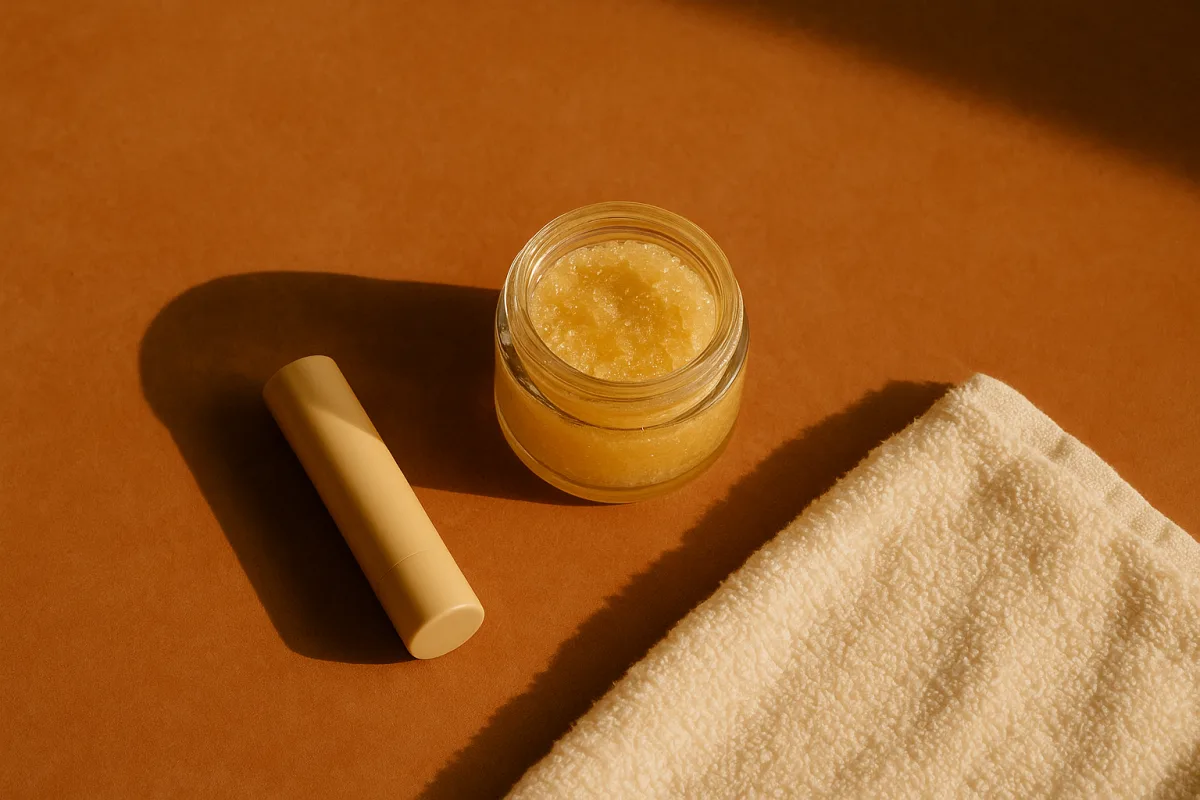
First, decide whether your lips should be scrubbed today
A lip scrub is not a repair treatment. It is a rinse-off or wipe-off physical exfoliant, meant to loosen superficial flakes so lips feel temporarily smoother. That can be useful before lipstick, but it is not a solution for continuously dry lips.
Do not scrub lips that are split, bleeding, sore, swollen or visibly damaged. The Associated Press includes exfoliating damaged lips among common ways people can aggravate chapped lips, while Kaplan MD cautions that repeated scrubbing can compromise an already stressed lip barrier. [1][15]
If your lips are persistently cracked, burn with ordinary products, develop a rash around the mouth or fail to settle with bland lip care, that has moved beyond product-selection advice. A dermatologist can assess the cause rather than having you rotate through more fragranced scrubs.
The realistic payoff is modest and immediate, not cumulative. Physical exfoliation can remove loose material sitting on the surface. It does not permanently change lip texture, increase lip volume or replace the barrier support provided by an emollient balm.
That distinction matters because the available evidence here is limited. The guidance in Healthline, Medical News Today and Skincare.com is practical consumer guidance, not a body of long-term clinical trials comparing scrub particles, frequencies and lip outcomes. [3][4][5]
Then read the grain, not the flavour name
For most people shopping for a conventional scrub, fine sugar is the sensible starting point. Healthline and Medical News Today both identify sugar as a gentle physical exfoliant when used carefully, and it is easy to find in formulas that also contain oils or butters. [3][4]
Fine is doing a great deal of work in that sentence. A scrub can contain sugar and still feel unnecessarily abrasive if the crystals are large, sparse or sharp. If you can see chunky crystals through the jar, it is reasonable to choose something with a softer-looking, more uniform texture.
Avoid scrubs built around crushed walnut shell, apricot kernel or similarly hard particles. HealthBeautify specifically warns against coarse physical exfoliants because their rough edges may cause tiny tears. “Natural” tells you where an ingredient came from, not whether its particle shape suits lips. [11]
Coffee grounds are less clear-cut. Healthline includes them among DIY exfoliating options, but BeautyHub’s dermatologist-reviewed sensitive-lip guidance warns that coarse coffee particles can create micro-tears unless they are extremely finely milled and assessed within the finished formula. [3][17]
That disagreement is a reason not to treat coffee as automatically gentle. The relevant question is particle size, shape and amount, information a front-label claim rarely gives you. If you have reactive or dry lips, there is little reason to gamble on a gritty coffee scrub.
A soft toothbrush is another commonly suggested physical method, but “soft” and brief are essential. Medical News Today and Healthline mention gentle brushing as an option, not as a reason to scrub harder until every flake disappears. [3][4]
Look for slip in the ingredient list
The exfoliating grain does the temporary smoothing. The emollient portion makes the experience less harsh and helps reduce the tight, stripped feeling that can follow friction. Honey, shea butter and jojoba oil are repeatedly recommended alongside exfoliants in Healthline and Medical News Today. [3][4]
For dry-feeling lips, favour formulas where a butter, oil, lanolin or similar emollient is doing visible work in the formula, rather than a dry pile of crystals with a little flavouring. HealthBeautify and SkinPetals both point dry-lip shoppers toward shea butter, lanolin and emollient oils. [11][12]
Do not overstate what those ingredients can do. In a scrub, they can improve slip and leave a softer surface feel. They do not make an abrasive particle non-abrasive, and their benefits are limited by the fact that the product is usually removed quickly.
The more important hydration step comes after rinsing. Skincare.com advises applying a balm or lip treatment following exfoliation to moisturize and protect the lips. [5] A scrub without follow-up balm is mostly friction followed by evaporation.
For that follow-up step, boring is often useful. A plain balm that you already tolerate is a better pairing than a strongly scented, tingling product that turns a brief exfoliation into an irritation experiment.
If your lips are sensitive, simplify aggressively
Sensitive lips do not need a “stronger” scrub to become smooth. They need less friction and fewer possible irritants. HealthBeautify recommends fragrance-free, minimal-ingredient options and identifies oat flour as a gentler exfoliating choice for sensitive lips. [11]
Avoid fragrance and essential oils where possible. Also scan for menthol, camphor, eucalyptus and peppermint, particularly if your lips feel dry, sting or flush after lip products. Healthline and SkinPetals both flag these cooling ingredients as potential irritants for dry or sensitive lips. [3][12]
That does not mean every person reacts to every scented scrub. It means the tingle is not proof that a product is working, and it is a poor trade-off when your stated goal is comfortable, smoother lips rather than a sensory effect.
For this group, an oat-flour-based or very finely milled sugar scrub with a short ingredient list makes more sense than a flavour-led formula full of oils and cooling agents. If even that stings, stop using exfoliants rather than searching for a more elaborate scrub.
Very sensitive lips may also need a longer interval than the usual schedule. EatHealthy365 cites expert opinion suggesting once every seven to 10 days, but there is no strong consensus or controlled evidence defining an ideal sensitive-lip frequency. [6]
Compare the named products by format and price, not promises
Lip scrubs commonly come in small pots or tubes between 0.21 and 0.88 ounces, with the supplied retail listings placing the category roughly between $13 and $24 as of September 2026. [8][9][10] Small packaging is normal, so compare ingredient list and intended use before comparing jar size alone.
Versed Cloud Polish Exfoliating Lip Scrub is listed through Ulta Beauty at $17.99 for 0.42 oz, placing it around the middle of the category’s typical price range. [8] It suits a shopper who wants a conventional branded sugar-scrub format and is willing to pay for a small, dedicated lip product.
Martie also lists Versed Cloud Polish Exfoliating Lip Scrub at $8.99. [[7]](https://martie.com/products/cloud-polish-exfoliating-lip-scrub?utm_source=openai "Cloud Polish Exfoliating Lip Scrub
– Martie") It suits a price-conscious shopper who finds it at that discount, though discounted marketplace availability can change and does not make it a different formula from the Ulta-listed product.
Lush Honey Lip Scrub is listed at $13 for 0.88 oz. [9] It suits someone who specifically wants a larger pot for the lower end of the stated category price range, but honey is an emollient-style supporting ingredient, not evidence that frequent exfoliation is necessary.
Grande Cosmetics GrandeBUFF Moisturizing Lip Scrub is listed by Macy’s at $24 for 0.21 oz. [10] It suits a shopper who prefers a compact, premium-priced option and accepts that the higher sticker price does not establish greater exfoliating effectiveness.
These prices cover the cosmetic product itself, not an outcome. A $24 scrub cannot exfoliate safely more often than a $13 one. Given the lack of comparative clinical evidence in the brief, the defensible way to choose is texture, irritant profile, emollient support and price per amount.
Glamour’s 2025 testing roundup is useful as a reminder that product testing can describe texture, taste and user experience, but it cannot establish long-term safety or make medical claims for a lip scrub. [13] Individual reviews are particularly weak evidence for sensitive-skin compatibility.
Use the scrub in a way that does not create the problem
Start with clean, slightly damp lips. Use a small amount and move it gently across the lips for one to two minutes, rather than pressing hard or repeatedly revisiting one dry patch. Skincare.com gives that one-to-two-minute usage window. [5]
Rinse or wipe it away as directed, then apply balm straight away. Do this once or twice a week, not every morning before makeup. Both Skincare.com and EatHealthy365 recommend limiting use to this range to reduce the chance of over-exfoliation. [5][6]
If flakes return the next day, resist the urge to scrub again. That usually signals that you need more consistent barrier support, less licking or fewer irritating lip products, not another abrasive pass. Repeated mechanical exfoliation is one of the mistakes flagged by Kaplan MD and Zerun Cosmetic. [14][15]
There is no lip-scrub-specific evidence in the research brief showing that you need a different exfoliant in winter, summer, dry indoor heating or humid weather. You may use more balm when conditions feel drying, but do not let seasonal marketing persuade you that harsher exfoliation is evidence-based.
What safety regulation does, and does not, tell you
A product sold legally is not necessarily proven ideal for every lip type. In the United States, the FDA requires cosmetics to be safe and properly labelled, but cosmetics generally do not receive pre-market FDA approval, apart from color additives. [2]
European and UK-style frameworks are more prescriptive for lip products. A Cosmetic Product Safety Report includes an oral exposure assessment, which makes sense for products that can be inadvertently ingested during normal use. [16]
A 2025 review indexed by PubMed still identifies global gaps and inconsistencies in lip-product regulation, especially around ingestion safety and testing. [2] That is not a reason to panic about a scrub, but it is a reason to prefer transparent labels and simple formulas over vague claims.
Frequently Asked Questions
What ingredients should I look for in a lip scrub?
Look for a lip scrub that contains fine sugar as a gentle physical exfoliant combined with emollients such as shea butter, honey, or jojoba oil. These ingredients help exfoliate without causing irritation and maintain hydration. Avoid scrubs with large, sharp particles that can damage lips.
How often should I use a lip scrub?
Use a lip scrub once or twice weekly for one to two minutes each time. Over-exfoliating can damage the lip barrier, so it’s important to limit use and follow up immediately with a plain, protective balm to moisturize and protect the lips.
Can I use a lip scrub if I have sensitive lips?
If you have sensitive lips, choose a fragrance-free, minimal-ingredient formula and avoid scrubs containing menthol, peppermint, camphor, essential oils, coffee grounds, and nut-shell exfoliants. These ingredients can cause stinging or irritation. Opt for gentle, dermatologist-reviewed options with soft particles.
What ingredients should I avoid in a lip scrub?
Avoid scrubs with coarse physical exfoliants like crushed walnut shells, apricot kernels, or other hard particles that can cause micro-tears. Also, stay away from menthol, peppermint, camphor, essential oils, and coffee grounds unless they are very finely milled and tested for sensitivity, as these may irritate lips.
How do I know if my lips need exfoliation?
Only exfoliate lips that have loose surface flakes and are not split, bleeding, sore, swollen, or visibly damaged. Persistent cracking, inflammation, or pain indicates that exfoliation is not appropriate and you should consult a dermatologist instead. Exfoliation provides a temporary cosmetic smoothing effect rather than treating underlying lip damage.
How we researched this
This article was assembled from 17 cited references.
Nothing here is based on hands-on testing. Where a figure or finding appears, it belongs to the source cited beside it, and the writing says so rather than implying otherwise. Every source is listed below so you can check it.
Sources
How to Exfoliate Your Lips: DIY Ingredients, Benefits & What to Avoid
How to Use Lip Scrub - Easy Steps for Smooth, Soft Lips | Skincare.com
[Cloud Polish Exfoliating Lip Scrub
– Martie](https://martie.com/products/cloud-polish-exfoliating-lip-scrub?utm_source=openai)
Best Lip Scrub: Smooth, Soft Lips Without Dryness or Flaking | HealthBeautify
7 Best Lip Scrubs We Tested for Dry, Chapped Lips in 2025 | Glamour
Why Your Lip Scrub May Be Damaging Your Lips | Lip Scrub Risks - KAPLAN MD SKINCARE
CPSR for Lip Scrub: UK & EU Safety Guide — Phoenix Cosmetic Safety
Related Articles
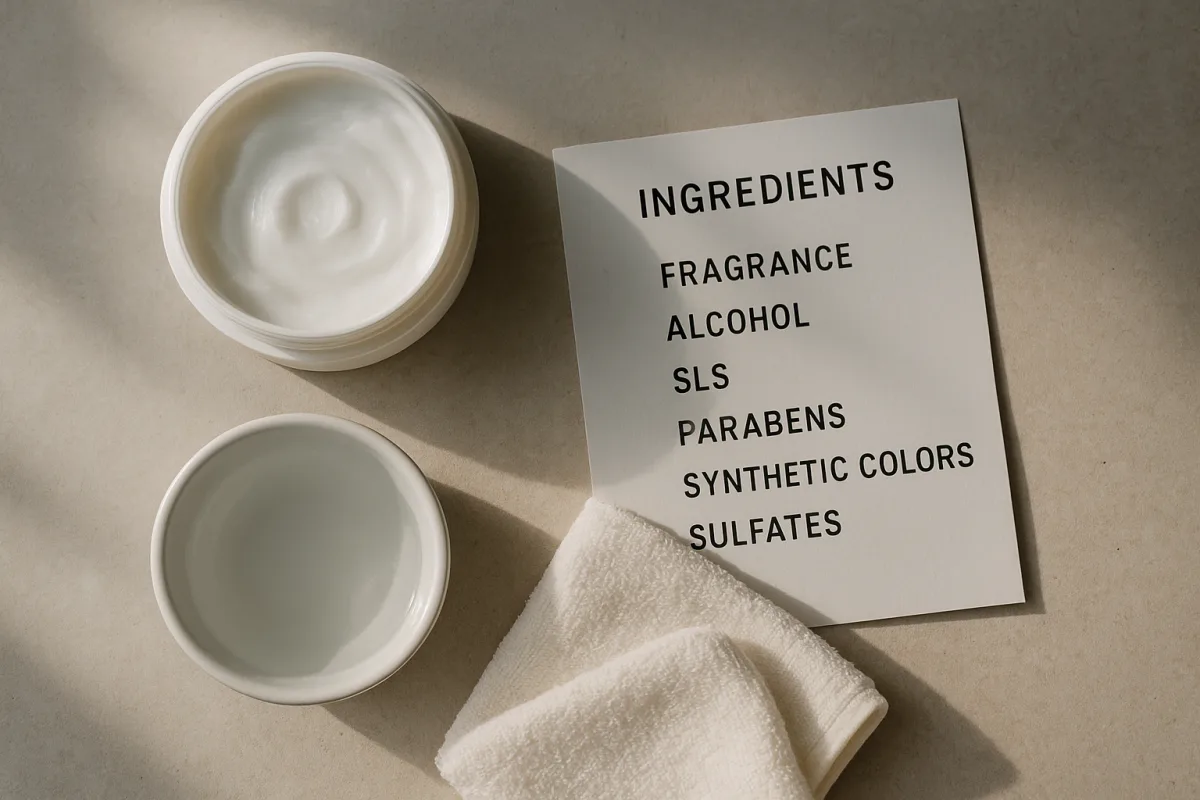
How to Choose a Gentle Cleanser for Sensitive Skin
Learn how to choose a gentle cleanser with skin-friendly pH and safe ingredients to avoid irritation and support sensitive skin health.
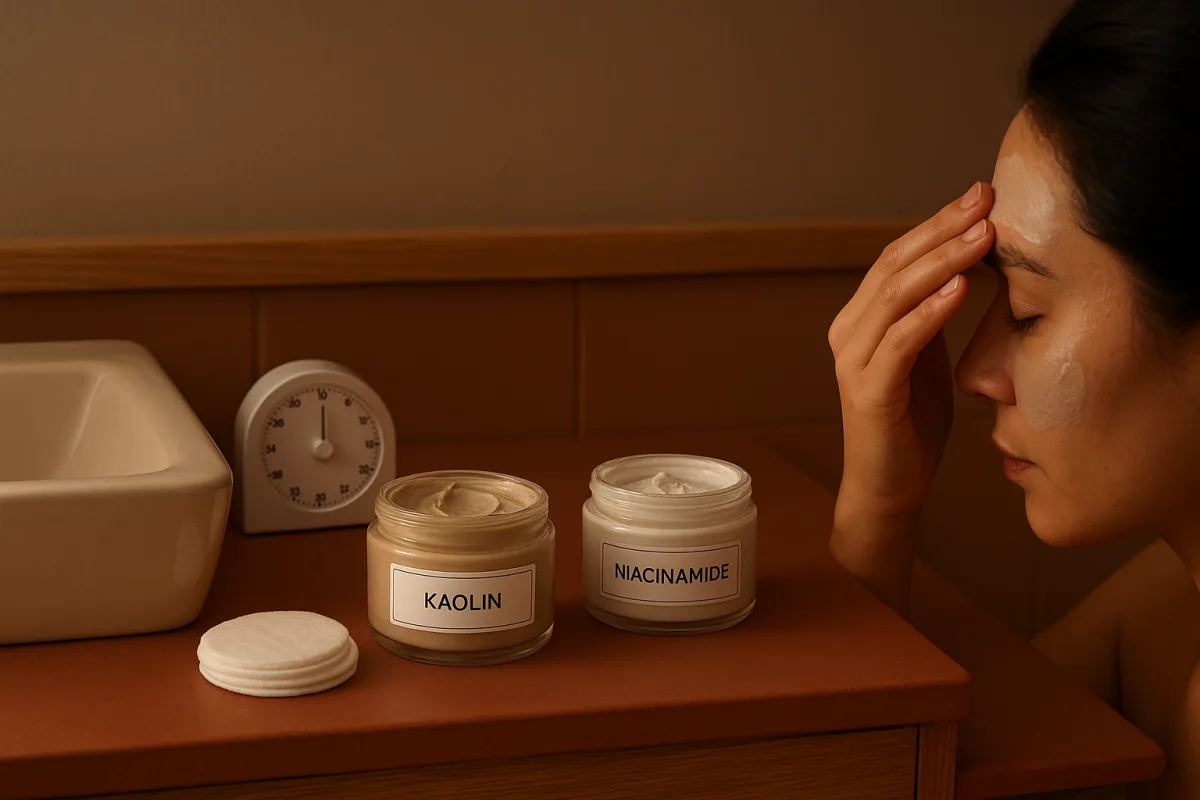
How to Choose a Face Mask for Oily Skin
Learn how to choose a face mask for oily skin with tips on ingredients, usage, and avoiding irritation for a balanced, shine-free complexion.
How to Choose a Facial Sunscreen: SPF, Ingredients & Tips
Learn how to choose a facial sunscreen with the right SPF, broad-spectrum protection, and ingredients suited for your skin type and daily needs.
What to Look for in a Moisturizer: Key Factors Explained
Learn what to look for in a moisturizer, including ingredients, skin compatibility, and tips for choosing the right product for your needs.