
How to Choose a Night Serum: Ingredients and Tips
Learn how to choose a night serum based on your skin concerns and key ingredients like retinol, niacinamide, and hyaluronic acid.
Read the active ingredients first
The serum bottle is in your hand, and the front label says “renewing,” “repairing,” or “glow.” Turn it over. The ingredient list and stated active percentage tell you far more than the nighttime promises on the carton.
A night serum is usually a lightweight treatment layer used after cleansing and before moisturizer. Its job is to deliver ingredients that support hydration, surface smoothness, more even-looking tone, or the appearance of firmer skin over time. [8][9]
We would start with one concern you can see in the mirror: dryness, uneven-looking tone, texture, or visible signs of aging. There is no established best formula for combinations such as aging concerns plus breakouts, so buying one overloaded serum is not a shortcut. [4]
If the label lists a long run of fashionable ingredients but does not explain what leads the formula, skip it. You do not need every active in one bottle, and combining multiple strong ingredients raises the chance of irritation. [16][23]
Match the lead active to your main concern
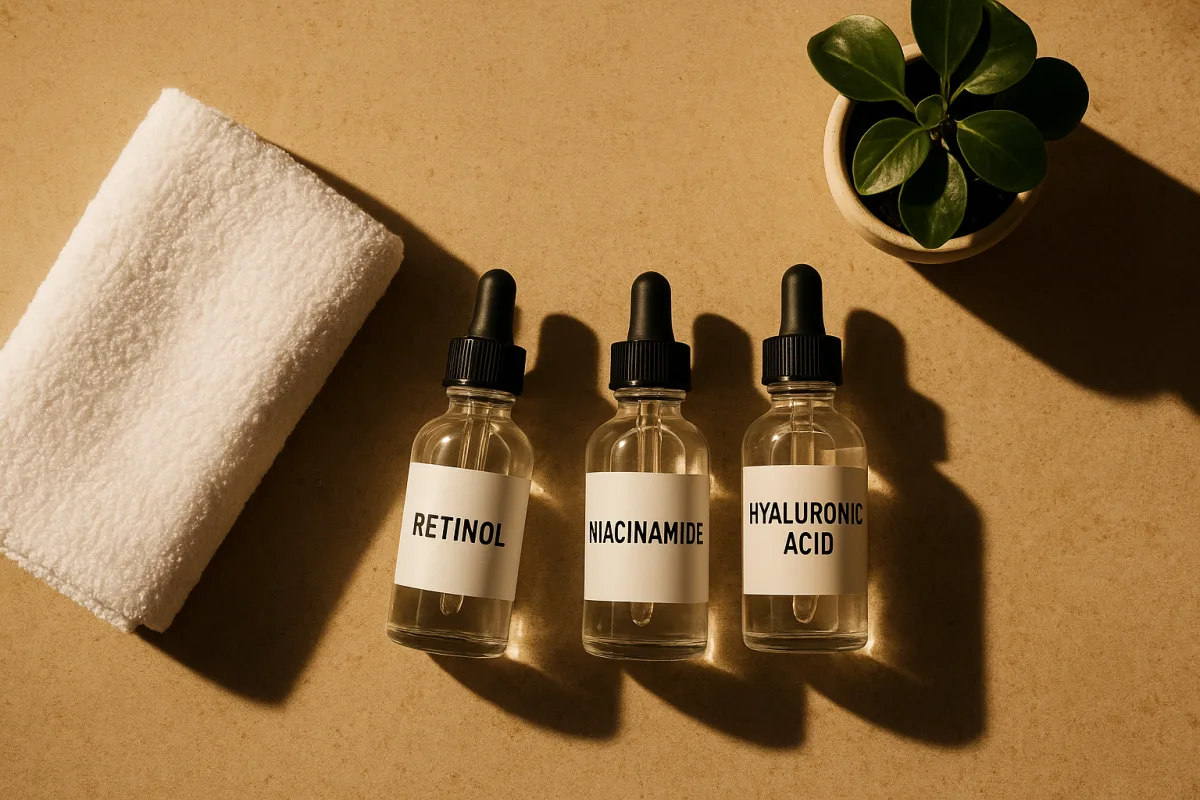
Pick a retinoid if your priority is fine lines, rough texture, or gradual overall renewal. Retinoids, including retinol, are associated with increased collagen production and faster cell turnover, which is why they are generally introduced at night. [14][20]
Do not expect a quick transformation. Retinoid results are gradual, and the early stage can involve dryness, flaking, or irritation. A serum that leaves your face sore or persistently inflamed is not working harder for you.
Pick niacinamide when your skin feels reactive, looks uneven, or needs barrier support. Niacinamide is used at 2% to 10%, with some formulas going up to 12%, and is associated with improved barrier function, calmer-looking skin, and reduced appearance of pigmentation. [2]
Pick hyaluronic acid when dehydration is the obvious problem: skin feels tight after cleansing, makeup catches on dry patches, or fine lines look more noticeable by evening. It is a hydration-focused ingredient suited to all skin types. [3][15]
Pick an exfoliating acid if dullness or uneven texture is your main issue and your skin tolerates actives well. AHAs and BHAs encourage cell turnover, but they can also push your routine from mildly active into irritating. [19][20]
Start retinol at a level your skin can tolerate
Retinol concentration advice is not fully aligned. MarketPickGo suggests beginners start around 0.025% to 0.1%, while CNA Lifestyle reports that 0.25% to 0.5% can offer efficacy with minimal irritation for many users. [1][20]
For very sensitive skin, we would begin at the lower end, 0.025% to 0.1%, even if the label makes a higher number sound more impressive. A lower concentration you can keep using is a better bet than a stronger formula you abandon.
Use your retinol serum at night, after cleansing, and introduce it gradually. There is no clear consensus on the ideal long-term frequency beyond that gradual ramp-up, so let your skin’s comfort set the pace. [14][20]
Do not layer a new retinol with exfoliating acids on the same night. The available guidance strongly favors caution with multiple actives, and there is no strong long-term safety evidence for routinely combining several active ingredients in night serums. [16][23]
Choose niacinamide or hydration when your barrier is the priority
Niacinamide is the easier choice when you want an active without making nighttime complicated. A 2% to 10% formula is the established range to look for, and the ingredient can fit alongside a basic moisturizer without demanding an elaborate schedule. [2]
A higher percentage is not automatically better. Some formulas reach 12%, but we found no published evidence that every person gets better results at that level, especially if stronger products make skin sting or feel dry. [2]
Hyaluronic acid works differently from a retinoid or acid exfoliant. It hydrates, so it makes sense when your immediate problem is dehydration, not when you are expecting it to resurface skin or visibly fade longstanding discoloration. [3][15]
We would pair a hydrating serum with moisturizer every time, particularly if indoor heat, cold weather, or dry air leaves your face uncomfortable. Richer barrier-supporting products tend to suit winter and dry climates. [12][13][22]
Use exfoliating acids sparingly
Check the acid type and percentage before buying an exfoliating night serum. AHA and BHA formulas in the 5% to 10% range are commonly described as effective, but they are not interchangeable in how they feel on skin. [19][20]
Lactic acid is generally the gentler AHA choice compared with glycolic acid. If you have sensitive or dry-feeling skin and want an exfoliating serum, lactic acid is the place we would start. [19]
Keep your acid serum separate from retinol nights at first. You may eventually find a routine that your skin tolerates, but there is no clear published formula for safely combining actives across every skin type and concern. [16][23]
Apply acids to dry skin, not a face still wet from cleansing. Damp skin can make active products feel more intense, which is a common route to irritation when someone has added a new serum too quickly. [16][23]
Keep vitamin C in the morning
Vitamin C appears in some night serums, and it can function in an evening routine. But the stronger conventional recommendation is morning use, when it can complement daytime UV protection from sunscreen. [11][18][20]
We would keep vitamin C for the morning and use a retinoid, niacinamide, hyaluronic acid, or a carefully chosen exfoliating acid at night. That split makes your routine easier to follow and reduces the temptation to stack everything at once.
Sunscreen still belongs in the daytime routine. A night serum cannot stand in for it, and ingredients marketed as “antioxidant” or “repairing” do not replace daytime UV protection. [18][20]
Bemotrizinol, also called BEMT, is an FDA-approved UV filter used primarily in sunscreen. Its appearance in a night serum is unusual, and there is no direct support here for treating it as a proven nighttime antioxidant active. [14]
Skip trendy specialist ingredients unless you have a reason
Peptides are generally well tolerated and can fit into either morning or night routines. The catch is that there is no established optimal peptide concentration, so a peptide percentage on a label cannot currently tell you much by itself. [6]
Choose a peptide serum if you want a gentle, flexible option and the rest of the formula suits your skin. Do not buy one because it claims to replace a retinoid or because the marketing implies a precisely proven dose.
PDRN is an emerging ingredient sometimes promoted for nighttime recovery. Evidence for topical PDRN serums is limited compared with injectable forms, so it belongs in the “interesting but unproven” category, not as a first-line night serum active. [5]
Topical estrogen is even more specialized. Evidence is limited and possible systemic risks mean it requires medical guidance, so this is not a general skincare purchase. Bring hormonal, sudden, painful, or persistent skin changes to a dermatologist. [14]
Adjust the texture for your climate
In dry weather, choose a serum that emphasizes hydration and barrier support, then seal it in with moisturizer. Cold temperatures, low humidity, and indoor heating can make skin feel drier and less tolerant of aggressive actives. [12][13][22]
In humid weather, a lighter and less occlusive serum may feel better. You still need moisturizer if your skin is dry or you are using retinol or acids, but the texture can be lighter than the cream you use in winter. [12][22]
Do not interpret summer oiliness as a reason to stop all hydration. Skin can look shiny yet still feel dehydrated, especially after over-cleansing or using multiple actives without enough moisturizer. [13][16]
A seasonal switch can be as simple as keeping the same active while changing the supporting formula. For example, retain your niacinamide serum but move from a rich cream to a lighter moisturizer in high humidity. [12][22]
Apply the serum in the right order
Cleanse first. Poor cleansing can leave sunscreen, makeup, oil, or debris on the skin, while over-cleansing can leave your face stripped before you apply an active serum. [16][17]
Apply your serum after cleansing and before moisturizer. Use two to four drops, or roughly a pea-sized amount, rather than coating your face until it feels slippery. The aim is skin that stays visibly damp for about a minute. [7][21]
Wait about 30 seconds to two minutes before moisturizer, allowing the serum to settle. There is no exact absorption timetable established for every formula, so you do not need to stand in the bathroom timing it precisely. [7][10]
Bring the product down your neck and onto your chest if those areas are part of your skincare goals. They are commonly missed, even though they are exposed skin and often receive the same daytime environmental stressors as the face. [16]
Check the price against what you are getting
High-quality night serums with clinically recognized ingredients commonly cost about $50 to $200 per bottle in 2026. [1][3] That price range covers the bottle itself, not a guaranteed concentration, a better formula, or faster visible results.
We would not pay premium-serum money for vague phrases such as “cellular renewal complex” when the product does not identify the active or disclose enough about the formula to judge its purpose. Marketing language cannot substitute for an ingredient list.
A modestly priced niacinamide or hyaluronic acid serum can make more sense than an expensive multi-active formula if it matches what your skin needs. Save the complicated routine for a dermatologist’s advice if your skin is persistently irritated or changing unexpectedly.
Finally, check the expiration date and stop using products that are expired. An old bottle, a rushed routine, and too many actives can turn a promising night serum into a source of irritation, which is an expensive way to get nowhere. [16][23]
Frequently Asked Questions
How do I choose the right night serum for my skin type?
Choose a night serum based on your main visible concern, such as dryness, uneven tone, texture, or signs of aging. Select one lead active ingredient that targets that concern instead of a serum overloaded with multiple strong actives, which can increase irritation risk. For example, retinoids for fine lines and texture, niacinamide for barrier support and uneven skin, or hyaluronic acid for dehydration.
What active ingredients should I look for in a night serum?
Look for a clear lead active ingredient that addresses your skin concern. Retinoids help with aging signs and cell turnover, niacinamide supports the skin barrier and reduces pigmentation, hyaluronic acid provides hydration, and exfoliating acids promote cell turnover for dull or uneven skin. Avoid serums with many strong actives combined, as this can cause irritation.
Can I use retinol in my night serum if I have sensitive skin?
Yes, but start with a low concentration, typically between 0.025% and 0.1%, to minimize irritation. Introduce retinol gradually at night after cleansing, and increase concentration only if your skin tolerates it comfortably. A lower concentration that you can use consistently is better than a stronger one that causes persistent irritation.
How much night serum should I apply before moisturizer?
Apply two to four drops of serum after cleansing and before moisturizer. Use enough moisturizer afterward to prevent your skin from feeling tight. Allow the serum to absorb for about 30 seconds to two minutes before applying moisturizer.
Is niacinamide a good ingredient for night serums?
Niacinamide is well suited for night serums, especially if your skin is reactive, uneven, or needs barrier support. It is typically used at concentrations from 2% to 10%, and sometimes up to 12%, and is associated with improved barrier function, calmer skin, and reduced pigmentation.
How we researched this
This article was assembled from 23 cited references.
Nothing here is based on hands-on testing. Where a figure or finding appears, it belongs to the source cited beside it, and the writing says so rather than implying otherwise. Every source is listed below so you can check it.
Sources
- Best Face Serums & Skincare Treatments | MarketPickGo
- Best Niacinamide Serums 2026, Concentration Guide & Top Picks | SkinClear
- Best Night Serum for Glowing Skin (2026) | CutisKart
- How To Choose The Best Night Serum: A Complete Buying Guide | ToolGuideDaily
- PDRN Is Having a Major Skincare Moment-9 Serums a Facialist Recommends
- How to Layer Peptides, Vitamin C & Retinol
- How to Apply Serum: The Three Things That Actually Matter | Face Fresh
- How to Use a Night Serum the Right Way | Purelita
- What Is a Night Serum? - Nighttime Skincare Routine - Kiehl's
- Serum Before or After Moisturizer: Order & Wait Time Guide
- How to Layer Vitamin C, Niacinamide & Hyaluronic Acid (AM vs PM Order)
- LILIXIR Climate Index: Your Daily Climate-Adaptive Skin Guide
- Seasonal skin changes: why products work differently
- Night Serum: Which Actives Belong in Your Evening Routine and Why
- Benefits of Night Serums and Key Ingredients for Skin Recovery - Fitness & Blog
- These Common Skincare Mistakes May Be Hurting Your Skin
- Nighttime skincare routine | SkinSafeCheck
- Morning vs Night Skincare Routine: What Goes in Each Step
- Lactic Acid: The Gentle, Hydrating Exfoliator Adored By Experts And Sensitive Skin-Sufferers Alike
- How much retinol, Vitamin C and acids does your skin really need? Dermatologists explain - CNA Lifestyle
- How Much Serum to Apply? | Skincare Application, Sivo
- How Seasonal Changes Affect Your Skin | RATIONALE Skincare Journal
- The nighttime skincare mistakes you may be making that could seriously damage your skin
Related Articles
How to Choose a Face Scrub for Sensitive Skin Safely
Learn how to choose a face scrub for sensitive skin with gentle ingredients, proper exfoliation frequency, and what to avoid to prevent irritation.
How to Choose a Body Lotion for Your Skin Type and Needs
Learn how to choose a body lotion by understanding ingredients, textures, and skin types for effective hydration and care.
How to Choose Face Oil for Dry Skin: A Practical Guide
Learn how to choose face oil for dry skin, including types, application tips, and best oils for sensitive or acne-prone dry skin.
How to Choose a Toner for Oily Skin
Learn how to choose a toner for oily skin with tips on ingredients, pH, and usage to control shine and avoid irritation.