
How to Fix Dull Skin
Learn how to fix dull skin with proven skincare tips, key ingredients, and routines for brighter, more radiant skin.
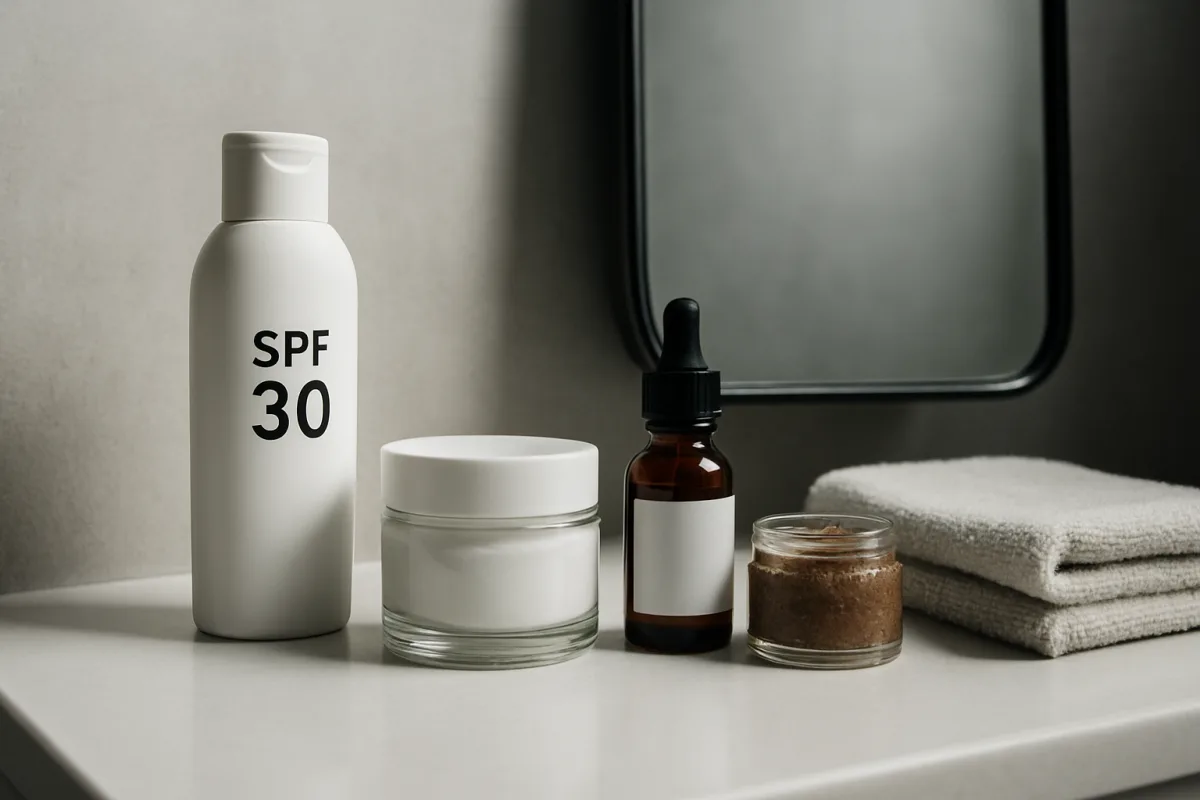
Check what “dull” looks like on your skin
Dull skin usually means your face looks less reflective, less even, or rougher than you expect after cleansing. It can come from surface buildup, dryness, sun exposure, irritation, uneven pigment, or a combination of all of them.
Look closely in daylight before buying a brightening serum. If the issue is flaky texture, your route is different from stubborn brown marks. If your skin is shiny but still flat-looking, aggressive exfoliation is not automatically the answer.
Start with the boring basics: a cleanser that does not leave your face tight, a moisturizer, and sunscreen. Harsh foaming cleansers can strip skin oils, while skipping moisturizer can leave skin dehydrated and less comfortable. [21][22]
We would not begin with a scrub, a peel pad, a vitamin C serum, and a retinoid all at once. You will not know what helped, and irritation can make uneven tone and roughness look worse.
Put sunscreen ahead of every brightening product
Use broad-spectrum SPF 30 or higher every morning, including on days you are indoors near windows or only outside briefly. UV radiation is identified as a primary driver of dullness and uneven pigmentation. [2]
This is the unglamorous purchase that protects the progress you are trying to make with everything else. A brightening routine without daily sunscreen can turn into a cycle of fading visible marks while new exposure keeps adding to them.
An SPF 50 option listed in this price range is Absolut Skin SPF 50 Sunscreen, 100 ml for $30, with vitamin C. That price covers the sunscreen tube, not any supporting cleanser, serum, moisturizer, or future replacement. [15]
Use the amount and reapplication schedule printed on the product you buy. The material supports daily broad-spectrum use, but it does not provide a single tested application quantity or reapplication interval for every formula and situation.
Repair dryness before chasing glow
Skin that is short on water can look crepey, rough, or gray instead of smooth and light-reflective. Hyaluronic acid is a humectant, meaning it helps draw water into the skin, though its performance can vary with molecule size and skin type. [9]
Pair a hydrating serum or moisturizer with a cleanser that does not make your skin feel stripped. We would prioritize that over a stronger active if your face feels tight after washing or stings when you apply basic products.
The Originote Brightening Moisturizer is a 50 ml option listed at $40, combining niacinamide and licorice extract. The price covers one moisturizer, not sunscreen or the other steps needed for a full routine. [14]
Do not expect drinking excessive water to replace topical hydration. Adequate hydration supports skin elasticity, but the visible moisture benefit appears small once you have corrected dehydration, and extra water has not been shown to create major brightening changes. [11]
Pick one active based on the problem you see
Choose vitamin C if you want an antioxidant-focused morning serum for uneven-looking tone and loss of radiance. Ascorbic acid inhibits tyrosinase, an enzyme involved in melanin production, at concentrations from 8% to 20%. [2]
Stay within that range. Higher vitamin C concentrations have not shown stronger brightening benefits above 20%, while irritation becomes more likely for some people. More percentage points on the label is not a better deal.
Eve Hansen Vitamin C Facial Serum is a 30 ml product with 15% vitamin C, listed at $45. That sits squarely within the supported 8% to 20% range, and the price covers the serum alone. [13]
Choose 5% niacinamide if your main concern is a gradual improvement in uneven-looking tone and you want an active that can fit into a simple routine. Five-percent formulas showed significant improvement over 12 weeks. [3]
Niacinamide works by blocking melanin transfer within skin. It is not a quick surface-polishing ingredient, so give it time and do not abandon it after a week because your skin does not look dramatically different. [3][10]
Add exfoliation only if rough texture is still the issue
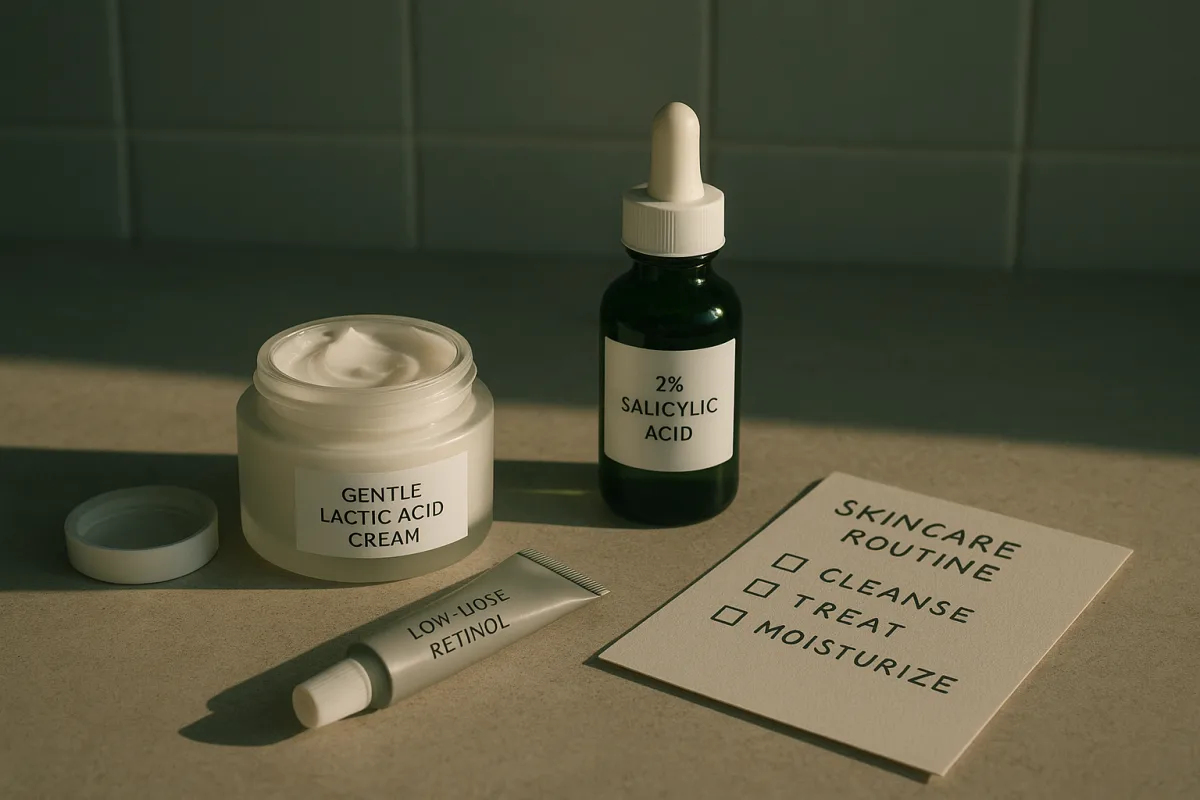
If your skin looks dull because it feels rough or has visible surface buildup, a chemical exfoliant can help remove dead surface cells. Glycolic and lactic acids are AHAs that support smoother-looking texture and radiance. [5]
Pick an AHA for surface roughness, salicylic acid, a BHA, if you are oily or acne-prone, and a PHA such as gluconolactone if your skin is sensitive. Chemical options are generally preferred over abrasive physical exfoliants. [9]
The Skin Collection Exfoliating Toner is a 200 ml AHA and BHA option listed at $35. It sits in the exfoliation category, so it suits someone addressing texture, not someone whose compromised skin already feels sore or tight. [24]
Start slowly. General guidance is once weekly for sensitive or dry skin, two to three times weekly for combination skin, and up to four times weekly for oily or acne-prone skin. Daily exfoliation is not advised. [25]
Physical scrubs are easy to overdo because pressure, particle shape, and frequency all change the experience. If you use one at all, keep the pressure light, but we would choose a measured chemical formula before a grainy scrub. [25]
Do not mistake irritation for progress
Redness, tightness, sensitivity, and new breakouts can signal over-exfoliation and barrier disruption. Pause exfoliating products if those show up, then return to a gentle cleanser, moisturizer, and sunscreen until your skin feels settled. [20][25]
Avoid introducing several potent actives in the same week. Starting a retinoid, acid toner, and vitamin C serum together gives you a high chance of confusion if your skin reacts, even if one product would have been fine alone. [9]
Fragrance and alcohol-containing products may trigger irritation for some people. If your routine has become complicated and your skin looks worse, simplify before assuming you need another brightening ingredient. [23]
Retinoids can improve texture and tone by accelerating cell turnover and supporting collagen production. They are an option for someone ready to introduce an active gradually, not a reason to ignore dryness or push through persistent irritation. [4]
Give uneven marks a realistic timeline
Brightening is slow because you are waiting for gradual changes in surface texture and visible pigment. Some subtle improvement may show within two to four weeks, while noticeable fading of dark spots may take four to six weeks. [10]
Published timelines suggest a 20% to 40% brightness improvement around six to eight weeks and 40% to 50% around 10 to 12 weeks. These figures are estimates, not a promise for your face or your marks. [10]
Tranexamic acid inhibits pigment-related pathways, with visible changes often reported after six to eight weeks. Evidence on daily long-term use beyond that window is limited, so this is an ingredient to approach with restraint. [6]
Alpha-arbutin is another tyrosinase inhibitor intended for gradual fading and daily use. Comparative evidence against other pigment-focused ingredients across diverse populations remains limited, so we would not assume it will outperform vitamin C or niacinamide. [8]
Azelaic acid is associated with reduced pigmentation and inflammation, and may appeal if you also deal with acne-prone or rosacea-prone skin. Those concerns can overlap with medical conditions, so get dermatology advice for persistent symptoms. [7]
Keep your routine short for eight weeks
A workable morning routine is gentle cleanser, vitamin C or niacinamide, moisturizer if needed, then SPF 30 or higher. A workable evening routine is cleanser, moisturizer, and one chosen active on the schedule your skin tolerates.
If you choose an exfoliating toner, use it on its scheduled nights and skip piling other strong actives onto the same routine. There is no definitive evidence quantifying the added benefit of stacking multiple brightening ingredients at once.
Take a bare-faced photo in the same daylight every two weeks if you want a fair comparison. Skin can look brighter or duller hour to hour depending on sleep, weather, irritation, and how hydrated the surface is.
Two nights of sleep deprivation were associated with lower skin hydration and brightness, plus greater water loss, in a study of 24 women. Fixing chronic sleep loss will not replace sunscreen, but it belongs in the routine. [12]
Adjust for the weather you actually live in
In winter or dry climates, low humidity can increase transepidermal water loss, so use a richer moisturizer and focus on barrier support. A humidifier may also be worth considering in a dry environment. [16][19]
In summer or humid climates, switch toward lightweight, oil-free moisturizers if heavier formulas feel uncomfortable, while keeping sunscreen in place. Increased sebum and UV exposure make this a season to simplify, not abandon protection. [17][19]
Spring and fall can suit a middle-ground routine, such as a gel moisturizer and gentle exfoliation if your skin tolerates it. Introduce seasonal changes gradually instead of replacing every product during one weekend. [18][16]
Diet may support skin appearance over time, especially a plant-predominant pattern rich in antioxidants, while high-sugar and high-salt diets are associated with faster visible skin aging. These are associations, not proof that one meal will brighten your face. [1]
Frequently Asked Questions
What is the best way to fix dull skin?
The best approach starts with daily use of broad-spectrum SPF 30 or higher sunscreen and a gentle moisturizer to protect against UV damage and dehydration. Incorporate one brightening active ingredient such as vitamin C (8% to 20%) or niacinamide (5%) consistently for at least six to eight weeks, avoiding overly complex routines that can irritate the skin.
How long does it take to see results from brightening products?
Subtle improvements can appear within 2 to 4 weeks, with noticeable fading of dark spots typically seen after 4 to 6 weeks. More significant brightness improvements of 20 to 40 percent usually require 6 to 8 weeks of consistent use, and deeper pigmentation issues may take 3 to 6 months to improve.
Which ingredients help improve dull skin?
Effective ingredients include vitamin C (ascorbic acid) at 8% to 20%, niacinamide at 5%, retinoids, alpha hydroxy acids (AHAs), tranexamic acid, azelaic acid, alpha-arbutin, and hyaluronic acid. These actives work by reducing melanin production, accelerating cell turnover, exfoliating dead skin cells, or hydrating the skin.
How does sunscreen help with dull skin?
Sunscreen protects the skin from UV radiation, which is a primary cause of dullness and uneven pigmentation. Using broad-spectrum SPF 30 or higher daily prevents new dark spots from forming and preserves the improvements made by brightening products.
Can exfoliation improve dull skin?
Exfoliation can improve dull skin by removing surface buildup and dead cells, but it should be done carefully. Over-exfoliation or using harsh scrubs can cause irritation, redness, and worsen dullness. Chemical exfoliants are generally preferred, and exfoliation should be stopped if sensitivity or breakouts occur.
How we researched this
This article was assembled from 25 cited references.
Nothing here is based on hands-on testing. Where a figure or finding appears, it belongs to the source cited beside it, and the writing says so rather than implying otherwise. Every source is listed below so you can check it.
Sources
- A Review of the Effects of Lifestyle Factors on Skin Aging - PMC
- What Ingredients Brighten Skin and Fade Dark Spots - ScienceInsights
- Best Brightening Serums for Dull Skin in 2026, Derm-Ranked | DermSkinHacks
- Best Skincare Ingredients 2026: Evidence Guide | ScanSkinAI
- Dull Skin: The Ingredients That Actually Restore Radiance, Skin Stacker
- Why Tranexamic Acid Is Every Beauty Editor's Holy Grail Brightening Ingredient
- Scouted: Azelaic Acid: Here's Why This Skincare Ingredient Is a Miracle Worker for Your Skin
- Dark Spot Skincare 2026 Guide: Brightening Ingredients and Sunscreen Care, Global Beauty News | Skincare, Cosmetics and Beauty Industry Updates
- Hundreds of Hyaluronic Acid Serums Later, Our Editors Agree These Are the 9 Best
- How Long Do Brightening Skincare Products Take to Work? | Debsline, Debsline.co
- Diet and Skin: What the Evidence Actually Says (2026)
- “You look sleepy…” The impact of sleep restriction on skin parameters and facial appearance of 24 women - ScienceDirect
- Vitamin C Facial Serum, Brightening | Eve Hansen
- The Originote - Beauty in Unity Brightening Moisturizer 50ml My Care Kits
- Brightening Absolut Skin
- Seasonal Adaptation: How to Adjust Your Skincare | ONE Cosmetix
- The Seasons & Your Skin: Why Seasonal Skincare Matters - JLUXE Aesthetics
- Seasonal Skincare Guide, Adjusting Your Routine for Spring, Summer, Autumn, and Winter
- Seasonal Skin Type Changes: Adapting Your Routine Year-Round | BlushPicks
- What Causes Dull Skin? | Med Spa In Encino, CA | A E Skin | Botox, Juvéderm Skincare & More!
- Why does cold weather make our skin look worse? Doctors explain 'winter face' and how to resolve it
- 9 Causes of Dull Skin and How to Fix Them, According to Experts
- Home remedies for dull skin · ComfiSkin
- รีวิว The skin Collection Exfoliating Toner รีวิวจากผู้ใช้จริง By Cosmenet.in.th
- The Truth About Hyperpigmentation in Darker Skin-and How to Treat It Gently
Related Articles
Build a Skincare Routine for Combination Skin
Learn how to build a skincare routine for combination skin with tailored cleansing, moisturizing, exfoliating, and sun protection steps.
Transition Skincare for Fall: How to Adjust Your Routine
Learn how to transition skincare for fall with tips on moisturizing, exfoliating, and protecting skin as the weather cools.
How to Treat Large Pores: Effective Skincare Tips
Learn how to treat large pores with proven skincare tips, key ingredients, and routines to reduce their appearance safely and effectively.
How to Treat Uneven Skin Texture: Effective Skincare Tips
Learn how to treat uneven skin texture with targeted actives, routines, and product tips for smoother, healthier skin.