
How to Treat Large Pores: Effective Skincare Tips
Learn how to treat large pores with proven skincare tips, key ingredients, and routines to reduce their appearance safely and effectively.
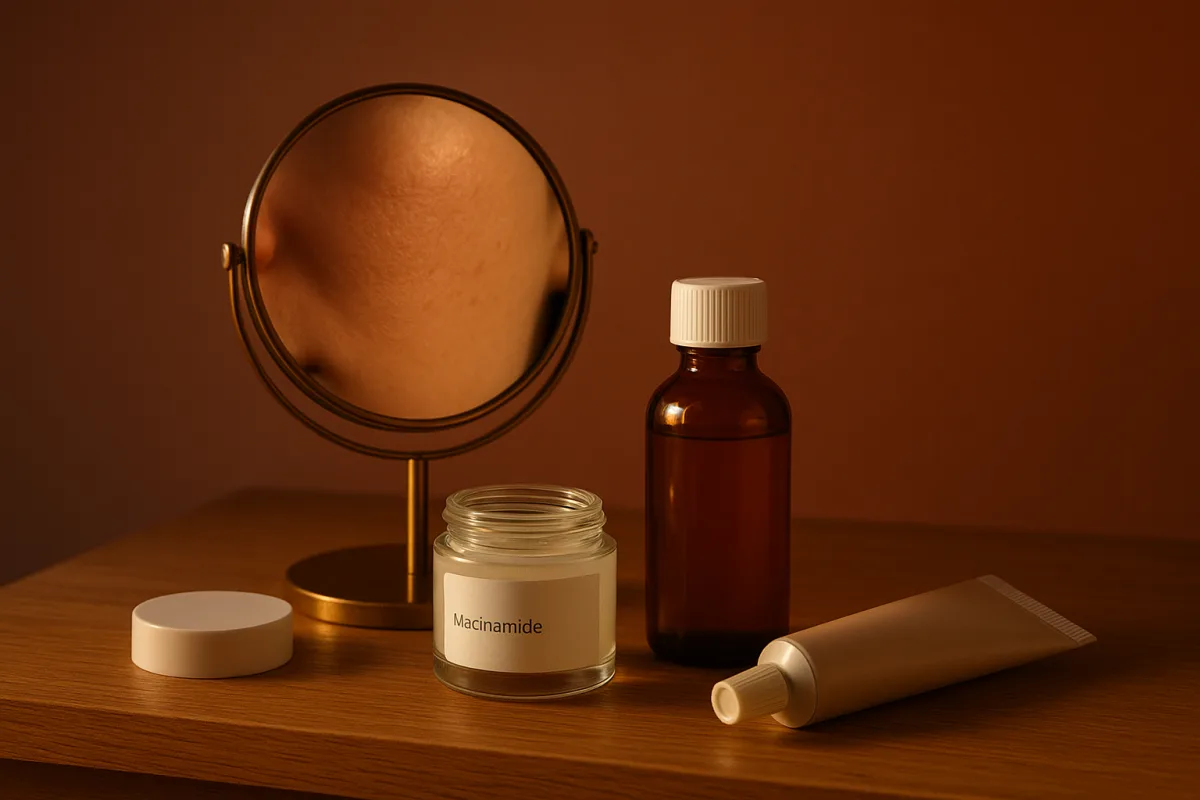
First, reset the expectation: pores are not doors you can close
“Pore shrinking” is useful marketing shorthand, not a literal cosmetic outcome. Pores are skin openings associated with hair follicles and oil glands. Their permanent size is not something a serum, toner or facial can reliably change. [3][25]
What skincare can do is less dramatic but still worthwhile: remove the material that makes pores look dark or stretched, reduce surface oil and support smoother-looking skin. Retinoids and sunscreen also address the loss of collagen support that can make pores look more conspicuous over time. [15][18]
That means results are usually slow and modest. If a product claims to erase pores, treat that as a reason to read the ingredient list more closely, not as a reason to buy it faster. The source material does not identify primary clinical studies by name or provide enough detail to judge their designs, so claims about exact outcomes deserve restraint.
Work out what is making your pores look larger right now
The practical distinction is between pores that look enlarged because they are oily or congested, and pores that are more visible because surrounding skin looks dehydrated, irritated or less firm. Many people have a mix, particularly through the T-zone. [17][24]
Oilier skin tends to benefit most from an oil-soluble beta hydroxy acid, usually salicylic acid. It can move through oil within the pore lining and help loosen sebum and dead cells, rather than merely polishing the skin’s surface. [7][19]
Dry or easily irritated skin can mistake dehydration for “clogging.” Repeated stripping cleansers, alcohol-heavy products, rough cleansing brushes and frequent acids may leave skin tight, then oilier as it tries to compensate. That combination can make texture look worse, not cleaner. [16][18]
If you have painful bumps, persistent redness, pitted marks, sudden changes in texture or anything you think may be a skin condition, skip the self-diagnosis. A dermatologist can assess whether a pore-focused cosmetic routine is even the relevant approach.
Start with cleansing, but do not turn it into punishment
Cleanse morning and evening if you are oily, sweaty or wearing sunscreen and makeup. The goal is to remove surface oil and residue without leaving the face squeaky, tight or stinging, which are not signs of a particularly effective cleanser. [17][19]
CeraVe Foaming Facial Cleanser comes in a 16 fl. oz. bottle for $15.99 and suits oily or combination skin looking for a straightforward cleansing step before leave-on actives. [8] It is not a pore treatment on its own, and its price and availability can change.
For dry skin, choose a gentle, non-stripping cleanser instead of assuming a foaming formula is required for visible pores. The brief supports mild lactic acid as a potentially gentler exfoliation option for dry skin, alongside moisturizers containing ceramides and glycerin. [24][26]
Combination skin is where targeted application makes more sense than buying an aggressively “oil-control” routine. Use salicylic acid on the oilier T-zone, if needed, while treating drier cheeks more conservatively with hydration and a milder exfoliant. [24][26]
Add salicylic acid slowly, not every night
A leave-on 2% salicylic acid product is the logical first active when clogged, oily-looking pores are the issue. Use it two nights a week initially, then move to a maximum of two or three nights weekly only if your skin remains comfortable. [7][17]
Paula’s Choice Skin Perfecting 2% BHA Liquid is listed at $32 for 4 fl. oz. and $59 for 8 fl. oz. [7] It suits oily and combination skin, particularly where the T-zone is prone to visible oil and congestion. It is a better fit for a controlled leave-on exfoliation step than a grainy face scrub.
Murad AHA/BHA/Retinoid Daily Clarifying Peel is a 3.2 fl. oz. product listed at $49. [6] Because it combines exfoliating acids with a retinoid, it suits experienced users seeking an all-in-one active step, not a beginner already using separate acid and retinoid products.
Do not interpret “daily” in a product name as an instruction to ignore your skin. The research brief specifically warns that over-exfoliating acids can cause inflammation and make pores look larger. If you use the Murad peel, do not layer it with another exfoliating acid or retinol that night. [16][18]
Physical scrubs are not the substitute. Harsh particles can create irritation without doing the pore-clearing work that an oil-soluble BHA is intended to do. Picking and squeezing are worse still, because repeated trauma can damage pore walls and introduce bacteria. [16]
Use niacinamide for oil balance and barrier support
Niacinamide is less immediately dramatic than an exfoliant, which is precisely why it is easy to underestimate. At 5%, it is associated with reduced visible pore size after eight to 12 weeks, likely through oil regulation and improved barrier function. [5][19]
The Ordinary Niacinamide 10% + Zinc 1% costs $6 for 1 fl. oz. [9] It suits budget-conscious oily or combination skin, especially someone who wants a lightweight morning serum. However, 10% is higher than the 5% concentration highlighted in the brief, so more is not automatically better.
If a 10% niacinamide serum tingles, pills under sunscreen or leaves skin red, use less often or choose a lower-strength formula. The point is not to prove your skin can tolerate a percentage. Consistency for two to three months is more useful than repeatedly switching to stronger products. [5][16]
A practical morning sequence is gentle cleanser, niacinamide, lightweight moisturizer and sunscreen. Moisturizer is not optional just because you are oily. Skipping it can leave skin dehydrated and prompt more oil production, which can put the pore problem back where it started. [17][19]
Retinoids are a longer-term texture step
Retinoids increase cell turnover and support collagen-related skin changes over time. The brief reports that tretinoin at 0.025% to 0.05% can reduce pore visibility by 15% to 25% over 12 weeks, but that is an appearance measure, not proof of permanent pore reduction. [15][18]
Retinol and tretinoin are not interchangeable categories. Tretinoin is a prescription retinoid in many places, and suitability depends on your medical context. If you are considering a prescription, have ongoing irritation or are uncertain about use, speak with a dermatologist rather than relying on a pore routine.
Use a retinol two or three nights weekly to begin, applying moisturizer after it. Keep it on nights separate from salicylic acid. Combining both immediately is a very efficient route to a compromised barrier, and a compromised barrier is not the smooth-skin shortcut it is often sold as. [17][18]
Expect visible change, if it happens, in months rather than days. A good sign is not peeling. A good sign is being able to continue the routine without persistent burning, flaking or escalating redness. Pull back if irritation develops, rather than adding more exfoliation. [16][17]
Sunscreen is the unglamorous step that protects the plan
Without sunscreen, a texture routine is working against ongoing UV exposure. Sun damage degrades collagen, and less supported skin can make pore openings look more pronounced. Broad-spectrum SPF 30 or higher is the baseline recommendation in the research brief. [1][15]
La Roche-Posay Anthelios UV Clear SPF 50 is listed at $39.99 for 1.7 fl. oz. [8] It suits someone who wants high daily SPF protection in a product positioned for clearer-looking skin, though no sunscreen can shrink pores or reverse structural changes overnight.
Apply sunscreen as the final morning skincare step. If you are outdoors, sweating or rubbing your face frequently, reapplication matters for protection. The product’s price is for the tube, not an assurance of a specific cosmetic result, and retail prices may vary. [1]
Adjust for weather rather than blaming the season
Cold, low-humidity weather can weaken the barrier and increase dryness, while hot, humid conditions can increase surface oil and congestion. Both can make pores look more prominent, but there is no evidence in the brief that seasons permanently change pore size. [12][13]
In winter, reduce acid frequency if skin feels dry or reactive, and use a more emollient moisturizer. In hot or humid weather, keep cleansing gentle, use a lightweight moisturizer and maintain measured BHA use rather than washing repeatedly. [12][13]
Dry climates can also provoke compensatory oil production, so stripping products are not the answer there either. The useful adjustment is matching moisturizer weight and exfoliation frequency to what your skin is doing now, not rebuilding the whole routine every season. [13][17]
Use clay masks as a temporary oil-control tool
A clay mask, including formulas based on volcanic ash, can absorb excess sebum and give a temporarily cleaner-looking, less shiny surface. That can improve the appearance of pores for an occasion, but it is not a structural change and should not replace leave-on actives. [4][10]
Keep it to once weekly, then follow with moisturizer. If your skin is dry, stinging or actively peeling from acids or retinoids, skip the mask rather than trying to “detox” your way through irritation. Excessive oil removal can backfire. [16][18]
When home care is not enough for the result you want
Professional treatments may offer a larger change in visible texture, but they still require maintenance and come with cost, downtime and individual suitability considerations. A dermatologist or qualified clinician should assess skin tone, sensitivity and goals before recommending an intervention. [20][21]
Light chemical peels using glycolic, lactic or mandelic acid are estimated at $100 to $300 per session, often with three to five sessions suggested. Downtime is typically hours to two days. [20] Medium peels using TCA or salicylic acid run about $250 to $600 per session, with three to seven days of redness and peeling. [20]
Laser Genesis is commonly planned as four to six sessions with minimal downtime measured in hours, although the brief does not provide a price. [21][22] Fractional CO2 laser is a much more intensive option, estimated at $1,800 to $4,500 per session with one or two sessions and seven to 14 days of downtime. [22]
Microneedling with platelet-rich plasma is listed at about $799 per session, or $1,999 for three sessions, with two to three days of downtime. [21] These are quoted treatment prices, not guaranteed total costs. Consultation fees, aftercare and geographic pricing can add to the bill.
The sensible order is boring: establish a tolerable routine, give it at least eight to 12 weeks, then decide whether the remaining concern warrants a professional consultation. Pores are normal anatomy. The aim is less visible texture, not an impossible poreless face.
Frequently Asked Questions
Can skincare products permanently shrink large pores?
No, skincare products cannot permanently shrink pores. Pores are openings in the skin associated with hair follicles and oil glands, and their size is fixed. Products can reduce the visible appearance of pores by managing excess oil, removing dead skin cells, and supporting skin firmness, but these effects are modest and require consistent use over weeks.
What ingredients help reduce the appearance of large pores?
Effective ingredients include salicylic acid, which penetrates pores to dissolve sebum and dead cells; niacinamide at around 5%, which regulates sebum and strengthens the skin barrier; retinoids that increase cell turnover and collagen production; clay masks that absorb excess oil; and broad-spectrum sunscreen to protect collagen and prevent pores from appearing larger over time.
How often should I use salicylic acid for large pores?
Salicylic acid exfoliants should be used two or three nights per week, not daily, to avoid irritation. It is best applied on separate nights from retinoids to minimize skin sensitivity while effectively loosening sebum and dead skin cells within pores.
How does sunscreen affect the appearance of large pores?
Daily use of broad-spectrum sunscreen with SPF 30 or higher protects collagen from UV damage, which helps maintain skin firmness around pores. This protection prevents pores from appearing larger due to loss of collagen support, making sunscreen an important part of managing pore visibility.
How we researched this
This article was assembled from 26 cited references.
Nothing here is based on hands-on testing. Where a figure or finding appears, it belongs to the source cited beside it, and the writing says so rather than implying otherwise. Every source is listed below so you can check it.
Sources
- How to Minimize Pores 2026 | Ulta Beauty
- How to Minimize Pores: What Actually Works | Layered Skincare
- Can Skincare Products Actually Eliminate Pores? | HealthRX.com
- Best Korean Pore Minimizer Products That Actually Work (2026 Guide) | Hannaru
- Niacinamide Routine: AM & PM Guide (2026) | Sola AI
- Pore Minimizing Skincare Products | Murad Skincare
- Paula's Choice Skin Perfecting 2% BHA Liquid – HilarySays
- Pore Minimizing Products | Sephora
- 0. THE ORDINARY Niacinamide 10% + Zinc 1% Formule Anti-Imperfections – MHT MULTI SERVICES
- 5 Best Products to Naturally Shrink Pores On Your Face | Product Rankers
- Products for Large Pores
- Why does cold weather make our skin look worse? Doctors explain 'winter face' and how to resolve it
- Seasonal Acne Management | Dermatology
- These Pore-Minimizing Gems Will Fool Everyone Into Thinking You Have Tiny Pores
- Treating Enlarged Pores | Connolly Dermatology
- 7 Mistakes That Are Enlarging Your Pores Over Time
- Skincare Routine for Large Pores: A Simple AM & PM Guide | Ava Fit Care
- What Can Treat Large Facial Pores? Complete Guide
- Best Serum for Large Pores and Oily Skin: What Actually Works | Elora Clinic
- Chemical Peels for Open Pores: Benefits, Risks, and Before-and-After Expectations | Pure Skin Laser Center
- Large Pores Treatment Options | Smooth & Refine Your Skin | WIFH
- Laser Skin Treatment Cost | What You’ll Really Pay in 2025–2026 - HealthorSkin
- Large Pores Treatment: What Actually Works | Skin Lab
- Combination Skin: 19 Tips for Dry vs. Oily, Routine, Products, More
- Facial Pores: Why Can't "Get Rid" But Only Minimize? | Perfect Medical
- What care routines are suitable for combination skin? – Celesty FAQ
Related Articles
How to Fix Dark Circles Under Eyes: Causes and Treatments
Learn how to fix dark circles under eyes with skincare, routines, and lifestyle tips tailored to different causes and skin types.

How to Treat Hyperpigmentation: Safe and Effective Tips
Learn how to treat hyperpigmentation safely with effective ingredients, sun protection, and routines for lasting dark spot fading.
How to Introduce New Skincare Products Safely
Learn how to introduce new skincare products safely with patch testing, gradual use, and tips to avoid irritation and track reactions.
How to Treat Uneven Skin Texture: Effective Skincare Tips
Learn how to treat uneven skin texture with targeted actives, routines, and product tips for smoother, healthier skin.