
Build a Skincare Routine for Combination Skin
Learn how to build a skincare routine for combination skin with tailored cleansing, moisturizing, exfoliating, and sun protection steps.
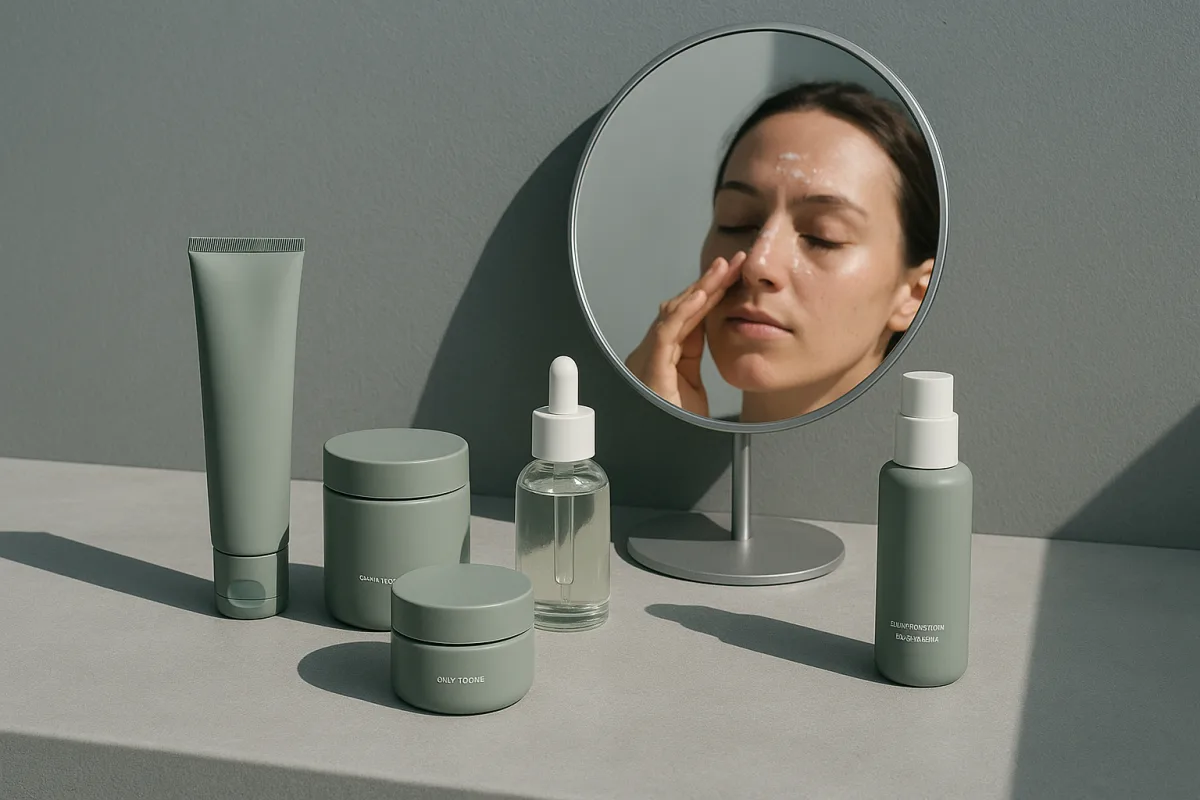
Identify the zones you actually need to manage
Combination skin is commonly an oily T-zone, meaning the forehead, nose, and chin, alongside cheeks and jawline that are normal to dry. [1] You are managing two tendencies at once: shine and congestion-prone areas in the center, plus areas that can feel tight after cleansing.
Look in the mirror at the end of a typical day, before washing your face. Notice where you look shiny, where makeup separates, and where skin feels dry or flaky. Those zones, not the label on a product, should determine where you apply your richer moisturizer or exfoliant.
Do not assume your entire face needs stripping because your nose gets shiny. Harsh cleansing across the whole face can leave dry zones more uncomfortable, while skipping moisturizer on oilier areas can contribute to rebound oiliness. [13][15]
If persistent redness, burning, cracking, or a sudden change in skin behavior is part of the picture, stop experimenting with multiple new products and see a dermatologist. A routine can support skin comfort and appearance, but it cannot diagnose why your skin has changed.
Build the basic morning routine first
Your morning routine should be short enough that you will actually repeat it: gentle cleanser, optional hydrating toner, serum if you want one, lightweight moisturizer, then broad-spectrum sunscreen with SPF 30 or higher. [2][4][5] Start there before buying a mask, acid, or retinoid.
Choose a gentle, pH-balanced cleanser, ideally one with ingredients such as glycerin, ceramides, niacinamide, or panthenol. [2] The aim is to remove overnight oil and residue without making your cheeks feel squeaky, tight, or stripped.
After cleansing, toner is optional. Some routine guidance includes a hydrating toner, while other guidance leaves it out, and there is no evidence here that every person with combination skin needs one. [2][5] We would spend that money on sunscreen or moisturizer first.
A niacinamide serum can fit after cleansing or toner. Guidance for oily zones points to 2% to 5% niacinamide, alongside salicylic acid for targeted oil control. [6][7] Skin response varies, so do not expect a serum to transform oil production quickly or permanently.
Use a lightweight, noncomedogenic moisturizer over your full face. [4] Apply a thin layer on your T-zone and a slightly more generous layer on cheeks and jawline if they feel dry. Combination skin still needs hydration in its oily areas.
Finish with sunscreen every day, regardless of season or climate. [12] This is the non-negotiable final daytime step, and it needs to be broad-spectrum SPF 30 or higher. [4] Let it be the product that gets your budget and attention first.
Set up a night routine that does not overcorrect
At night, remove sunscreen and makeup thoroughly. A double cleanse, using an oil-based cleanser followed by a gentle cleanser, is one suggested approach for combination skin. [2][5] If you do not wear makeup or heavy sunscreen, pay attention to whether this leaves dry areas uncomfortable.
Follow with optional toner, then moisturizer. Use the same lightweight moisturizer across the face if it is enough, or put a richer moisturizer only on dry zones. Ingredients suggested for drier areas include hyaluronic acid, ceramides, and emollients such as shea butter. [3][7][9]
Coconut oil also appears in guidance for dry areas, but it may clog pores for some people. [3][9] We would choose a ceramide- and glycerin-focused moisturizer before putting coconut oil on a face with an oily T-zone.
The point of your nighttime routine is not to make every area equally matte. It is to leave your face clean and comfortable, with enough moisture on dry areas and no unnecessary heavy layer over the parts that already produce more oil.
Add salicylic acid only where it earns its place
If shine and clogged-looking pores are concentrated in your T-zone, salicylic acid is the active to consider. Guidance for oily areas recommends 0.5% to 2% salicylic acid. [6][8] Apply it to the forehead, nose, and chin, not automatically to your cheeks.
Start once a week at night. Exfoliation guidance ranges from one to three times weekly, with advice to begin at once weekly and adjust according to tolerance. [10][20] Other routine guidance places AHAs and BHAs at one to two uses per week when introduced gradually. [4]
Do not add a salicylic acid cleanser, leave-on salicylic serum, scrub, and exfoliating toner all at once. That is how an attempt to control shine becomes an irritated, dry face. Over-exfoliation can compromise the skin barrier, so dry zones need particular restraint. [16]
At the first signs of stinging, persistent tightness, or flaking, reduce frequency and return to your basic cleanser-moisturizer-sunscreen routine. Slow, modest adjustment is the realistic expectation here. An exfoliant is not a reason to stop moisturizing your T-zone.
Exfoliant prices are broad, from $7 to $95, with an average around $35 in one 2026 product roundup. [11] Price does not tell you whether your cheeks can tolerate it, so begin with frequency and placement, not with the strongest-looking formula.
Keep retinoids on separate nights
A retinoid is an optional nighttime active, not an automatic addition to a combination-skin routine. If you decide to use one, start slowly at night. [21] Do not combine it with salicylic acid or other acids in the same routine unless a dermatologist has advised you to do so.
The reason is irritation risk, especially when you are already treating dry and oily zones differently. Alternate nights are the cautious route: one night for salicylic acid on the T-zone, another for a retinoid, with moisturizer supporting both.
Do not introduce an acid, retinoid, and new moisturizer in the same week. Add products gradually, every three to five days, so you have some chance of identifying what your skin dislikes. [13] This is boring advice. It also saves you from replacing your entire routine after one irritated week.
Adjust texture before you chase new actives
In humid weather, keep things light. Guidance favors gentle cleansers, oil-free moisturizers with humectants, and mild exfoliation options such as enzymes or fine powders. [12] Humectants draw in water, which can give dry zones hydration without making your T-zone feel coated.
In dry climates, use a hydrating cleanser and richer moisturizer with ceramides, hyaluronic acid, or glycerin. Limit exfoliation to one or two times weekly. [12][13] If cheeks feel tight in winter, switch to a cream cleanser and a richer moisturizer before increasing serum steps. [14]
During summer, lightweight, oil-free products are the direction suggested for combination skin, and salicylic acid cleansers are one option for oil control. [13] Daily sunscreen remains part of the routine in every climate. [12]
Monitor your face, not the calendar alone. A humid week, indoor heating, travel, and seasonal shifts can change how much moisturizer your cheeks need. Adjust one element at a time, starting with cleanser texture or moisturizer richness.
Choose products by job, not by the routine aesthetic
At the budget end, CeraVe Foaming Facial Cleanser comes in a 12-fluid-ounce bottle listed at $5.99 to $18.99, making it the cleanser option for someone who needs a basic wash without a luxury price. [17] The stated price is for the cleanser and size listed.
Clinique Clarifying Face Lotion 2 is a 13.5-ounce toner listed at $37. [18] It is for the person who wants a toner step, though we would not call toner essential. The Ordinary Niacinamide 10% + Zinc 1%, in a one-ounce bottle at $5.90, is the low-cost serum option.
That 10% niacinamide formula sits above the 2% to 5% range identified in guidance for oily zones. [6][7] We would introduce it cautiously, not assume a higher percentage is automatically better, and stop if your skin becomes irritated.
Neutrogena Hydro Boost Water Gel, 1.7 ounces at $19.99, is the lightweight moisturizer choice in this group. Neutrogena Ultra Sheer Dry-Touch SPF 100, three ounces at $9.97, is its sunscreen option. These listed prices cover the named product and size. [17]
For a mid-range lineup, La Roche-Posay Toleriane Hydrating Gentle Cleanser is a 13.5-fluid-ounce cleanser listed at $17.99. [19] It is the pick for someone whose cheeks want a gentler, more hydrating wash.
Dermalogica Daily Microfoliant Exfoliator, 2.6 ounces at $19.50, occupies the exfoliant slot, not a necessary daily toner slot. [17] Use exfoliants according to your skin’s tolerance, beginning once weekly, despite the product name.
Glow Recipe Plum Plump Hyaluronic Acid Serum, one ounce at $38, is the hydration-focused serum option. CeraVe Moisturizing Cream, 16 ounces at $16.99, is the richer moisturizer choice for dry cheeks or jawline, while Supergoop! Glowscreen SPF 40, 1.7 ounces at $36, is the sunscreen option. [18]
At luxury prices, Tatcha The Rice Wash Soft Skin Cleanser is five ounces at $40, and La Mer The Essential Tonic Hydrating Toner is 6.7 ounces at $140. [18] The latter is for someone who specifically wants a hydrating toner, not someone building the minimum effective routine.
OLEHENRIKSEN Truth Hydrating Vitamin C Serum is one ounce at $58, Augustinus Bader The Light Cream is 1.7 ounces at $265, and Dr. Dennis Gross All-Physical Lightweight Wrinkle Defense SPF 30 is 1.7 ounces at $42. [18] They occupy the serum, lightweight moisturizer, and sunscreen positions, respectively.
We would not start with the luxury group. Combination skin usually benefits first from zoning your application, cleansing gently, moisturizing everywhere, and using sunscreen daily. Spend extra only after you know which step your current routine is failing to cover.
Frequently Asked Questions
How do I build a skincare routine for combination skin?
Start by mapping your face into zones, identifying oily areas like the forehead, nose, and chin, and drier areas such as cheeks and jawline. Use a gentle cleanser, moisturizer, and broad-spectrum SPF 30 or higher daily on the whole face. Add targeted treatments like salicylic acid or niacinamide mainly to oily zones, and adjust product weight seasonally.
What products should I use for combination skin?
Choose a gentle, pH-balanced cleanser with ingredients like glycerin, ceramides, or niacinamide. Use a lightweight, noncomedogenic moisturizer applied thinly on oily areas and more generously on dry zones. Incorporate broad-spectrum sunscreen with SPF 30 or higher every day. Exfoliate with salicylic acid once or twice weekly on oily zones only.
How do I balance oily and dry areas in a skincare routine?
Apply richer moisturizers to dry cheeks and jawline while using lighter layers on the oily T-zone to avoid excess shine. Use targeted actives like salicylic acid or niacinamide on oilier zones to control congestion without drying out the rest of the face. Avoid harsh cleansing of the entire face to prevent irritation in dry areas.
What is the best morning skincare routine for combination skin?
A simple morning routine includes a gentle cleanser, optional hydrating toner, a niacinamide serum if desired, a lightweight moisturizer, and a broad-spectrum sunscreen with SPF 30 or higher. Keep the routine short to encourage consistency and apply products according to your skin’s zone needs.
How should I adjust my skincare routine for combination skin at night?
At night, consider a double cleanse if wearing makeup or sunscreen, followed by targeted treatments like salicylic acid on oily areas. Use a moisturizer that is richer on dry zones and lighter on oily zones. Introduce exfoliants gradually, starting once per week, and avoid over-exfoliating dry areas.
How we researched this
This article was assembled from 21 cited references.
Nothing here is based on hands-on testing. Where a figure or finding appears, it belongs to the source cited beside it, and the writing says so rather than implying otherwise. Every source is listed below so you can check it.
Sources
- What Is Combination Skin? | CeraVe
- My Finicky Combination Skin Begs for This $9 Drugstore Cleanser to Reset and Boost Radiance
- Combination Skin: Signs, Ingredients and a Routine | Vegalab
- I Have Textbook Combination Skin, and These Are the Only Moisturizers I'll Use
- Combination Skin Care Guide - Skincare Company - River Forest - Oak Park - Forest Park - Spa & Hair Salon
- Combination Skin, Best Ingredients & Routine | Skincare Database
- Combination Skin Guide: Routine & Ingredients
- Skincare Routine for Combination Skin: A Zone-by-Zone Guide
- Combination Skin: 19 Tips for Dry vs. Oily, Routine, Products, More
- How Often Should You Exfoliate Your Face? | Canada, Esthetic Skin Solutions
- Best Exfoliants for Combination Skin Skin of 2026
- How to Choose Skincare Based on Humid or Dry Climates | Skincare.com
- Seasonal Care for Combination Skin | Dermatology
- How to Change Your Skincare Routine by Season | ArniSun
- Combination Skin, How to Identify & Care for It - Déesse cosmetics & nutritional supplements
- The Skincare Routine for Combination Skin: Morning and Night | The Skin Formulary
- Best Skin Care for Combination Skin 2026 | Ulta Beauty
- Skincare Products For Combination Skin | Sephora
- Skincare Routine for Combination Skin, The Skin Edit
- How Often Should You Exfoliate Combination Skin? Expert Tips
- The Skincare Order That Dermatologists Actually Recommend-Here's Exactly Where Every Product Goes
Related Articles
Best Time to Exfoliate Skin: Morning or Night Explained
Discover the best time to exfoliate skin, why night is preferred, and how to protect your skin after exfoliation with sunscreen.

Transition Skincare for Fall: How to Adjust Your Routine
Learn how to transition skincare for fall with tips on moisturizing, exfoliating, and protecting skin as the weather cools.

How to Choose a Moisturizer for Combination Skin
Learn how to choose the best moisturizer for combination skin with tips on ingredients, textures, and applying to oily and dry zones effectively.

Best Time to Apply Retinol: Nighttime and Dry Skin Tips
Learn the best time to apply retinol, why nighttime matters, and how waiting after cleansing reduces irritation for a better skincare routine.