
Signs of Dehydrated Skin: How to Identify Them Clearly
Learn the key signs of dehydrated skin, how to spot them, and why it differs from dry skin for better skincare decisions.
The useful concept: dehydrated skin is a water-loss problem
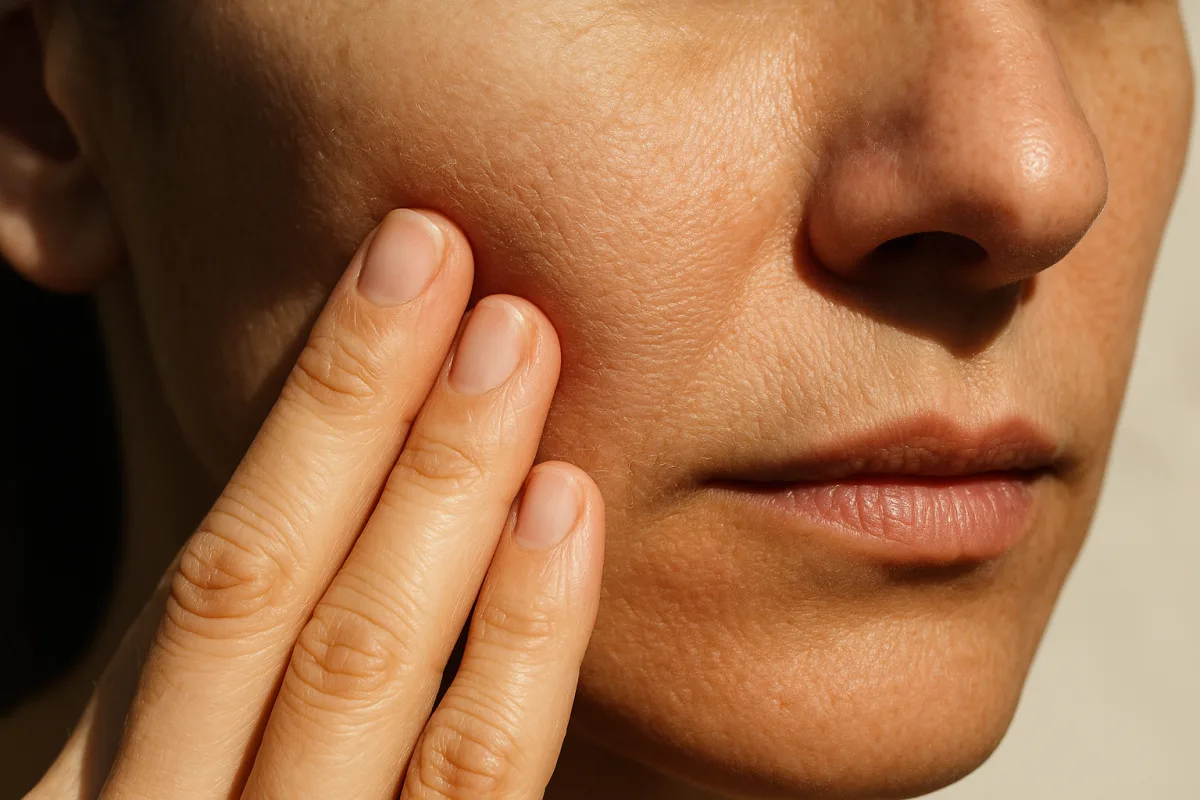
“Dehydrated skin” is widely used as a skincare label, but it is more useful when treated as a description of what is happening at the surface. The outermost layer of skin, the stratum corneum, does not hold enough water for its barrier to function and look its best.
This is different from dry skin. Dry skin refers to a skin type or state with too little oil, particularly lipids that soften the surface and support the barrier. Dehydration is a temporary lack of water and can affect every skin type, including skin that looks shiny by lunchtime. [4][6]
The overlap causes confusion because both can look flaky or feel uncomfortable. But applying richer oils to water-depleted skin is not always the complete answer. Oils and occlusive ingredients can slow water evaporation, but they do not directly add water to the stratum corneum.
The system worth understanding is transepidermal water loss, usually shortened to TEWL. This is the ongoing movement of water from deeper skin layers, through the epidermis, and into the air. It happens in healthy skin too. The question is how quickly it happens.
Think of the barrier as a brick wall. Skin cells are the bricks, while lipids including ceramides, cholesterol and fatty acids act as the mortar. A well-organised lipid layer slows water loss. A disrupted one allows water to escape faster, leaving the surface less flexible and less reflective of light. [9]
That is why dehydrated skin can look dull even when it is producing plenty of sebum. Oil creates shine, but it is not the same as water held inside the outer skin layer. It is entirely possible to have an oily T-zone and cheeks that feel tight after cleansing.
What dehydrated skin tends to look and feel like
The first visible sign is often dullness. Hydrated surface skin is smoother, so it reflects light more evenly. When its water content falls, tiny irregularities in the outer layer scatter light instead. The result can be a flat, tired-looking finish rather than an obvious patch of peeling. [10]
Fine lines can also look more pronounced, especially beneath concealer or foundation. This does not mean new wrinkles have formed. Water temporarily improves the flexibility and surface volume of the stratum corneum, so when that water is low, existing lines may be easier to see.
Makeup is often where people first notice the issue. Base products may catch around the nose, mouth, forehead or under-eye area, even if those areas do not visibly flake without makeup. This is a cosmetic sign, not a reliable diagnostic test.
Another commonly reported sign is that pores appear more visible. The logic is indirect. A stressed, water-depleted surface may prompt compensatory sebum production in some people, and oil plus uneven texture can make pores seem more prominent. Pore size itself has not suddenly changed. [6][7]
The tactile clues are usually more informative than the mirror. Skin may feel tight after washing, less springy when facial expressions move it, or mildly uncomfortable in a heated office. That tight feeling is not a measurement of hydration, but it fits the broader pattern of reduced water content. [10]
Flaking can happen, although it is not specific to dehydration. It may also reflect dry skin, irritation from an active ingredient, dermatitis or another skin concern. If peeling is persistent, widespread, inflamed or uncomfortable, it needs professional assessment rather than a longer list of moisturisers.
No single sign settles the question. Dullness can reflect sleep, sun exposure, pigmentation or product buildup. Fine lines can be structural. Visible pores are affected by genetics, oil production and skin texture. Dehydration is most plausible when several signs appear together and fluctuate with environment or routine.
Why winter skin often looks worse
The strongest practical clue is timing. If skin becomes tight, dull or makeup-unfriendly in autumn and winter, the weather may be doing more than your skincare routine. Low humidity means there is less water in the surrounding air, increasing the gradient that pulls water outward from skin.
One winter comparison cited in ScienceInsights found TEWL of 18.2 g/m²/h in winter versus 9.9 g/m²/h in summer, close to a doubling. That is a useful illustration of seasonal pressure on the barrier, not a universal number that applies to every face. [2]
Indoor heating adds another layer. Heated rooms are often dry, while cold outdoor air and abrupt temperature shifts can make the surface barrier feel less comfortable. Cleveland Clinic and the British Skin Foundation both flag winter conditions as common contributors to dry, dehydrated-feeling skin. [12][13]
Seasonal shifts may also affect the lipid barrier itself. DermatologyNews reports evidence that reductions in ceramide levels during autumn can contribute to scaling, dullness and barrier weakness. That makes winter care less about chasing a dramatic “glow” and more about reducing the rate at which water leaves. [3]
Low humidity below 40 percent is frequently cited as a point where dehydration becomes more likely. Still, humidity is not destiny. Cleansing frequency, water temperature, irritating leave-on products, regional climate and individual barrier function all influence how skin responds. [2][12]
Research also documents differences in skin properties among ethnic groups, including barrier and hydration-related measurements. These findings do not support a universal routine by ethnicity. They are a reminder that averages from one population, body site or climate do not perfectly predict an individual face. [1]
Why “dry” and “dehydrated” lead to different product choices
If the main issue is water loss, the first category to understand is humectants. These ingredients attract and hold water in the stratum corneum. Glycerin is the less glamorous classic, typically used at about 2 to 10 percent in moisturising formulas. [8][9]
Hyaluronic acid is another humectant, commonly effective in formulations around 0.1 to 2 percent. It can bind substantial amounts of water relative to its weight, which is why it can create a temporarily smoother, plumper surface appearance. [8]
The marketing shortcut is that hyaluronic acid equals hydration. The less tidy reality is that formulation and climate matter. In very dry air, or in formulas with high levels of hyaluronic acid and little barrier support, it may not feel comfortable for everyone and can leave skin feeling tighter. [8]
Applying a humectant serum to slightly damp skin is sensible because it gives the ingredient water to work with. Following it with moisturiser matters just as much. Otherwise, you may add a water-binding step without sufficiently slowing the water loss that caused the problem.
This is where emollients and occlusives come in. Emollients smooth rough surface texture, while occlusive ingredients form a film that reduces evaporation. A good moisturiser often combines humectants with one or both, rather than relying on a single hero ingredient. [9]
Ceramides address the “mortar” part of the barrier model. They are lipids found naturally in the stratum corneum. Product formulas may use ceramide NP, AP and EOP, often alongside cholesterol and fatty acids, to support the lipid mixture that slows TEWL. [8]
The frequently cited optimal 3:1:1 ratio of ceramides, cholesterol and fatty acids is a formulation principle, not a promise that a jar will recreate a healthy barrier exactly. Ceramides may appear in products at roughly 0.01 to 0.5 percent, and labels rarely disclose the full lipid architecture. [8]
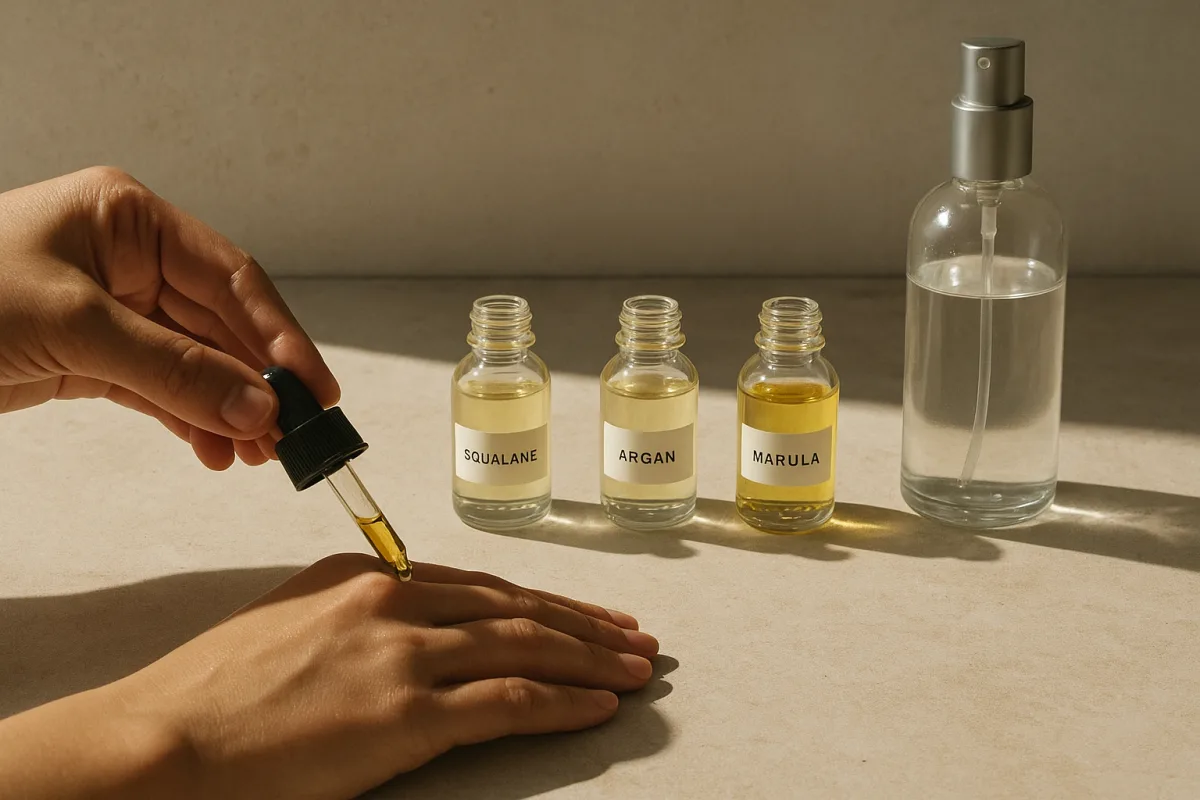
This is also why a face oil alone may disappoint someone whose skin is dehydrated. It can feel comforting and reduce some evaporation, but it may not supply humectants or the barrier-supporting mix needed for a meaningful change in surface hydration. It is a category limitation, not a verdict on all oils.
What improvement realistically looks like
A humectant-heavy product can change the look and feel of skin within hours. Fine dehydration lines may appear softer and makeup may apply more evenly. This is a temporary cosmetic effect, caused by improved water content in the outermost layer, not permanent structural change. [14][15]
With consistent use of a moisturiser that combines water-binding and water-loss-reducing ingredients, smoother texture and less tightness may emerge over one to two weeks. That is a reasonable timeframe for noticing a modest difference, not a deadline by which every symptom should disappear. [14]
More durable barrier improvement is commonly placed around two to four weeks. Some recovery timelines stretch to eight weeks for chronically dry or stressed skin, but this depends on the trigger, climate, baseline skin condition and whether irritating products are still in the routine. [15]
The sensible approach is boring: cleanse gently if cleansing leaves skin tight, apply a humectant to damp skin if it suits you, then use a moisturiser with barrier-supportive ingredients. During cold or dry periods, a more occlusive final layer may be useful at night.
Do not turn every line or rough patch into a hydration project. Burning, intense itch, bleeding cracks, sharply defined rashes, swelling, acne that is changing quickly, or symptoms that persist despite simplifying your routine can resemble other concerns. A dermatologist is the appropriate person to diagnose those.
The point is not to achieve a permanently “dewy” face. Skin hydration naturally changes across the day, seasons and environments. The more realistic goal is skin that feels comfortable, looks reasonably even, and is not repeatedly signalling that its surface barrier is struggling.
Frequently Asked Questions
What are the common signs of dehydrated skin?
Common signs include dullness, more visible fine lines especially under makeup, and a tight feeling after cleansing or exposure to cold weather. Makeup may catch on fine lines around the nose, mouth, forehead, or under the eyes, and pores can appear more prominent due to compensatory oil production on a water-depleted surface.
How can I tell if my skin is dehydrated or dry?
Dehydrated skin is a temporary lack of water affecting all skin types, while dry skin is a chronic lack of oil. Dehydrated skin often feels tight and looks dull but may still be oily, whereas dry skin lacks oil and tends to flake. The pattern of symptoms fluctuating with environment or routine, such as worsening in cold or low-humidity conditions, suggests dehydration rather than dry skin.
Why does dehydrated skin look dull and tight?
Dehydrated skin has reduced water in the outermost layer, causing tiny surface irregularities that scatter light unevenly, leading to dullness. The lack of water also reduces the skin’s flexibility and surface volume, which can create a sensation of tightness and make fine lines more visible.
What causes fine lines to appear more visible on dehydrated skin?
Water in the skin temporarily plumps and smooths the outer layer, improving its flexibility and volume. When water content drops, existing fine lines become more pronounced because the skin surface is less plump and more uneven, especially noticeable under makeup.
How does weather affect the signs of dehydrated skin?
Cold weather, low humidity, and indoor heating increase transepidermal water loss (TEWL), nearly doubling water loss in winter compared to summer. These environmental factors weaken the skin barrier and reduce surface water, making tightness, dullness, and makeup issues more apparent during autumn and winter months.
How we researched this
This article was assembled from 15 cited references.
Nothing here is based on hands-on testing. Where a figure or finding appears, it belongs to the source cited beside it, and the writing says so rather than implying otherwise. Every source is listed below so you can check it.
Sources
- Racial (ethnic) differences in skin properties: the objective data.
- Why Is Skin Drier in Winter? The Science Explained - ScienceInsights
- Autumn skin barrier repair: what the evidence supports — DermatologyNews
- Dry vs. Dehydrated Skin: Treatments and How To Tell the Difference
- Moisturizer for Peeling Skin: Is Your Skin Dry or Dehydrated? | Face Fresh
- Dry vs Dehydrated Skin: Key Differences & Fixes
- Dehydrated vs. Dry Skin: What’s the Difference? | SkinCeuticals
- Ceramides vs Hyaluronic Acid — Ingredient Comparison | Skincare Database
- Skin Hydration Science: How Your Barrier Really Works
- Just A Really Handy Guide To Dehydrated Skin-The Causes, The Treatment And The Products
- Hydration Testing for Dry Skin vs Normal Skin: Key Differences – Cosmetics Testing News
- Dry Skin in Winter: 9 Tips To Keep Hydrated
- Learn how to look after your skin in winter… | British Skin Foundation
- How Long Does It Take to Moisturize Dry Skin? Expert Tips
- Dehydrated Skin Recovery Timeline: Evidence Review
Related Articles
Signs of Over-Exfoliation: How to Recognize Skin Damage
Learn the signs of over-exfoliation and how to recognize when your skin barrier is compromised for healthier skincare choices.
How to Identify Skin Concerns: A Practical Guide
Learn how to identify skin concerns by observing your skin's signs and symptoms to choose the right care and products.
How to Choose a Moisturizer for Combination Skin
Learn how to choose the best moisturizer for combination skin with tips on ingredients, textures, and applying to oily and dry zones effectively.
How to Choose Face Oil for Dry Skin: A Practical Guide
Learn how to choose face oil for dry skin, including types, application tips, and best oils for sensitive or acne-prone dry skin.