
Signs of Over-Exfoliation: How to Recognize Skin Damage
Learn the signs of over-exfoliation and how to recognize when your skin barrier is compromised for healthier skincare choices.
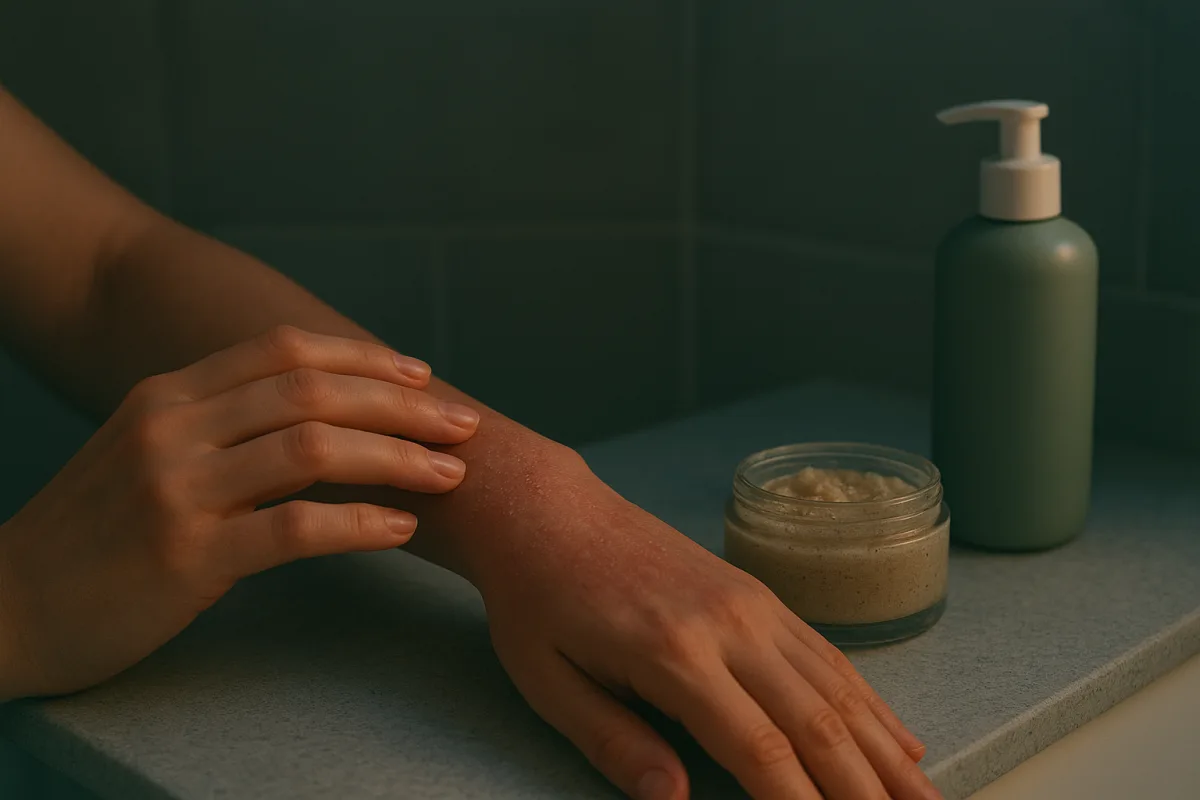
Over-exfoliation is really a barrier problem
Over-exfoliation is not a formal diagnosis, and it does not mean you have permanently damaged your skin. It describes a recognisable pattern: too much removal of surface cells, too often, leaving the outer skin barrier less able to hold water in and keep potential irritants out.
That barrier is the stratum corneum, the thin outermost layer of skin. It is often compared to bricks and mortar, with flattened skin cells as the bricks and a mixture of lipids around them as the mortar.
Exfoliating acids, such as glycolic, lactic and salicylic acid, loosen connections between surface cells. Physical exfoliants, including scrubs, textured cloths, cleansing brushes, pumice stones and exfoliating gloves, remove cells through friction. Neither category is automatically harsh, but both can become too much.
The important number in barrier research is transepidermal water loss, usually shortened to TEWL. It measures the amount of water vapour passing from the body through the skin into the environment, expressed as grams per square metre per hour.
A normal TEWL reading is generally cited as about 5 to 10 g/m²/h. Readings from 10 to 20 can indicate mild barrier impairment, 20 to 40 moderate impairment, and readings above 40 more substantial impairment. Those are broad barrier-health ranges, not a diagnostic test for over-exfoliation. [13]
That distinction matters. TEWL rises for several reasons, including dry air, cleansing, irritation and underlying inflammatory skin conditions. There is no universally accepted TEWL cutoff that can tell you, specifically, “you have over-exfoliated.”
Still, it explains why the symptoms travel together. When the barrier is less effective, water leaves more easily and products that previously felt ordinary, such as a simple cleanser or moisturizer, can sting on contact.
The signs are a pattern, not one dramatic symptom
The most familiar sign is redness that lingers rather than fading shortly after cleansing or applying a new product. It may look like a diffuse flush across the cheeks, nose, chin or around the mouth rather than a few isolated blemishes. [1][4]
Dryness and flaking are also common, although they are easy to misread. Someone sees flakes and assumes they need a scrub. In an over-exfoliation pattern, the flakes may reflect disrupted barrier function, so more abrasion can make the cycle worse. [3][4]
Stinging or burning is often the more useful clue. Skin does not need to look dramatically inflamed to be unhappy. If water, cleanser, moisturizer or sunscreen suddenly feels sharp, hot or prickly, take that change seriously. [1][3]
Another confusing sign is a shiny or waxy-looking surface. This is not necessarily the healthy “glow” promised by exfoliating-product marketing. It can appear when the skin’s surface has become overly smooth, tight and reflective while feeling dry or uncomfortable. [2][3]
Small rough bumps or breakouts can appear too. This is one reason over-exfoliation is frequently mistaken for congestion: the person responds by adding another acid, stronger cleanser or exfoliating toner, then finds that the irritation escalates. [1][4]
None of these signs proves the cause on its own. Dryness after a cold week, redness after exercise, or a new cluster of bumps can each have other explanations. The more persuasive clue is timing: symptoms begin after increasing exfoliation, stacking active products or adding friction.
What TEWL explains, and what it cannot
Think of TEWL as the skin barrier’s leakiness, not a beauty score. A higher reading means more water is moving outward through the skin. It does not measure whether your skin looks polished, whether pores appear smaller, or whether an exfoliant is “working.”
This is why a smooth face can still be overworked. Cosmetic smoothness is an immediate surface effect. Better tolerance, less flaking and a more comfortable skin feel are different outcomes, and they usually take longer because the barrier has to re-establish itself.
The cost of repeatedly pushing exfoliation is that you may gain a temporary smoother feel while losing comfort and routine flexibility. Suddenly, products you enjoy using can become difficult to tolerate, and it becomes harder to identify which formula is actually causing the reaction.
Concentration matters, but it is not the whole story. A low-strength acid used daily, alongside a retinoid and an exfoliating cleanser, can be more disruptive than a stronger product used infrequently. The formula, pH, application method and the rest of the routine all affect the outcome.
The research brief does not provide a single concentration of glycolic, lactic or salicylic acid that reliably triggers over-exfoliation. That is the honest answer. Product labels do not supply a universal safety calculation because skin tolerance varies substantially.
Look at the routine, including the non-bottle tools
To work out whether exfoliation is plausibly involved, count every source of it over seven days. That includes leave-on acid serums, exfoliating toners, peeling pads, scrub cleansers, masks, facial brushes, washcloths and at-home devices.
Traditional body practices count as well. Abrasive lifa gloves, pumice stones and vigorous scrubbing can be part of a long-standing bathing ritual, but frequent or forceful use can still disrupt the barrier. Context matters more than whether the tool is traditional or trendy. [13]
General frequency guidance is broad rather than exact. Sources commonly suggest exfoliating normal skin two to three times weekly, dry or sensitive skin one to two times weekly, and oily or acne-prone skin two to four times weekly. [4][6]
Even that is not a strict ceiling. Some guidance allows daily use of very mild products for some oily skin, while others advise considerably less. The practical limit is not a calendar number, it is whether skin remains comfortable and stable. [4][6]
If your face becomes stingy, persistently red or flaky after moving from twice weekly to daily use, that change is more useful information than a brand’s recommended schedule. Stop, simplify and reassess rather than assuming an adjustment period is required.
Do not label every reaction “purging”
“Purging” is a widely used skincare term, but it is not a catch-all explanation for irritation. Redness, burning, flaking and widespread sensitivity are not signs to ignore simply because a product contains an exfoliating active.
Allergic reactions can overlap with irritation, but may involve itching, swelling, hives, blistering or oozing. They can develop hours to days after exposure, which is why a product used several times without trouble can still be relevant. [12]
Eczema, rosacea and other skin conditions can also resemble the redness and sensitivity attributed to over-exfoliation. A skincare article cannot distinguish these conditions for you, and their management is not interchangeable with simply pausing an acid. [8][12]
Seek professional advice promptly for facial swelling, blistering, oozing, eye-area involvement, severe pain or a spreading rash. If symptoms do not improve after simplifying your routine, a dermatologist can assess whether something other than exfoliation is driving them.
The reset should be boring
The first step is to stop all exfoliation, including acids, scrubs, brushes and peeling masks. Sources on barrier recovery also advise pausing other potentially irritating actives for one to two weeks, rather than rotating through alternatives. [10][11]
Use a gentle cleanser, a plain moisturizer and sunscreen in the daytime. This is not glamorous, but it reduces variables. Choose formulas without fragrance or drying alcohol where possible, particularly if products are currently stinging. [10][11]
Do not try to speed recovery with a stronger “barrier” serum, a peel or a new active. More products create more opportunities for irritation and make it harder to tell what your skin can tolerate. The best routine during this period is deliberately uneventful.
Consumer skincare sources estimate that mild irritation may settle within three to seven days, while a more established over-exfoliation pattern can take two to four weeks. More severe disruption may take four to eight weeks or longer. [5][9]
Treat those timelines as rough expectations, not guarantees. They are not diagnostic benchmarks from a standardised clinical trial, and individual recovery depends on the products involved, how long symptoms have lasted, climate, cleansing habits and underlying skin sensitivity.
Once the skin no longer feels stingy and the redness and flaking have settled, reintroduce only one active at a time. Start with fewer applications than your previous routine, then wait long enough to observe whether irritation returns. [10][11]
That patience is less exciting than chasing a daily exfoliation schedule, but it is the useful lesson. Exfoliation can offer a temporary smoother surface, yet skin that is calm enough to tolerate its basic routine is a better marker of success than shine alone.
Frequently Asked Questions
What are the common signs of over-exfoliation on skin?
Common signs include persistent redness, dryness, flaking, stinging or burning sensations, small rough bumps or breakouts, and a shiny or waxy-looking surface. These symptoms indicate the skin barrier is compromised and struggling to retain moisture and protect against irritants.
How can I tell if I am over-exfoliating my skin?
You can suspect over-exfoliation if symptoms like redness, irritation, dryness, or breakouts start after increasing exfoliation frequency, stacking active products, or adding friction. Stinging or burning sensations from normally gentle products are also important clues.
What does over-exfoliated skin look and feel like?
Over-exfoliated skin may appear red or flushed, flaky or dry, and sometimes shiny or waxy rather than healthy glowing. It often feels sensitive, tight, uncomfortable, or stinging when applying water, cleansers, moisturizers, or sunscreen.
Why does my skin sting or feel dry after exfoliating?
Stinging and dryness happen because exfoliation can disrupt the skin’s outer barrier, increasing transepidermal water loss (TEWL). This barrier impairment allows moisture to escape and irritants to penetrate more easily, making the skin feel dry, reactive, and uncomfortable.
Can over-exfoliation cause redness and breakouts?
Yes, over-exfoliation can cause persistent redness and small rough breakouts. The damaged barrier allows irritation that may look like congestion, leading some to mistakenly increase exfoliation and worsen the problem.
How we researched this
This article was assembled from 13 cited references.
Nothing here is based on hands-on testing. Where a figure or finding appears, it belongs to the source cited beside it, and the writing says so rather than implying otherwise. Every source is listed below so you can check it.
Sources
- Am I Over Exfoliating My Skin? | Front Range Dermatology
- 7 signs you are over exfoliating your skin - Tata 1mg Capsules
- How to Avoid Over-Exfoliated Skin | Paula's Choice
- Are You Over-Exfoliating? How to Tell & Reverse the Damage
- Over-Exfoliated Skin: Signs, Recovery Time and How to Rebuild – NAYA
- Why Your Skin Needs Exfoliation: A 2026 Guide
- How to Tell If You're Exfoliating Your Skin Too Much or Too Often — Expert Advice | Allure
- So, You Think You Have Sensitive Skin? Here's What Experts Are Desperate for You to Know
- Over-Exfoliated Skin: Signs, Causes & How to Repair Your Skin Barrier – Ellitee Skincare
- How to fix over-exfoliated skin · SkinRegime
- How To Heal Over Exfoliated Skin | Ulta Beauty
- Am I Allergic to My Skin Care Products?
- Perspectives sur l’Exfoliation Cutanée : Des Rituels à l’Objectivation Scientifique – Cosmetics Testing News
Related Articles
Signs of Dehydrated Skin: How to Identify Them Clearly
Learn the key signs of dehydrated skin, how to spot them, and why it differs from dry skin for better skincare decisions.
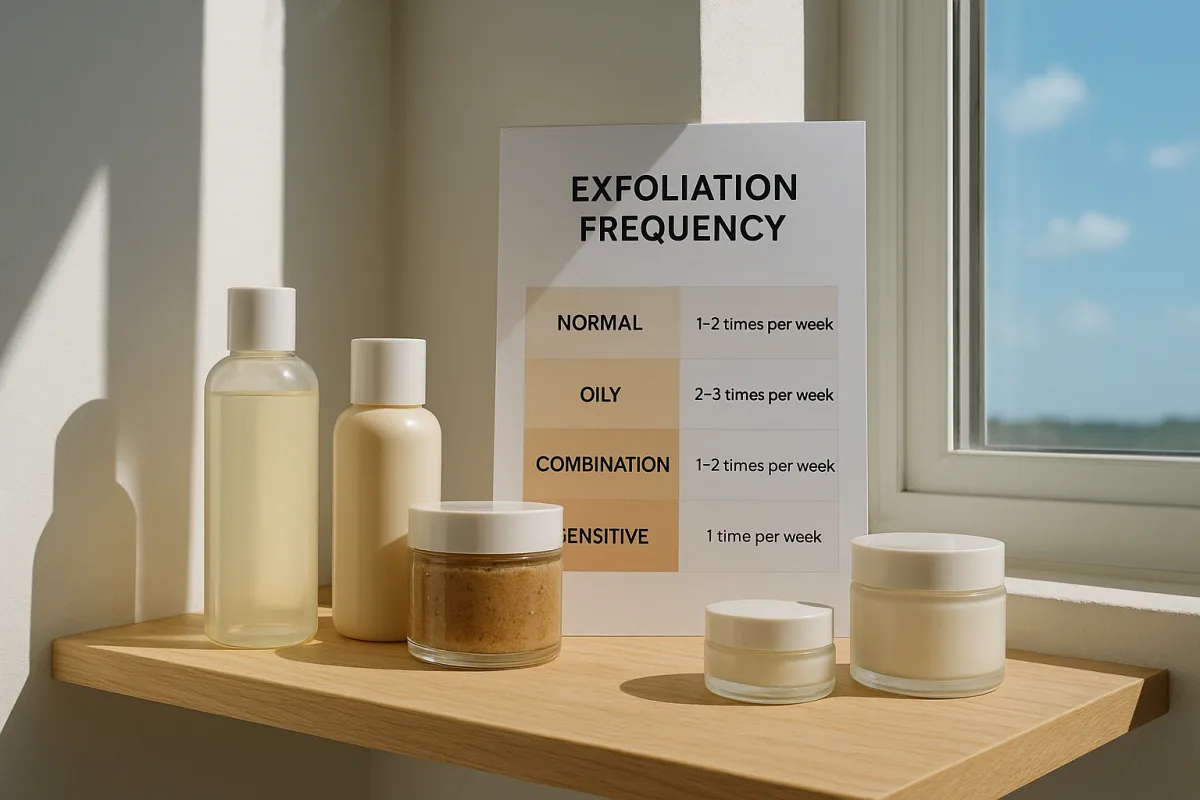
How Often Should You Exfoliate? Expert Frequency Guide
Learn how often you should exfoliate based on skin type, exfoliant type, and signs of over-exfoliation to build a safe skincare routine.
Best Time to Exfoliate Skin: Morning or Night Explained
Discover the best time to exfoliate skin, why night is preferred, and how to protect your skin after exfoliation with sunscreen.
How to Identify Skin Concerns: A Practical Guide
Learn how to identify skin concerns by observing your skin's signs and symptoms to choose the right care and products.