
How to Identify Skin Concerns: A Practical Guide
Learn how to identify skin concerns by observing your skin's signs and symptoms to choose the right care and products.
Start with a baseline, not a personality label
The first problem is treating “skin type” as a complete explanation. It is not. Skin type describes broad patterns of oil production and comfort, while concerns such as redness, breakouts, dark marks and irritation can occur across multiple types. [2][3][16]
The usual categories are oily, dry, combination, sensitive and normal. Oily skin tends to look shiny and may feel slick; dry skin may feel rough or tight; combination skin often has more oil through the forehead, nose and chin than the cheeks. [2][3]
Sensitive skin is better thought of as a tendency toward stinging, burning, redness or irritation from products and environmental exposure, rather than a neat category that replaces oily or dry. You can be oily and sensitive, or dry and sensitive. [16]
“Normal” is not a goal or a superior category. It generally means skin appears reasonably balanced, without pronounced excess oil or persistent dryness. It does not mean someone cannot develop spots, irritation or uneven tone. [2][3]
For a beginner, the useful question is not “what is my perfect skin type?” Ask: where do I become oily, where do I feel uncomfortable, what changes after cleansing, and what has changed recently? That gives you observations rather than a label.
Do the checks before buying a new routine
Begin on a relatively ordinary day, not immediately after a workout, a long flight, a beach day or trying three new products. Wash with a gentle cleanser, pat dry, and leave your skin bare rather than applying toner, serum or moisturiser. [17]
CeraVe describes this as the Watch and Wait method. After about 30 minutes, assess how your skin feels and looks: overall shine may suggest oiliness, while tightness, roughness or flaking may point toward dryness. [17]
Look zone by zone rather than judging your entire face in a bathroom mirror. A shiny nose with comfortable cheeks is different from shine across the forehead, cheeks and chin. This distinction is why combination skin is frequently mistaken for fully oily skin. [2][3]
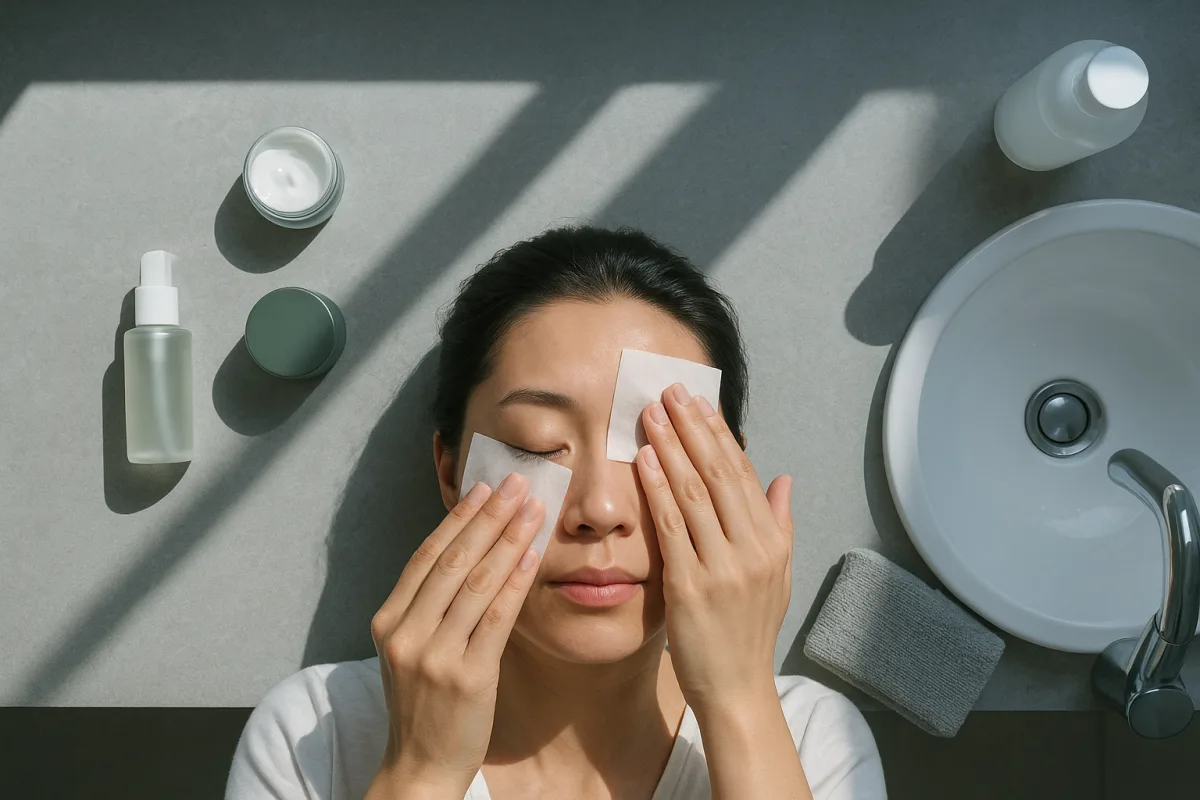
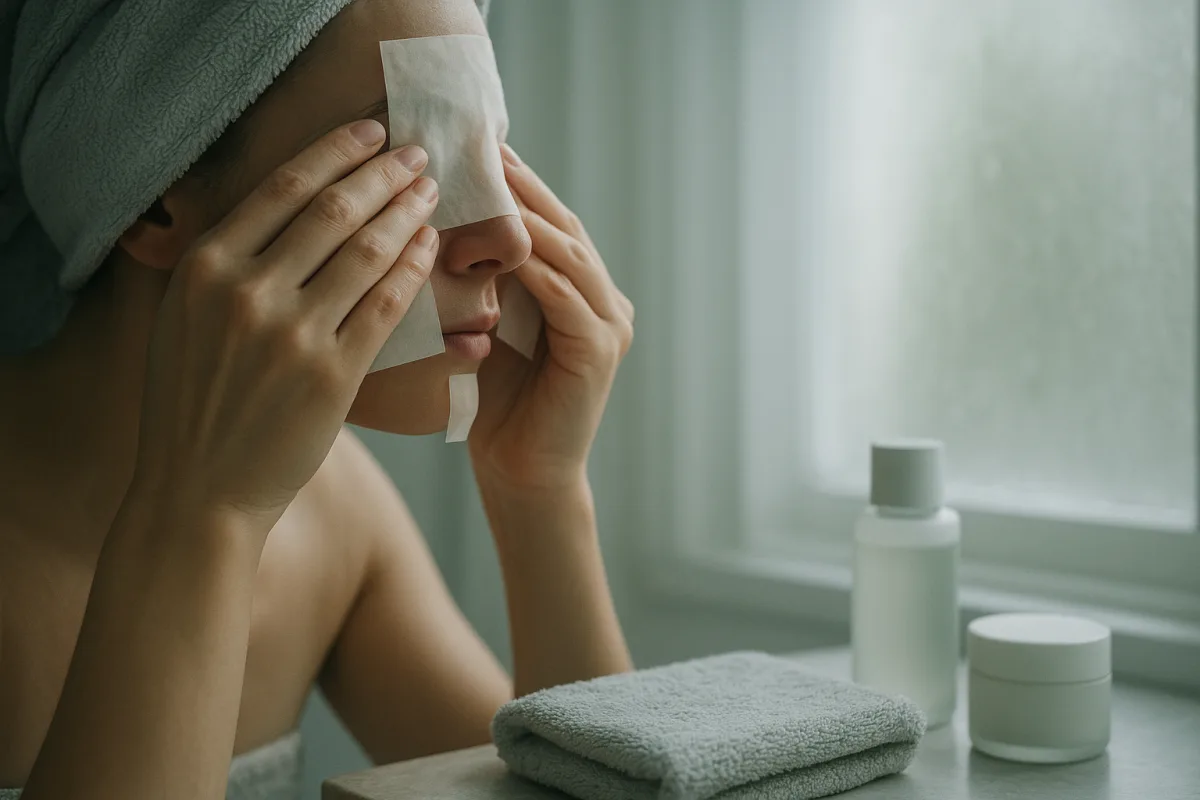
Then use blotting sheets or plain tissue to press, not rub, around the forehead, nose, chin and cheeks. Oil picked up across the face supports an oily pattern; oil concentrated in the central face supports a combination pattern. [17]
Neither check diagnoses a skin disorder, measures your skin barrier or explains redness. They are low-stakes ways to notice surface oil and post-cleansing comfort. Repeat them on a few ordinary days before changing products, because one reading can be misleading.
Take notes rather than relying on memory. Record where you see shine, flakes, tightness, stinging, bumps, dark marks or redness, along with the cleanser, sunscreen and makeup used that day. A daily routine also makes changes easier to spot. [9]
Separate dry skin from dehydrated skin
This is the distinction beginners most often miss. Dry skin refers to insufficient oil, while dehydrated skin refers to insufficient water. They can overlap, but they are not interchangeable, and an oily person can still have dehydrated-feeling skin. [10]
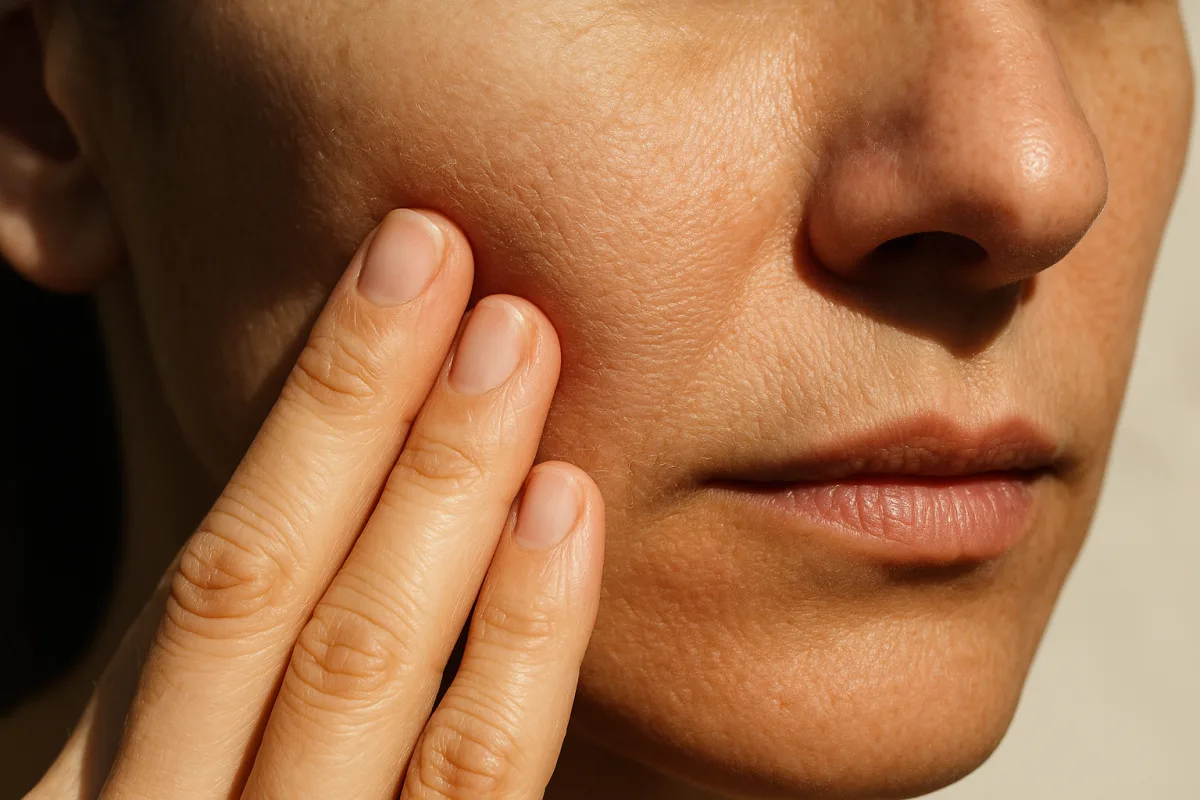
Dry-leaning skin may feel rough, look flaky or feel persistently tight. Dehydrated skin can look dull or temporarily less plump and feel tight, even while the forehead and nose remain visibly oily. Universkin specifically separates these two patterns. [10]
There is no validated at-home test in the research brief that cleanly proves whether a person is dry versus dehydrated. Symptom observation is useful, but it is not a diagnosis, and it cannot tell you why the symptoms are occurring. [10]
The practical implication is restraint. Do not respond to tightness by scrubbing harder, using a stronger cleanser or adding multiple exfoliants. Harsh cleansing and over-washing can worsen irritation and undermine the barrier function that helps skin retain moisture. [11][12]
Likewise, do not skip moisturiser simply because your face gets shiny. Schweiger Dermatology lists skipping moisturisation for oily skin among common mistakes, since oiliness and surface discomfort can coexist. [12]
Choose products by the immediate pattern you observe. If cheeks feel tight after cleansing, simplify the cleanser and use moisturiser there. If the T-zone is oily but cheeks are comfortable, apply lighter layers where needed rather than forcing one approach everywhere.
Name the visible concern, but do not diagnose it
Once you understand your oil and comfort pattern, identify what you can actually see. Describe the feature first, such as “small red raised bumps on the jaw” or “flat brown mark after a spot,” rather than immediately assigning it a medical name.
Acne-like lesions can include red papules and pustules. A papule is a raised inflamed bump, while a pustule is a raised bump containing visible pus. These are descriptive terms, not proof of a particular cause.
The source brief also lists persistent facial redness, visible blood vessels, swollen bumps, burning and, in advanced cases, thickening of nasal skin among features associated with rosacea. Those features require clinical interpretation because several conditions can look similar.
Redness is particularly easy to misread as dryness, dehydration or “sensitivity.” It can be affected by irritation, cleansing habits and other factors, and Schweiger Dermatology advises professional input rather than self-diagnosis when redness is unclear or persistent. [12]
Darkened patches or marks are commonly described as hyperpigmentation, meaning increased melanin in an area of skin. The word describes appearance, not a cause, and new, changing or unexplained pigmentation should not be casually assigned an at-home explanation. [2]
Eczema can involve itchy, dry, inflamed, red or swollen patches, sometimes with thickened skin after ongoing rubbing or scratching. Those signs overlap with contact irritation and other skin problems, so treat this as a reason to seek medical advice, not a product-shopping category. [2]
A simple rule helps: cosmetic observations are things like shine, temporary dryness, texture and the look of a mark. Pain, persistent itch, burning, spreading redness, visible vessels or recurring inflamed lesions move beyond a beginner skincare assessment.
Expect your skin to change with the calendar
A routine that seemed sensible in July may feel wrong in January. Dermatology sources cited in the brief describe winter as a period when dryness can become more apparent, while summer heat and humidity can increase perceived oiliness. [4][5]
Spring and autumn are transition periods, not seasons to ignore. Changes in temperature, humidity and environmental exposure can alter comfort and sensitivity, so a routine should be reassessed when your skin’s behaviour changes rather than on a fixed annual schedule. [4][6]
That does not mean rebuilding everything four times a year. Start with the smallest useful adjustment: reduce cleansing intensity if skin becomes tight, use moisturiser more consistently when dryness appears, or reassess heavy layers when heat makes your face feel slick.
Seasonal change can also complicate breakouts. If congestion or inflamed spots become recurrent or severe, avoid assuming weather is the only explanation. The Teen Acne Solutions source notes seasonal influences, but an ongoing pattern still warrants a dermatologist rather than escalating products alone. [7]
Consider pigmentation and sensitivity in context
Skin tone matters, but it does not replace observation. The Fitzpatrick scale groups skin by response to ultraviolet exposure from types I through VI, and sources on ethnic skin care note that skin of colour has distinct pigmentation and sensitivity considerations. [13]
Research reviewed by PMC notes that darker skin contains more melanin, which offers some natural ultraviolet protection but does not make sunscreen unnecessary. It also has a greater tendency toward post-inflammatory hyperpigmentation after irritation or inflammation. [1]
That means a spot, scratch, harsh product reaction or over-exfoliation can leave a lingering dark mark more readily in some people. Prevention here is cosmetic caution: minimise avoidable irritation and use broad-spectrum SPF 30 or higher, as Marie Claire’s expert guidance recommends for all tones. [18]
A denser stratum corneum does not automatically mean darker skin cannot feel dry or dehydrated. Marie Claire’s reporting notes that dryness and dehydration can still occur despite barrier differences, another reason not to decide product needs from complexion alone. [18]
If exfoliation is part of your routine, the brief supports a gentle approach, with lactic acid or polyhydroxy acids, often called PHAs, identified as options intended to lower irritation and hyperpigmentation risk compared with more aggressive exfoliation. [14]
There is no concentration, schedule or guaranteed outcome supplied in the brief for these acids. Start cautiously, avoid piling them onto already irritated skin, and do not use exfoliation as a DIY attempt to manage persistent dark patches or inflamed lesions.
Avoid creating the concern you are trying to identify
The second problem after misidentifying skin is changing too much at once. Over-washing, harsh cleansers, skipping moisturiser and over-exfoliating are all common beginner errors identified by the brief’s dermatology and skincare sources. [11][12]
A basic assessment routine needs only cleansing, moisturising when your skin needs it, and daily broad-spectrum sun protection. Adding actives before you know whether your baseline skin is tight, oily, stingy or calm makes it harder to identify what caused a reaction. [9][18]
Weekly gentle exfoliation is a general guideline from Dermathub, not a universal requirement. Skin sensitivity and individual tolerance vary, and more frequent exfoliation is not inherently more effective for the cosmetic goal of smoother-looking texture. [4]
If a product stings, burns or causes new irritation, stop treating that as evidence that it is “working.” Irritation is not a required stage of skincare improvement. Simplify the routine and seek professional advice if symptoms persist or are significant.
Reassess regularly and know when to book help
Review your notes monthly, particularly when seasons change or after introducing a product. The point is not to chase perfect skin, but to notice meaningful shifts in oiliness, dryness, comfort, marks or recurring inflammation before adding another product. [4][8]
ScanSkinAI’s guidance recommends monthly self-exams for new or changing irregularities and annual dermatologist checks, with appointments every three to six months for people at higher risk. A clinician should set the schedule for anyone with individual risk factors. [8]
Book a dermatologist appointment for persistent or uncertain redness, itching, burning, visible vessels, recurring swollen bumps, substantial changes in pigmentation, or any new or changing irregularity. A good beginner routine can support comfort and appearance, but it cannot replace diagnosis.
Frequently Asked Questions
How can I identify my skin concerns at home?
Start by observing your skin on a normal day after washing with a gentle cleanser and leaving it bare for about 30 minutes. Use the "Watch and Wait" method to note how your skin feels and looks zone by zone, then press blotting sheets on different areas to check oiliness. Take notes on shine, tightness, flakes, redness, or bumps to track patterns over several days before changing products.
What are the signs of common skin concerns?
Oily skin tends to look shiny and may feel slick, while dry skin feels rough or tight and may flake. Combination skin shows oiliness mainly on the forehead, nose, and chin but not the cheeks. Sensitive skin often stings, burns, or becomes red and irritated from products or environmental exposure. Persistent redness, painful bumps, visible vessels, or changing marks should be evaluated by a dermatologist.
How do I tell the difference between dry and dehydrated skin?
Dry skin lacks oil and may feel rough, tight, or flaky, whereas dehydrated skin lacks water and can look dull or less plump even if oily areas are present. Dehydrated skin often feels tight temporarily but does not necessarily have the rough texture of dry skin. Confusing the two can lead to inappropriate skincare choices.
What should I observe to recognize oily or combination skin?
Oily skin shows overall shine and may feel slick across the face. Combination skin has oil concentrated in the central face—forehead, nose, and chin—while the cheeks remain comfortable or less oily. Using blotting sheets pressed on different zones can help map where oil is produced.
When should I see a dermatologist for skin concerns?
See a dermatologist if you notice persistent redness, painful or swollen bumps, itch, visible blood vessels, changing marks, or unexplained dark patches. These signs require professional assessment rather than at-home diagnosis to ensure accurate treatment. Regular skin checks are also recommended, especially if you have risk factors or notice new or changing irregularities.
How we researched this
This article was assembled from 18 cited references.
Nothing here is based on hands-on testing. Where a figure or finding appears, it belongs to the source cited beside it, and the writing says so rather than implying otherwise. Every source is listed below so you can check it.
Sources
- Aging Differences in Ethnic Skin - PMC
- The No BS Guide to Discovering Your Real Skin Type
- What’s Your Skin Type?
- Seasonal Skin Type Changes | Dermatology
- How Your Skin Is Affected by Seasons and the Weather | Allure
- Your skin changes dramatically with the seasons | KAIAN Inc.
- How Seasonal Changes Affect Your Acne (And When to Switch Products) | Teen Acne Solutions
- Skin Check Frequency Guidelines: How Often Is Right (2026) | ScanSkinAI
- The Complete Skincare Routine Guide for Beginners (2026) | Beauty Hygiene
- Dry & Dehydrated Skin: Causes & Treatment | Universkin
- Complete Guide to Beginner skincare mistakes for Indian Skin – Belogical Wellness Private Limited
- Men’s Skincare Mistakes: What You’re Doing Wrong
- Ethnic Skin Care | Skin Inc.
- After Seriously Glowy Skin? Here's Your Expert Guide to Exfoliating Acids
- Understanding Ethnic Skin: Personalized Skincare for Every Skin Type
- What Is My Skin Type and Why Does It Matter?
- What Skin Type Do I Have? | Determine Your Skin Type | CeraVe
- Do You Know Your Phototype? Here's Why It Might Just Be As Important As Your Skin Type For Your Routine
Related Articles

How to Identify Your Skin Type: A Practical Beginner's Guide
Learn how to identify your skin type accurately with at-home tests, avoid common mistakes, and understand how it changes over time.
Signs of Dehydrated Skin: How to Identify Them Clearly
Learn the key signs of dehydrated skin, how to spot them, and why it differs from dry skin for better skincare decisions.
Skin Type Home Test: How to Identify Your Skin Type
Learn how to perform a skin type home test using simple methods like the bare-faced test and blotting paper to identify your skin type accurately.

Signs of Over-Exfoliation: How to Recognize Skin Damage
Learn the signs of over-exfoliation and how to recognize when your skin barrier is compromised for healthier skincare choices.