
Transition Skincare for Winter: How to Adjust Your Routine
Learn how to transition skincare for winter with expert tips on adjusting routines, choosing ingredients, and protecting your skin in cold weather.
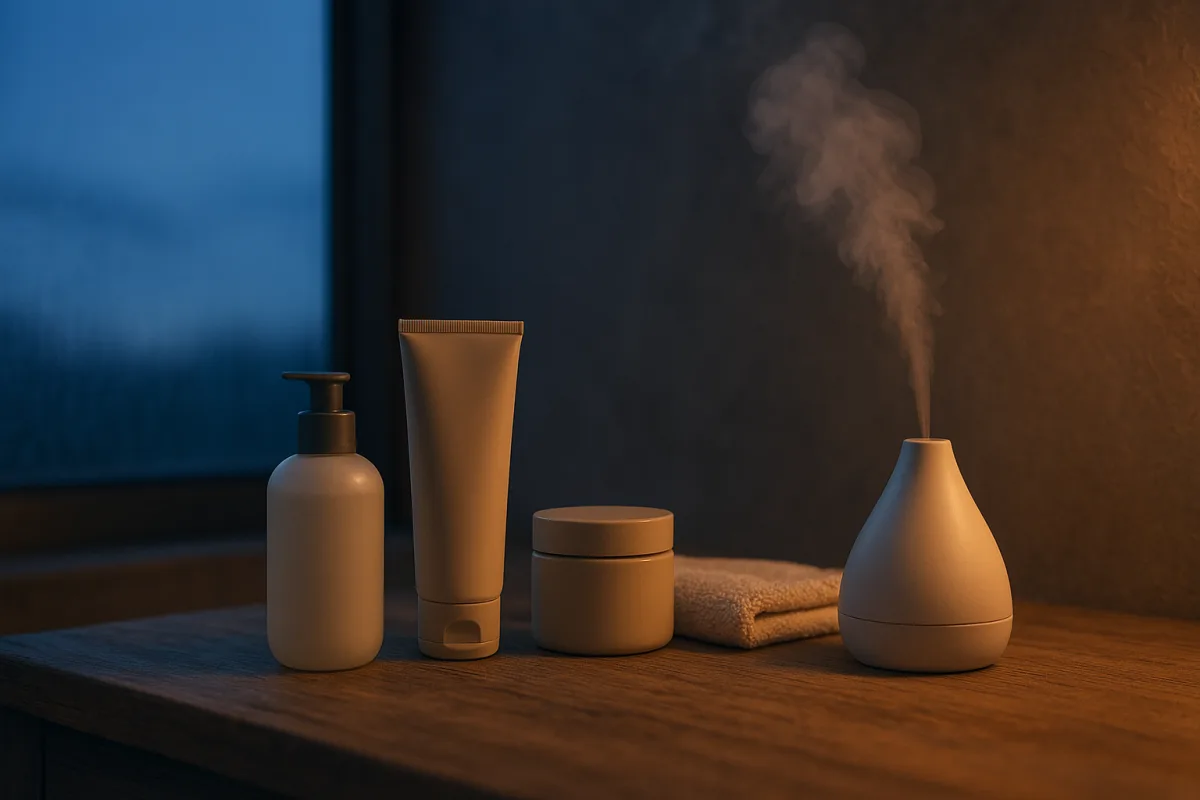
Winter skincare is a routine adjustment, not a reason to buy an entirely new shelf
The shift is real: when cold weather arrives, skin often loses water faster, feels less comfortable and becomes less tolerant of the routines that worked in summer. The sensible response is usually not “winter skincare” as a separate category. It is a seasonal edit: gentler cleansing, more reliable moisturising, less casual exfoliation and continued sunscreen use.
Multiple independent sources arrive at broadly the same advice. The American Academy of Dermatology recommends gentler cleansing, prompt moisturiser application and daily sunscreen through winter. University of Rochester Medicine similarly points to cold, low-humidity conditions as factors that can compromise the skin barrier. ScienceInsights reports a substantial seasonal change in water loss from skin, while Forefront Dermatology and YourSkin.Care both distinguish dry cold from humid cold rather than treating all winter weather alike. [1][2][5][6][9]
That convergence matters more than a seasonal product launch. Still, it is worth being clear about the limits: there is no strong evidence establishing a precise winter formula, a universal number of moisturiser pumps or a perfect date to switch routines. Most winter-skincare advice is sensible barrier management, not a clinically standardised protocol.
The evidence is stronger for the problem than for a perfect solution
The clearest physiological case for changing a routine is transepidermal water loss, usually shortened to TEWL. This is the passive movement of water from deeper layers of skin into the surrounding air. ScienceInsights cites cheek TEWL of 18.2 g/m²/h in winter versus 9.9 g/m²/h in summer, close to a doubling in that example. It also reports lower levels of natural moisturising factors in winter. [2]
That figure should not be read as a promise that everyone’s skin will lose exactly twice as much water, nor does it tell us which moisturiser will suit a particular person. Seasonal studies and measurements can show an overall pattern while individual skin still responds differently according to climate, cleansing habits, indoor conditions and use of irritating products.
But the direction of travel is credible. University of Rochester Medicine notes that cold weather and low humidity can weaken barrier function and make skin more susceptible to irritation. [1] The American Academy of Dermatology’s winter guidance makes the same practical connection, advising people to avoid habits that strip skin unnecessarily, including harsh cleansing and long, hot showers. [5]
The trend, then, is not that everyone suddenly needs the richest cream available. It is that a lightweight routine built for heat, sweat and humidity may stop making sense once the air becomes cold and dry.
Why this is happening now
Seasonal skincare changes are being discussed more openly because routines have become more active-heavy. Plenty of people use exfoliating acids, retinoids, strong cleansers or layered treatment serums year-round. Those products are not automatically inappropriate in winter, but a routine with little margin for error can become uncomfortable when the weather removes some of skin’s tolerance.
The other reason is simpler: weather changes are tangible. Skin that felt ordinary in September may start feeling tight after cleansing in November. Hands may need more frequent moisturiser. Makeup may catch on dry patches. These are cosmetic changes, not necessarily signs of a medical problem, but they are useful feedback that a routine needs revisiting.
There is no good evidence that a particular amount of moisturiser is required in winter. The research brief found no trials that establish winter-specific grams, pumps or a precise frequency increase. Advice is more consistent on timing than quantity: moisturise at least twice daily, and consider reapplying to exposed areas such as hands when needed. ScienceInsights recommends applying moisturiser promptly after washing, within three minutes, while skin is still damp. [2]
That timing is more important than buying a dramatically thicker product. Water is available on damp skin. A moisturiser can help hold onto it.
Read the moisturiser label by function, not by seasonal copy
A useful winter moisturiser usually combines three jobs.
Humectants, such as glycerin and hyaluronic acid, help bind water in the outer skin layer. Emollients, including ingredients such as lanolin and glyceryl stearate, improve the feel of roughness by filling gaps between shedding skin cells. Occlusives, including petrolatum and mineral oil, form a film that reduces water evaporation. SkinCeuticals and the winter guidance collected by the research brief point to this humectant, emollient and occlusive combination as the practical template for dry-weather moisturising. [3]
None of those ingredient categories is inherently “better” in isolation. A humectant serum can feel elegant but may not be enough as the only moisturising step in dry air. A petrolatum-rich ointment can be very effective at reducing water loss but may feel excessive on the whole face for someone in a humid winter climate. The sensible choice is texture plus function.
The recurring marketing mistake is to treat a heavy cream as hydration itself. It is not. An occlusive-rich product mainly slows the loss of water already present in skin. Beauty Hygiene makes this point in its winter guidance: applying a heavy cream to very dry skin may seal in what little moisture is there rather than add water. [11] Applying moisturiser after a lukewarm shower or cleanse, on skin that is still slightly damp, is the low-cost correction.
Ingredient concentration is where skincare writing often becomes unhelpfully confident. The sources here support looking for these ingredient families, but they do not establish an ideal winter percentage for glycerin, hyaluronic acid, petrolatum or any other moisturising ingredient. A label listing an ingredient high on the list may suggest it is present in a meaningful amount, but it is not a guarantee of performance or tolerability. Formula structure matters, and brands rarely disclose enough to calculate it properly.
Cleanser is often the first product worth changing
If a summer routine uses a strongly foaming cleanser twice a day, winter is a reasonable time to question it. The American Academy of Dermatology advises washing once or twice daily and warns against over-cleansing, which can contribute to dryness. [5] Healthline likewise recommends gentle cream- or oil-based cleansers and lukewarm, rather than hot, water. [4]
This does not mean all foam cleansers are automatically harsh, or that every oil cleanser is automatically gentle. It means the skin-feel after cleansing matters. If skin feels tight before moisturiser is even applied, the cleanser, water temperature or cleansing frequency may be doing too much.
A practical transition looks less dramatic than social media makes it sound:
- Keep cleansing to once or twice daily rather than adding “deep-clean” steps.
- Use lukewarm water, not a hot shower as a substitute for central heating.
- Choose a cleanser that leaves skin comfortable rather than squeaky.
- Apply moisturiser soon after drying off, while skin remains slightly damp. [2][4][5]
There is limited direct research comparing seasonal cleanser switches over the long term, so this is an area for restrained experimentation. Change one variable, give it time, and do not interpret a single dry day as proof that a product has failed.
Winter is also the season to be less ambitious with exfoliation
Reduced exfoliation is a recurring recommendation for dry, cold climates. Forefront Dermatology and MedSpot both advise a more protective approach when cold and low humidity are likely to aggravate dryness. [6][7] That does not mean exfoliating acids are forbidden from November to March. It means that a routine already producing stinging, persistent tightness or obvious flaking does not need a new acid toner.
There is no evidence in the research brief for an exact schedule, such as using lactic acid every Tuesday or pausing every active six weeks before winter. Likewise, there is no direct evidence for a precise date to start or stop a specific active safely. Skincare.com suggests transitioning a routine four to six weeks before temperatures fall, but that is practical planning guidance, not a clinically established biological deadline. [10]
The more useful approach is to make the baseline routine comfortable first: cleanser, moisturiser and sunscreen. Then decide whether an exfoliant still earns its place. Results from most cosmetic exfoliants are gradual and modest, while irritation can arrive quickly.
Your climate should decide the texture
“Winter” is not one environment. Forefront Dermatology recommends richer occlusive moisturisers and, where helpful, humidification in dry-cold conditions. [6] YourSkin.Care takes a different approach for humid cold weather, suggesting lighter, oil-free moisturisers and gentle exfoliation where excess sebum remains a concern. [9]
That distinction is one of the better corrections to one-size-fits-all winter advice.
In a dry-cold climate, the priority is usually reducing water loss. A cream or balm with glycerin plus an occlusive ingredient may make more sense than a gel used alone. Hands, lips and other exposed areas may need repeat application during the day.
In a humid-cold climate, the skin may still feel oily or congested while being less comfortable after cleansing. Here, a lighter lotion can be more realistic than a heavy balm, provided it is used consistently. NDTV also notes that oily skin in winter is not a reason to abandon moisturiser altogether. [14]
Neither approach requires chasing a “winter active.” The ingredients doing the most routine-level work are often familiar moisturising ingredients and a less aggressive cleanser.
Do not retire sunscreen because it is cold
Sunscreen is the winter step people most readily drop, and the evidence-based guidance is unusually straightforward: continue using a broad-spectrum sunscreen daily. The American Academy of Dermatology includes sunscreen in its winter skin-care recommendations, and Mcaffeine’s winter-mistakes guide flags seasonal sunscreen neglect as a common error. [5][12]
This is not a claim that sunscreen will solve winter dryness. It will not. It is a separate protective step, and it remains relevant even when a routine otherwise becomes richer and gentler.
For someone planning a winter routine, the useful project is not a complete replacement of every product. Start four to six weeks before the usual weather shift if that gives you time to observe changes, but do not treat that window as scientifically exact. [10] Swap the cleanser if it leaves skin tight. Move from a light gel alone to a moisturiser with humectant, emollient and occlusive support if dryness is increasing. Reduce optional exfoliation before adding more products. Keep sunscreen in the morning.
If skin is cracked, painful, persistently inflamed, bleeding or not settling despite simplifying the routine, that is beyond a cosmetic troubleshooting exercise. A dermatologist can assess what is going on rather than having you guess from a moisturiser aisle.
Frequently Asked Questions
How do I transition my skincare routine for winter?
Transitioning your skincare routine for winter involves making a seasonal edit rather than a complete overhaul. This typically means switching to gentler cleansers, increasing the reliability of moisturising, reducing exfoliation, and continuing daily sunscreen use. It's helpful to start this transition about 4-6 weeks before temperatures drop to allow your skin to adapt.
What changes should I make to my skincare in cold weather?
In cold weather, skin loses water faster and the barrier weakens, so it’s important to avoid harsh cleansing and long hot showers. Use cream-based or oil-based gentle cleansers instead of foaming or harsh ones, moisturise at least twice daily (and more on exposed areas), and apply moisturizer promptly after washing while the skin is still damp. Continue to use broad-spectrum sunscreen daily, even in winter.
Which ingredients help with winter skin dryness?
Effective winter moisturisers combine humectants (like glycerin and hyaluronic acid) that bind water, emollients (such as lanolin and glyceryl stearate) that smooth rough skin, and occlusives (including petrolatum and mineral oil) that reduce water evaporation. This combination helps manage dryness by retaining moisture and repairing the skin barrier.
How often should I moisturize during winter?
Moisturising at least twice daily is recommended during winter, with additional applications to exposed areas such as hands as needed. Applying moisturizer promptly within three minutes after washing, while the skin is still damp, helps lock in moisture more effectively than simply increasing the amount used.
Should I change my cleanser for winter skincare?
Yes, switching to a gentler cleanser is advised for winter. Cream-based or oil-based gentle cleansers are preferable to foaming or harsh cleansers, which can strip moisture and worsen dryness. Avoid over-cleansing; once or twice daily is sufficient to maintain skin health in colder months.
Sources
- Winter Skin Care Tips | University of Rochester Medicine
- Why Is Skin Drier in Winter? The Science Explained - ScienceInsights
- Dry Skin in Winter: How to Keep Skin Hydrated | SkinCeuticals
- Winter Skincare Tips: How to Hydrate and Moisturize
- Your winter skin survival kit
- Winter Skin Care Guide | Forefront Dermatology
- Winter skincare: how cold weather changes your skin and how to adapt your routine | MedSpot
- Winter Skincare Routine — Step-by-Step Guide | WhatsInSkincare | WhatsInSkincare
- Skincare for Different Climates: A Woman's Guide | yourskin.care
- How Often Should You Change Your Skincare Routine? | Skincare.com
- Winter Skin Moisture: The Honest Survival Guide (2026) | Beauty Hygiene
- How to Avoid Common Winter Skincare Mistakes for Healthy Skin
- Top Skincare Mistakes We See Every Winter - Southern California Dermatology
- Oily Skin In Winter Doesn't Mean Ditching The Moisturiser; Other Mistakes To Avoid
- Seasonal skin care routine: The best moisturizers for the different seasons
Related Articles
Transition Skincare for Summer: How to Adjust Your Routine
Learn how to transition skincare for summer with tips on moisturizers, sunscreen, cleansing, and exfoliation for healthy skin all season.

Skin Type Home Test: How to Identify Your Skin Type
Learn how to perform a skin type home test using simple methods like the bare-faced test and blotting paper to identify your skin type accurately.
Best Ingredients for Skin Hydration
Discover the best ingredients for skin hydration, how to use humectants and moisturizers for effective water retention and skin barrier support.
How to Choose a Skincare Routine for Aging Skin
Learn how to choose a skincare routine for aging skin with tips on sunscreen, retinoids, and avoiding irritation for effective anti-aging care.