
Best Ingredients for Oily Skin: Effective Skincare Solutions
Discover the best ingredients for oily skin and how to use them to reduce shine, unclog pores, and improve your skincare routine.
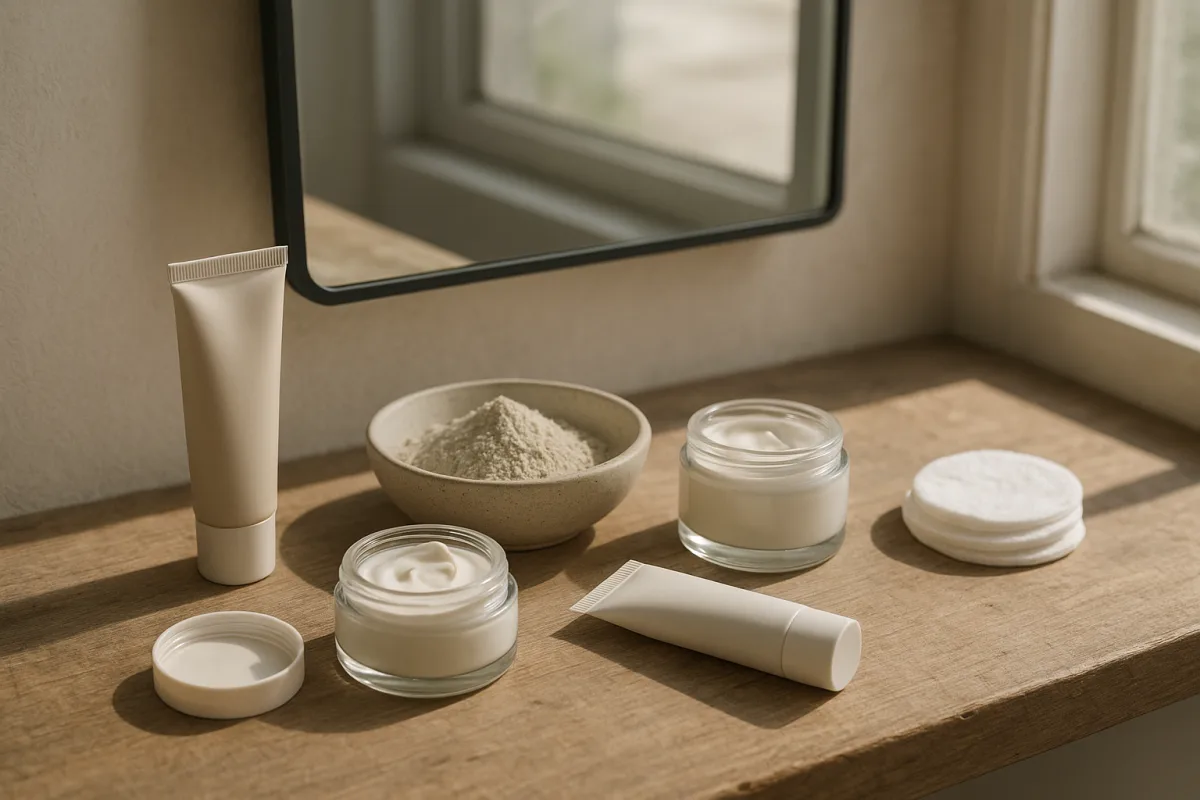
The useful distinction: oil on the surface versus oil in the pore
“Oily skin” is often treated as one problem requiring one aggressive solution. It is not. Visible shine, makeup slipping, enlarged-looking pores, blackheads and post-breakout marks can overlap, but they do not respond to the same ingredient on the same timeline.
The most useful way to choose products is to separate two jobs. One is reducing or disguising oil already sitting on the skin. The other is changing how sebum, dead cells and pore lining behave over weeks. [1][2]
Sebum is the oily material produced by sebaceous glands. It reaches the surface through follicles, where it mixes with shed skin cells, sunscreen, makeup and environmental debris. If that mixture accumulates near an opening, the pore can look more obvious or congested.
This matters because a clay mask may leave skin convincingly matte after rinsing, but it does not operate like a leave-on salicylic acid product. Likewise, a serum that gradually reduces oil output will not provide the immediate blurred finish of silica powder. [13][14]
For most oily-skin routines, the best ingredients are therefore not interchangeable winners. Niacinamide, salicylic acid, retinoids, azelaic acid and zinc oxide each sit at a different point in this system. [1][2][3]
Niacinamide: the sensible starting point for ongoing shine
Niacinamide is the ingredient to consider first when the complaint is steady midday shine rather than obvious clogged pores. At 2 to 5 percent, it has evidence for reducing sebum production, with reported reductions of up to 30 percent after four weeks. [1][4]
That number needs a little restraint. “Up to 30 percent” is not a promise that every face will become 30 percent less oily, and sebum measurements from a study do not translate neatly into how foundation wears in humid weather.
Still, niacinamide’s appeal is practical. It is generally easier to introduce than exfoliating acids or retinoids, can be used in a serum or moisturiser, and is compatible with a simple morning routine under sunscreen. [1][4]
Start at 2 to 5 percent once daily. Products containing 10 percent are common, and some people tolerate them perfectly well, but the available guidance does not establish that more than 5 percent is more effective for oil control. [1][4]
That is a useful corrective to concentration shopping. A 10 percent label can look more serious than a 4 percent formula, yet skincare is not a competition for the biggest number. More active can mean more stinging, flushing or a damaged barrier.
If a niacinamide product causes persistent burning, redness or peeling, stop treating that as an adjustment period. Simplify the routine and consider professional advice if symptoms continue, especially if there is painful inflammation, widespread scaling or a sudden change in oiliness.
Salicylic acid: for the material that makes pores look blocked
Salicylic acid is the more targeted choice when oily skin also has blackheads or pores that seem to refill with waxy material. It is oil-soluble, meaning it can work within the oily environment of a follicle rather than only exfoliating the outer surface. [3][15]
At 0.5 to 2 percent, salicylic acid helps loosen the mix of sebum and compacted dead cells that forms a plug. That is why it is more relevant to congestion than a basic “mattifying” toner, even when both products make skin feel cleaner. [1][3][15]
The sensible starting concentration is 0.5 to 1 percent, used one to three times a week. If skin remains comfortable over several weeks, moving toward 2 percent or using it somewhat more often may be reasonable. [1][3]
The cost of using it too enthusiastically is barrier irritation. Tightness, sting after washing, flakes and a shiny-but-dehydrated appearance are not evidence that skin is being “deep cleaned.” They are signs to reduce frequency and review the rest of the routine.
A salicylic cleanser is usually the lower-commitment route because it is rinsed away. A leave-on toner, serum or pad has more contact time, but also more potential to irritate, especially if it is combined with scrubs, strong cleansing brushes or multiple acids.
This is where patience is less glamorous than marketing. A product used twice weekly for a month can tell you more about tolerance and usefulness than a daily product used until the barrier is uncomfortable after four days.
Retinoids: slow turnover management, not an instant pore eraser
Retinoids address a related part of the pore system: how skin cells shed and move through the follicle. They normalise cell turnover and can reduce the appearance of pore size while decreasing sebum over time. [1][3]
That is a longer project than controlling shine before a meeting. Retinol products are commonly introduced at 0.25 to 0.5 percent once or twice weekly, then increased gradually only if the skin stays comfortable. [1][3]
Apply a retinoid to fully dry skin, rather than immediately after washing. Damp skin can increase the chance of irritation, and irritation makes it difficult to know whether the ingredient is helping or merely overwhelming the routine. [3][5]
Retinoids also increase photosensitivity, so daily broad-spectrum SPF 30 or higher is part of the system, not an optional extra. A zinc oxide sunscreen can be especially appealing for oily skin because it also offers a matte finish. [1][3]
Do not use a retinoid in the same routine as benzoyl peroxide. The guidance is to separate them, such as one in the morning and one in the evening, rather than layering them together and hoping skin will cope. [1][3]
Benzoyl peroxide is not one of the five leading ingredients for sebum control in this brief. If it has been recommended for a particular breakout pattern, begin at 2.5 percent every other evening on dry skin and seek dermatology guidance for persistent or severe symptoms. [1][3]
Azelaic acid: the middle ground for oil and lingering marks
Azelaic acid, generally found at 10 to 20 percent, can reduce sebum while also helping fade post-acne marks. [1][3] It is particularly relevant when oiliness is not the only cosmetic concern and uneven colour remains after spots have settled.
It still deserves a gradual introduction. A person already using salicylic acid several nights weekly and a retinoid does not necessarily need azelaic acid immediately. Adding every plausible active makes irritation more likely and the source of any reaction impossible to identify.
Use one new active for several weeks before deciding whether another is necessary. Results from sebum-regulating and turnover-supporting ingredients tend to be modest and gradual, not the overnight “poreless” effect often suggested by product photography.
Zinc oxide, kaolin and silica: useful, but mainly for today’s shine
Zinc oxide is a mineral UV filter that can provide a matte finish and mild anti-inflammatory effects. It is also described as less comedogenic than chemical sunscreen options, although formula texture matters more than judging an entire sunscreen category. [2][3]
For someone who becomes shiny under sunscreen, a broad-spectrum zinc oxide formula may solve two routine problems at once: daily photoprotection and a less reflective finish. It does not, however, replace a leave-on active designed to address pore congestion.
Kaolin clay and silica work differently again. They absorb oil already on the surface, producing a temporary matte effect. Kaolin is generally the gentler option, while silica tends to give a more immediate oil-absorbing effect. [13][14]
Their limitation is duration. The exact number of matte hours varies with the formula, climate, amount applied and individual sebum output, so claims of all-day control should be treated as marketing rather than a fixed biological outcome. [13][14]
A kaolin mask, silica-containing primer or powder can therefore be worthwhile for appearance, particularly in humid weather. They are cosmetic management tools, not evidence that the underlying skin behaviour has been permanently changed.
The routine around the actives determines whether they are tolerable
A strong active cannot compensate for a harsh cleanser. Skin-friendly cleansers generally sit around pH 4.5 to 6.0, closer to the skin’s acidic surface environment, while alkaline cleansers around pH 9 to 11 can increase water loss and barrier disruption. [11]
Wash no more than twice daily unless there is a specific reason to do otherwise. Over-cleansing can create a tight, dehydrated feeling that people mistake for cleanliness, followed by the urge to use even more stripping products. [6][7]
Skipping moisturiser is another common mistake. Oily skin still needs water and barrier-supporting ingredients, and a lightweight non-comedogenic gel, lotion or fluid can be more useful than trying to dry the face out completely. [1][2]
Be cautious with heavy occlusives and rich oils if they consistently feel congesting, particularly in humid climates. Petroleum jelly, mineral oil, coconut oil, dimethicone and certain dyes may feel too heavy for some people, though reactions vary by formula and individual skin. [7][8][10]
Coconut oil is often assigned a comedogenic rating of 4 out of 5, but those ratings are imperfect predictors of real-world reactions. The better test is whether a finished product repeatedly leaves your skin feeling greasy, congested or irritated over several weeks. [10]
Avoid relying on denatured alcohol or sodium lauryl sulfate for a squeaky-clean finish. Aggressive solvents and surfactants can disrupt the barrier, while over-exfoliation can produce the same cycle of tightness, sensitivity and unwanted shine. [1][10][11]
A realistic oily-skin routine
Morning can be deliberately boring: a gentle cleanser if needed, a 2 to 5 percent niacinamide product, lightweight moisturiser if skin feels dehydrated, then broad-spectrum SPF 30 or higher. A zinc oxide sunscreen may suit those wanting a more matte finish. [1][3][4]
Evening is where you choose one treatment lane. Use salicylic acid one to three nights weekly for clogged-looking pores, or start a 0.25 to 0.5 percent retinol product once or twice weekly for gradual turnover support. [1][3]
On the remaining nights, use cleanser and moisturiser only. This is not wasted time. It gives the barrier an opportunity to stay intact, which makes a routine more sustainable than stacking acid, retinoid, scrub and mask in one evening.
If oiliness changes suddenly, comes with painful lesions, scarring, persistent redness or symptoms elsewhere on the body, this is no longer a straightforward product-selection question. A dermatologist can assess causes that a skincare ingredient list cannot diagnose.
Frequently Asked Questions
What are the best ingredients for oily skin?
The best ingredients for oily skin include niacinamide, salicylic acid, retinoids, azelaic acid, and zinc oxide. Each targets a different aspect of oily skin, such as sebum production, pore congestion, or surface shine, so they are often used together in a routine rather than interchangeably.
How does niacinamide help oily skin?
Niacinamide at 2 to 5 percent can reduce sebum production by up to 30 percent after about four weeks of use. It is generally well tolerated and can be incorporated into serums or moisturizers, making it a practical starting point for controlling steady midday shine.
What concentration of salicylic acid is best for oily skin?
Salicylic acid is best used at 0.5 to 1 percent one to three times per week initially, before considering increasing to 2 percent. This gradual introduction helps avoid irritation, which can counteract its oil-controlling benefits.
How to reduce shine on oily skin with skincare ingredients?
To reduce surface shine, absorbent powders like kaolin clay or silica provide immediate mattifying effects lasting several hours. For longer-term control, ingredients like niacinamide reduce sebum production gradually, while salicylic acid and retinoids help clear pores and reduce oiliness over weeks.
What ingredients help unclog pores in oily skin?
Salicylic acid is particularly effective for unclogging pores because it is oil-soluble and can penetrate the follicle to dissolve sebum plugs. Retinoids also help by normalizing cell turnover and reducing pore size, improving pore appearance over time.
How we researched this
This article was assembled from 15 cited references.
Nothing here is based on hands-on testing. Where a figure or finding appears, it belongs to the source cited beside it, and the writing says so rather than implying otherwise. Every source is listed below so you can check it.
Sources
- Oily Skin Guide: Routine & Ingredients
- Oily Skin — Best Ingredients & Routine | Skincare Database
- Best Ingredients for Oily Skin | Dermatology
- Is niacinamide good for oily skin? | Landys Chemist
- Derms Reveal the Ultimate Tretinoin Skincare Routine for The Best Skin of Your Life
- Dermatologists settle it: this is how often you should wash your face for cleansed - not stripped - skin
- How to Control Oily Skin in Humid Weather? A Practical Guide
- Skincare Routine for Oily Skin in Humid Weather | HadaBuddy
- Oily Skin & Large Pores — Skincare Guide & Product Picks | WhatsInSkincare | WhatsInSkincare
- 6 makeup and skincare ingredients you need to avoid if you have oily skin | Vogue India
- How Ph Balance Affects Skin Health and Skincare Products | The STEM Professor
- Stop Chasing the Perfect pH: Toner pH Levels for Skincare Shoppers – Cosmedica Skincare
- Kaolin Clay for oil control on oily skin — how to use it | KoreaPlus
- Clays: evidence, levels and formulation · CSL
- Not Just for Acne: Why Salicylic Acid Is the Ingredient Experts Are Revisiting
Related Articles
How to Choose a Toner for Oily Skin
Learn how to choose a toner for oily skin with tips on ingredients, pH, and usage to control shine and avoid irritation.
How to Choose a Face Mask for Oily Skin
Learn how to choose a face mask for oily skin with tips on ingredients, usage, and avoiding irritation for a balanced, shine-free complexion.
How to Treat Uneven Skin Texture: Effective Skincare Tips
Learn how to treat uneven skin texture with targeted actives, routines, and product tips for smoother, healthier skin.
How to Choose a Gentle Exfoliant for Sensitive Skin
Learn how to choose a gentle exfoliant with safe acids, enzymes, and scrubs suitable for sensitive skin and avoid irritation.