
Best Time to Apply Sunscreen for Maximum Protection
Learn the best time to apply sunscreen, how much to use, and when to reapply for effective sun protection.
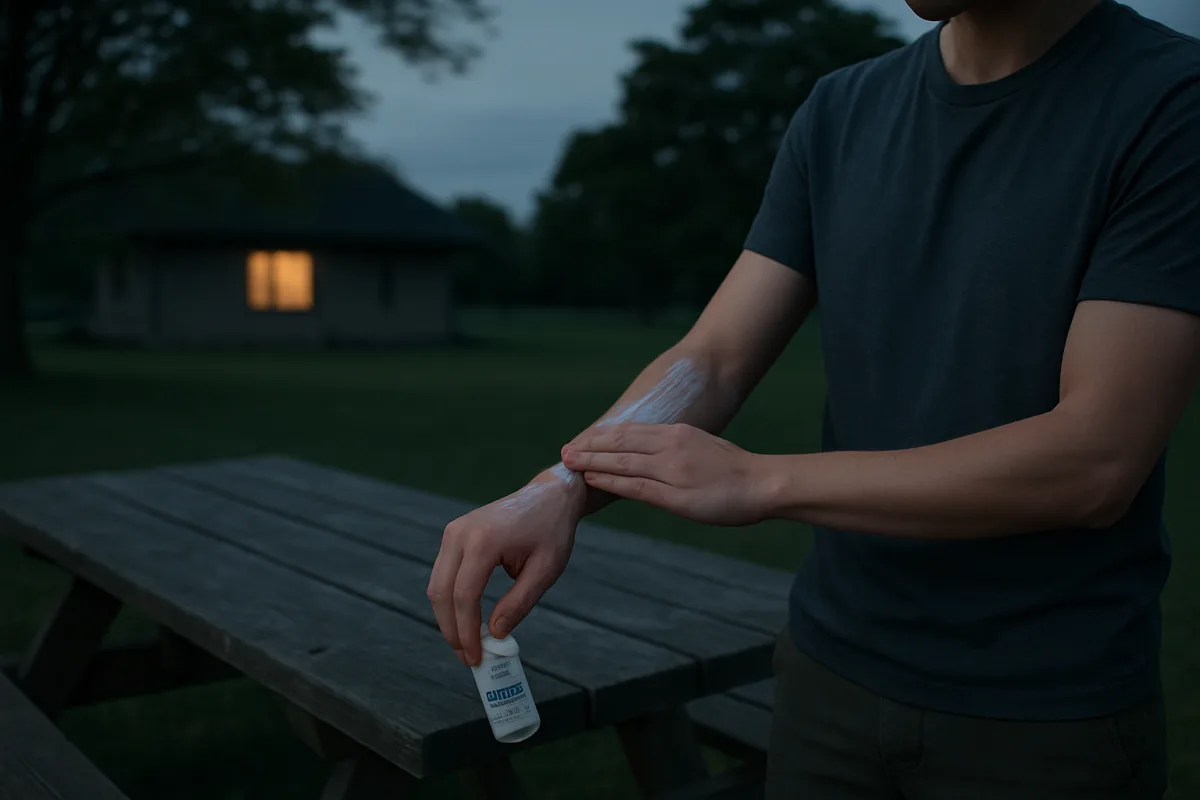
Your sunscreen has a protection clock
You are getting dressed for a walk, commute, outdoor lunch, or beach day. The timing question seems easy: put sunscreen on before you leave. But maximum protection depends on when its protective film is actually in place, and how long you keep that film there.
The common advice is to apply sunscreen at least 15 minutes before sun exposure. The FDA, National Cancer Institute, and American Academy of Dermatology give this lead time because sunscreen needs to be applied and allowed to form an even protective layer on skin. [1][3]
That advice is a good default, especially if you do not know what kind of UV filters your sunscreen contains. Yet sunscreen timing is less about a universal 15-minute countdown than about two different kinds of formulas and one shared problem: coverage.
Chemical sunscreen formulas need time after application to become fully effective. Baylor College of Medicine puts that window at roughly 15 to 20 minutes, which is why applying one at the door, after you are already outdoors, leaves a short period with less protection. [2]
Mineral sunscreen works differently. Formulas using zinc oxide or titanium dioxide begin working immediately once they are applied, so they do not require a waiting period before you step outside. [2][14]
This does not make mineral sunscreen automatically stronger, or chemical sunscreen inadequate. It changes the timing of your routine. If you tend to apply sunscreen in the elevator, at the trailhead, or once you reach the pool, a mineral formula removes the initial wait.
The real goal is an even, full-strength layer
The 15-minute rule gets most of the attention because it is easy to remember. The larger issue is whether you apply enough sunscreen to create the same layer that was used to produce the SPF number printed on the package.
SPF testing uses 2 milligrams of sunscreen for every square centimeter of skin. That is a standardized test amount, not an estimate based on a few dots across the cheeks or a thin pass over your arms. [4][6]
In daily life, people often use only 0.39 to 1.0 mg/cm². NicerSkin reports that level of underapplication can translate to roughly one-third of the protection suggested by the labeled SPF. [6]
So a sunscreen applied 20 minutes before you leave can still underperform if you use too little. Time helps a chemical formula settle into its protective layer, but it cannot turn a sparse application into the tested dose.
For your face and neck, the guidance is about half a teaspoon of sunscreen. Another commonly used shortcut is two finger lengths, with sunscreen dispensed along the length of your index and middle fingers. [4][5]
For exposed skin across your body, the benchmark is about 1 ounce, or 30 mL. Picture a shot glass, not a coin-sized blob in your palm, especially on days when your legs, arms, chest, back, and shoulders are uncovered. [4][5]
Those amounts can feel excessive if you are used to stretching out a bottle. That reaction is understandable, but it is also why a product can seem cosmetically elegant while delivering less real-world protection than its SPF label suggests.
We would choose a sunscreen you can afford to apply at these amounts without rationing. An SPF 50 product used too sparingly is not an upgrade over an SPF 30 formula you apply thoroughly and are willing to reapply.
SPF 30 is the floor, not the whole plan
For daily use, the American Academy of Dermatology recommends broad-spectrum SPF 30 or higher. Broad-spectrum means the sunscreen is intended to protect against both UVA and UVB radiation, while SPF is primarily a measure of UVB protection. [3]
SPF 30 filters about 97% of UVB rays, while SPF 50 filters about 98%. [3][15] The numerical jump looks large on the front label, but the difference in stated UVB filtering is one percentage point.
That does not mean SPF 50 is pointless. It gives you a little more margin, which may appeal if you know you apply unevenly. But neither SPF number cancels out thin application, missed areas, or a day outdoors without reapplication.
For maximum protection, we would start with a broad-spectrum SPF 30 or higher sunscreen whose texture and finish you can tolerate every day. Then we would spend more attention on the amount, the first application, and the reapplication clock.
Reapplication is where the clock resets
A sunscreen layer does not stay intact because it was applied carefully in the morning. Water, sweat, rubbing, skin oils, clothing, and towels can disturb or remove it over the course of a day.
The standard recommendation is to reapply every two hours during continuous sun exposure. [10][16] This is not a rule reserved for a pool day, nor does it mean your morning application carries you through an afternoon sitting outside.
Swimming, heavy sweating, and towel-drying move the schedule forward. Reapply immediately after any of these, even if two hours have not passed, because the layer may have been partly removed before the routine two-hour mark. [10][16]
This is the system to remember: a chemical sunscreen needs a 15-to-20-minute head start, mineral sunscreen starts working once applied, and every formula needs another full application after time or friction has thinned its layer.
It is tempting to treat reapplication as a small touch-up. The guidance is to reapply sunscreen, meaning you need enough product to restore coverage across the exposed areas, not one quick swipe over the center of your face.
Your morning routine needs an exit time
If you use a chemical sunscreen, work backward from the time you expect to be outdoors. Leaving at 8:30 means applying at about 8:10 to 8:15, after the rest of the skin-care steps you use in the morning.
The available guidance does not set different waiting periods according to skin type, individual absorption rate, or whether you use a cream, spray, or another format. The supported distinction is the type of UV filter: chemical formulas need lead time, mineral filters begin working immediately. [2][14]
You also do not need a different pre-sun waiting period because it is cloudy, cold, early, or winter. UV exposure varies by location, season, and time of day, and it can still be meaningful under conditions people often read as low-risk. [11]
That changes whether sunscreen belongs in your routine on a given day, not the basic mechanics of application. If you need sun protection, chemical sunscreen still needs its lead time and mineral sunscreen still needs a complete, even coat.
Applying sunscreen once you see bright sun through the window is a common timing mistake. The Environmental Working Group lists applying too late and failing to reapply, particularly around swimming and sweating, among frequent errors that reduce effectiveness. [13]
A routine built for maximum protection
For a normal day with intermittent exposure, apply broad-spectrum SPF 30 or higher as the final sun-protection step before you leave. Use about half a teaspoon or two finger lengths across your face and neck, not a token amount. [3][4]
If the sunscreen is chemical, give it 15 to 20 minutes before going outside. [2] If it is mineral and relies on zinc oxide or titanium dioxide, it can protect immediately, but only once you have spread it evenly over the areas you mean to protect. [2][14]
For a day outdoors, bring the bottle. Apply roughly a shot-glass amount, 1 ounce or 30 mL, over the exposed body areas, then reapply every two hours and immediately after swimming, heavy sweating, or towel-drying. [5][10]
The point is not to turn sunscreen into a stopwatch exercise. It is to stop treating the morning application as a one-time ritual. Protection is strongest when the sunscreen type, application amount, and reapplication schedule all line up.
Frequently Asked Questions
How long before sun exposure should I apply sunscreen?
Chemical sunscreens should be applied about 15 to 20 minutes before sun exposure to allow the formula to form an effective protective layer. Mineral sunscreens containing zinc oxide or titanium dioxide start working immediately upon application, so they do not require a waiting period before going outside.
Does mineral sunscreen need to be applied earlier than chemical sunscreen?
No, mineral sunscreen does not need to be applied earlier. It begins protecting the skin immediately once applied, unlike chemical sunscreen, which requires 15 to 20 minutes to become fully effective.
How much sunscreen should I apply for full protection?
For the face and neck, use about half a teaspoon or two finger lengths of sunscreen. For exposed body skin, apply roughly 1 ounce (about a shot glass) to cover all areas evenly. Applying less than these amounts can significantly reduce the level of protection.
How often should I reapply sunscreen during outdoor activities?
Sunscreen should be reapplied every two hours during continuous sun exposure. It should also be reapplied immediately after swimming, heavy sweating, or towel-drying to maintain effective protection.
Is SPF 50 significantly better than SPF 30?
SPF 50 offers only a small increase in UVB protection compared to SPF 30, blocking about 98% of UVB rays versus 97% for SPF 30. Therefore, using a broad-spectrum SPF 30 or higher and applying it properly is generally sufficient.
How we researched this
This article was assembled from 16 cited references.
Nothing here is based on hands-on testing. Where a figure or finding appears, it belongs to the source cited beside it, and the writing says so rather than implying otherwise. Every source is listed below so you can check it.
Sources
- Sunscreen: How to Help Protect Your Skin from the Sun | FDA
- Mineral vs. chemical sunscreens - Baylor College of Medicine Blog Network
- How to apply sunscreen
- How Much Sunscreen Do You Really Need to Apply Every Day? | Allure
- How Much Sunscreen to Use | Sunscreen Ranker
- How to Apply Sunscreen: The Right Amount, Technique, and Timing | NicerSkin
- How much Sunscreen should we be applying? | Dermacare
- How Often Do I Need to Reapply Sunscreen? - ScienceInsights
- How Often Should You Reapply Sunscreen? | SafeSun
- How to Choose and Use Sunscreen | REI Expert Advice
- When to Put on Sunscreen UV Index: The Real Threshold, Beauty Nexus Pro
- Yes, You Should Be Wearing SPF Every Day: How, Where and When to Apply It
- Seven Most Common Mistakes When Applying Sunscreen | Environmental Working Group
- Chemical vs Physical Sunscreen: What's the Difference?
- How to Use Sunscreen | American Cancer Society
- How Often You Should Reapply Sunscreen?
Related Articles
Best Time to Apply Retinol: Nighttime and Dry Skin Tips
Learn the best time to apply retinol, why nighttime matters, and how waiting after cleansing reduces irritation for a better skincare routine.
Best Time to Apply Moisturizer: When and How to Do It Right
Learn the best time to apply moisturizer for optimal hydration and how to layer it properly in your skincare routine.
How to Choose a Sunscreen: SPF, Broad Spectrum & Formulas
Learn how to choose a sunscreen with the right SPF, broad spectrum protection, and formula for your skin type and daily needs.
Best Time to Exfoliate Skin: Morning or Night Explained
Discover the best time to exfoliate skin, why night is preferred, and how to protect your skin after exfoliation with sunscreen.