
Safe Skincare Ingredients During Pregnancy
Learn which skincare ingredients are safe during pregnancy and how to build a gentle, effective pregnancy skincare routine.
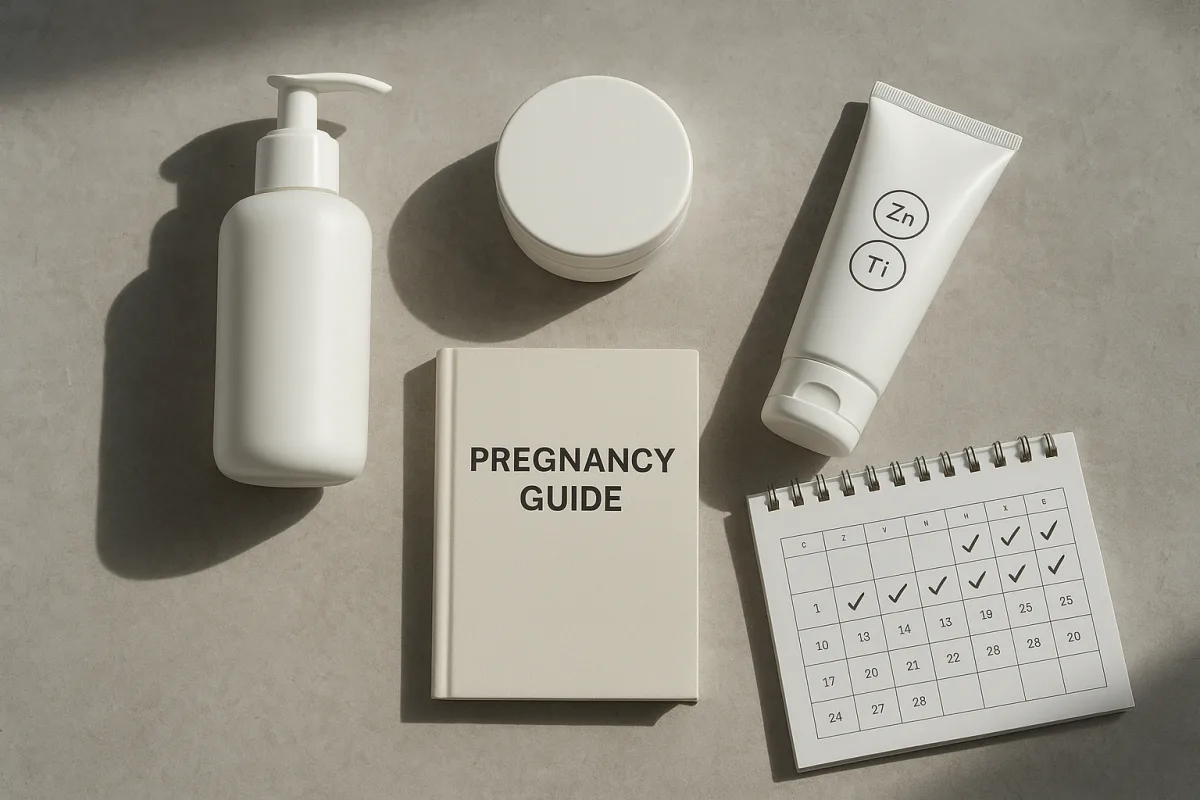
The useful idea is exposure, not “clean” skincare
Pregnancy skincare advice becomes confusing because ingredient lists are treated as a moral test. An ingredient is either declared perfectly safe or banned outright, with little explanation of what happens between applying a product and any ingredient entering circulation.
The more useful framework is exposure. Safety decisions involve both hazard, meaning what an ingredient can do at a sufficient internal dose, and exposure, meaning how much actually gets through the skin under real conditions.
That distinction explains why a dermatologist may be relatively comfortable with a brief rinse-off cleanser but cautious about a concentrated leave-on treatment. It also explains why “topical” does not automatically mean irrelevant during pregnancy.
Skin is a substantial barrier, but it is not shrink-wrap. Absorption changes with concentration, the amount applied, frequency, the body area covered, whether skin is inflamed or broken, and whether the formula stays on skin or is washed away.
A face cleanser used for 30 seconds, then rinsed, presents a different exposure pattern from a serum massaged in twice daily. A professional-strength peel placed over a broad area differs again. The label percentage matters, but it is not the whole calculation.
Pregnancy recommendations are therefore often precautionary rather than built on neat clinical trials. Pregnant people are rarely enrolled in trials designed to measure cosmetic ingredient safety, so dermatologists must work from absorption data, animal research, established drug risks, case reports and clinical judgement. [4][13]
That uncertainty is not a reason for panic-cleaning every bathroom shelf. It is a reason to remove the few categories where concern is meaningful or where a low-exposure alternative is easy to choose.
Why retinoids are the clearest “do not use” category
Retinoids are the group to take seriously, not because a retinol cream behaves exactly like an oral prescription medicine, but because they belong to a biologically active vitamin A family with a well-established pregnancy risk in oral forms.
Ingredient lists may use retinol, retinal, retinyl palmitate, tretinoin, adapalene, tazarotene or isotretinoin. The names differ, as do their strength and prescription status, but the practical pregnancy recommendation is not nuanced: avoid the category throughout pregnancy. [4][6]
Oral isotretinoin is definitively teratogenic, meaning it can cause fetal developmental harm. Topical retinoids produce far lower systemic exposure than oral medication, but low exposure is not the same as no exposure, and case reports have raised concern. [4][9]
The important point is that there is no established “safe concentration” of topical retinol for pregnancy. A product containing 0.1% retinol is not made acceptable by being weaker than a 1% retinol product, because consensus guidance does not offer a threshold below which retinoid use is endorsed. [4][6]
This is where skincare marketing can mislead. “Gentle,” “encapsulated,” “plant-inspired” and “beginner-friendly” describe formulation or positioning. They do not create pregnancy safety data, nor do they override the ingredient’s pharmacological family.
If a retinoid was part of a pre-pregnancy routine, the sensible move is simply to pause it and ask the prescriber or obstetric clinician what to use instead. There is no cosmetic payoff important enough to justify treating this as a concentration puzzle.
Bakuchiol is frequently sold as a plant-derived “retinol alternative.” It may be an option some pregnancy skincare guides consider acceptable, but it is not retinol with a safety certificate, and it should not be expected to reproduce prescription retinoid results. [7]
For skin texture or uneven-looking tone, a plain moisturising routine plus sunscreen, vitamin C, niacinamide or azelaic acid is a less dramatic replacement strategy. Results from cosmetics tend to be gradual and modest, measured over weeks rather than days. [2][3]
Salicylic acid shows why format changes the answer
Salicylic acid is the ingredient most likely to produce an unhelpful all-or-nothing rule. It is a beta hydroxy acid, or BHA, used in cleansers, spot gels, toners, pads and chemical peels, usually to exfoliate surface skin and help keep pores from becoming congested.
The meaningful number here is 2%, but it only makes sense alongside the product format. Dermatology guidance generally considers low-concentration salicylic acid, up to 2%, in a rinse-off product acceptable during pregnancy. [4][16]
Rinse-off matters because contact time is short. Apply a 2% cleanser, lather briefly and wash it away, and the opportunity for absorption is lower than with a 2% treatment left on the face overnight.
That does not make every product labelled “2% salicylic acid” interchangeable. A leave-on serum, exfoliating pad or spot treatment maintains contact for hours, often on irritated skin, which is precisely when a cautious exposure-based approach becomes more useful than a percentage alone.
Higher-dose salicylic acid peels are the clearest avoid. They use more concentrated acid over a larger area, often for longer contact, creating a different absorption scenario from a daily cleanser. Pregnancy guidance advises against these peels and leave-on salicylic treatments. [4][16]
This is not a claim that one use of a low-strength leave-on product causes harm. It is a decision under incomplete evidence, where a wash-off alternative can usually do the same cosmetic job with less theoretical exposure.
For someone who wants an exfoliating step, glycolic acid and lactic acid are commonly listed as pregnancy-compatible alpha hydroxy acids when used gently and in moderation. They can still sting, disrupt a compromised skin barrier and increase irritation, especially if introduced alongside other actives. [2][3]
Start with one exfoliating product, not an acid cleanser plus acid toner plus acid mask. A smoother surface may look brighter quickly because light reflects more evenly, but meaningful changes in uneven tone or blemish marks are slow, variable and not guaranteed.
Hydroquinone is a different precaution problem
Hydroquinone is used in products intended to fade visible dark spots and uneven pigmentation. It deserves a pause during pregnancy not because direct fetal-harm evidence is definitive, but because it appears to be absorbed through skin at an unusually high rate.
Guides cited in the research brief place dermal absorption around 35% to 45%. That is much higher than many consumers assume when they hear “topical,” and it is why expert guidance generally recommends avoiding hydroquinone while pregnant. [4][8][15]
This is a classic example of precaution: high absorption plus inadequate pregnancy-specific data equals an easy decision to defer a nonessential cosmetic active. It is not evidence that every person who used hydroquinone before realising they were pregnant has caused harm.
Do not try to self-manage that worry from internet articles. Stop the product, note the ingredient and product name, then ask an obstetric clinician or dermatologist for individual advice. That is especially important with prescription combination creams, which may include other actives.
A less ambitious approach to uneven-looking pigmentation is more realistic during pregnancy. Mineral sunscreen, hats and avoiding deliberate tanning reduce the ultraviolet exposure that can deepen the appearance of existing marks, while vitamin C, niacinamide and azelaic acid are commonly suggested cosmetic alternatives. [2][3]
None of these ingredients promises to erase melasma, dark spots or acne marks. Pregnancy-related pigmentation can be stubborn, and a dermatologist can assess whether the pattern warrants medical evaluation rather than another brightening serum.
Sunscreen is the everyday exposure trade-off
Sunscreen advice has two jobs: limit ultraviolet exposure and minimise ingredient uncertainty. The straightforward pregnancy route is a broad-spectrum mineral sunscreen based on zinc oxide, titanium dioxide or a combination of the two. [1][12]
The FDA advises broad-spectrum SPF 15 or higher, while the American Cancer Society recommends reapplying sunscreen every two hours, and after swimming or sweating. SPF is a laboratory measure of UVB protection, not a promise that one morning application survives a full day. [1][12]
Mineral filters largely work by sitting on the skin and scattering, reflecting and absorbing ultraviolet radiation. In practice, the formula matters more than the simplistic claim that mineral sunscreen is a physical shield and chemical sunscreen is not. Both types can absorb UV energy.
Some pregnancy guides advise avoiding filters such as oxybenzone and avobenzone because these ingredients can be absorbed and there are concerns about potential endocrine activity. [8][9] That is a precautionary recommendation, not proof that every organic-filter sunscreen is dangerous.
The practical cost of switching is cosmetic. Mineral formulas can leave a white cast, feel heavier or pill under makeup, particularly at the application quantity needed to reach the labelled protection. Tinted mineral sunscreens can make that trade-off more workable for some skin tones.
Do not let pursuit of an ideal ingredient list result in skipped sunscreen. A mineral sunscreen you can apply liberally and tolerate daily is more useful than an expensive product that remains in a drawer because it feels unwearable.
A routine with fewer variables is easier to assess
A pregnancy routine does not need five replacement actives. The core can be a gentle cleanser, a fragrance-free or low-irritant moisturiser if skin is dry, and mineral sunscreen each morning. Hyaluronic acid and ceramides are commonly considered appropriate moisturising ingredients. [2][3]
Hyaluronic acid is a humectant, meaning it helps bind water in the uppermost skin layers. Ceramides are lipids found naturally in the skin barrier. Neither is an overnight transformation ingredient, but both can support a more comfortable, less tight-looking complexion.
Vitamin C, niacinamide and azelaic acid are reasonable optional additions in pregnancy-focused guidance. [2][3] They do different cosmetic work: vitamin C is an antioxidant, niacinamide can support barrier function, and azelaic acid is used for uneven-looking tone and blemish-prone skin.
Introduce one new product at a time and give it several weeks before judging it, unless it causes burning, swelling, widespread redness or another obvious reaction. Immediate glow is usually hydration, silicone slip or exfoliation, not structural change in skin.
Fragrance deserves proportion. Some fragranced products irritate sensitive skin or trigger headaches or nausea, but fragrance is not automatically a pregnancy hazard. The research brief found limited evidence for treating all fragrance as harmful, so choose based on tolerance rather than fear.
Parabens and formaldehyde-releasing preservatives are often placed on avoidance lists because of potential hormonal or toxicity concerns, despite limited direct pregnancy evidence. [5][10] If avoiding them makes product selection simpler for you, that is reasonable, but preservation also protects formulas from microbial contamination.
Finally, there is no trimester when retinoids become acceptable, nor an official FDA, European Medicines Agency or Health Canada list that certifies individual skincare ingredients for pregnancy. Guidance applies across pregnancy and rests largely on dermatology consensus rather than regulatory approval. [1][4]
Frequently Asked Questions
Which skincare ingredients are safe to use during pregnancy?
Ingredients generally considered safe during pregnancy include vitamin C, niacinamide, azelaic acid, hyaluronic acid, ceramides, gentle glycolic acid, lactic acid in moderation, and low-dose salicylic acid rinse-off products. Mineral sunscreens containing zinc oxide or titanium dioxide are also recommended for sun protection.
Why should retinoids be avoided in pregnancy skincare?
Retinoids belong to the vitamin A family, which is known to cause fetal developmental harm in oral form. Although topical retinoids result in lower systemic exposure, there is no established safe concentration, and dermatology guidelines recommend complete avoidance throughout pregnancy due to potential risks.
Is salicylic acid safe during pregnancy and in what form?
Salicylic acid is generally safe in rinse-off cleansers at concentrations of 2% or less. However, leave-on treatments and stronger chemical peels containing salicylic acid should be avoided because they may lead to higher systemic absorption.
What sunscreen ingredients are recommended for pregnancy?
Broad-spectrum mineral sunscreens containing zinc oxide, titanium dioxide, or both are recommended during pregnancy. These should have at least SPF 15 and be reapplied every two hours when exposed to daylight.
How to build a safe skincare routine during pregnancy?
A simple routine focusing on cleanser, moisturizer, and mineral sunscreen is advised. Adding one modest active ingredient such as vitamin C, niacinamide, or azelaic acid is acceptable if needed. Persistent or severe skin issues should be evaluated by a dermatologist or obstetric clinician rather than self-treating with new ingredients.
How we researched this
This article was assembled from 17 cited references.
Nothing here is based on hands-on testing. Where a figure or finding appears, it belongs to the source cited beside it, and the writing says so rather than implying otherwise. Every source is listed below so you can check it.
Sources
- Cosmetics & Pregnancy | FDA
- Best Skincare For Pregnancy 2026 - Forbes Vetted
- Pregnancy-Safe Skincare Guide | Anne Allen, MD — Anne Allen, MD
- Dermatologist-approved pregnancy skin care
- Pregnancy-Safe Skincare Isn't a Needle in a Haystack as Long as You Know This
- Pregnancy-Safe Skincare: What to Use & Avoid (2026 Guide) | DermLens AI
- Pregnancy-Safe Skincare – PSA Skincare
- Pregnancy-Safe Skincare Routine - PatPat
- What Skincare Ingredients to Avoid While Pregnant? - ScienceInsights
- Skin-Care Ingredients to Avoid During Pregnancy
- Why Sunscreen Ingredients Need More Safety Data
- How to Use Sunscreen | Sun Safety | American Cancer Society
- What is safe to use for pregnancy skin care?
- Pregnancy Safe Skincare Ingredients Guide | Sketchy Labels
- Skincare safety in pregnancy | MDacne
- Skincare Ingredients to Avoid During Pregnancy – Conceivio
- Pregnancy skincare is a minefield of myths and mixed messages-think of this as the definitive guide
Related Articles
How to Introduce New Skincare Products Safely
Learn how to introduce new skincare products safely with patch testing, gradual use, and tips to avoid irritation and track reactions.
Understanding Skincare Ingredient Order and Concentrations
Learn how to interpret skincare ingredient order and concentrations to better evaluate product formulas and active ingredient levels.
Best Ingredients for Skin Hydration
Discover the best ingredients for skin hydration, how to use humectants and moisturizers for effective water retention and skin barrier support.
How to Choose a Gentle Cleanser for Sensitive Skin
Learn how to choose a gentle cleanser with skin-friendly pH and safe ingredients to avoid irritation and support sensitive skin health.