
Understanding Skincare Ingredient Order and Concentrations
Learn how to interpret skincare ingredient order and concentrations to better evaluate product formulas and active ingredient levels.
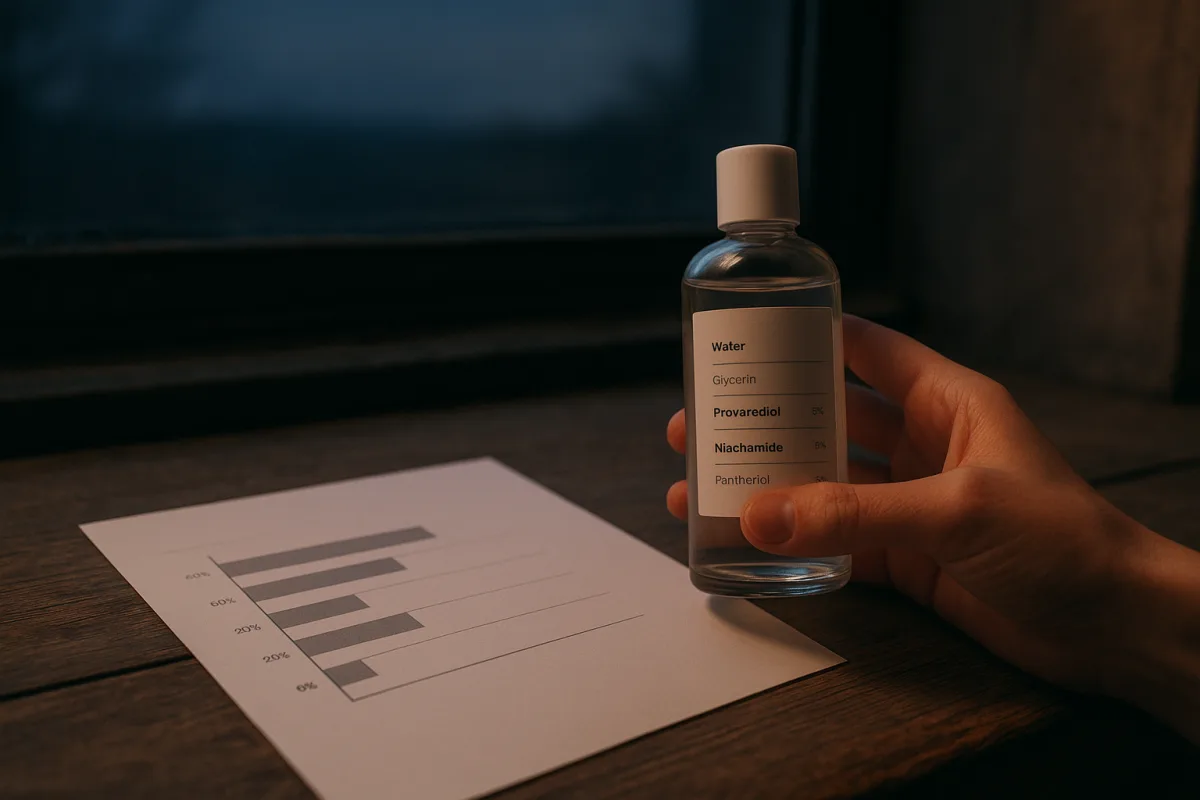
Start with the promise, then turn the bottle over
The front label is designed to sell a result: glow, barrier support, resurfacing, brightening, or “natural” comfort. The ingredient list tells a narrower and more useful story: what makes up the formula, what might provide the claimed cosmetic effect, and what may be irrelevant to your needs.
Do not expect the list to function like a recipe card. It cannot tell you the product’s exact pH, how ingredients were processed, whether an antioxidant is stable, or how the formula behaves on your skin. It is still better evidence than a hero ingredient printed in large type.
Begin by asking what job you need the product to do. A cleanser needs cleansing agents and a tolerable finish, while a moisturiser needs water-binding ingredients, skin-softening oils or lipids, and sometimes an occlusive layer to reduce water loss.
That distinction prevents a common shopping error: rejecting a plain-looking moisturiser because it lacks a fashionable active. Glycerin and sodium hyaluronate are humectants that hold water, while squalane and shea butter are emollients that soften the feel of skin. [7]
Petrolatum and dimethicone are occlusives, meaning they form a film that can reduce water loss from the skin’s surface. That is a cosmetic formulation function, not a promise that a cream will resolve a medical skin problem. [8]
Read the list from the top, but know where that logic stops
In the US, ingredients present above 1% are generally required to appear in descending order of predominance. In ordinary language, ingredients near the beginning make up more of the formula than ingredients appearing later, at least until you reach the low-concentration portion. [2]
This is why the first five ingredients are worth reading. They often reveal whether you are mostly buying water and humectants, a silicone-based smoothing formula, a rich oil-and-butter cream, or a cleanser built around surfactants.
Water, or aqua, appearing first is normal for many serums and creams. It does not mean the product is diluted or ineffective. A water-based formula may still contain useful amounts of an active, but the list alone cannot confirm that amount.
The catch is the 1% line. Ingredients at 1% or below, along with colour additives, may be listed in any order under US rules, so a lower placement does not reliably rank their concentration against neighbouring ingredients. [2][14]
Phenoxyethanol can be a useful clue rather than a universal marker. It is a commonly used preservative, and ingredients appearing after it may be present in very small amounts, but treat that as a prompt for caution, not proof of an exact percentage. [10][15]
A label that puts a fashionable botanical after a long list of base ingredients may still contain it. What you cannot responsibly infer is that it is present at a level likely to change the product’s performance, especially without a disclosed percentage.
Sort unfamiliar names by function before judging them
A long ingredient list is not automatically a bad list. Cosmetic formulas need ingredients that make them stable, safe to use through their shelf life, spreadable, and pleasant enough that people will actually apply them consistently.
Preservatives such as phenoxyethanol and ethylhexylglycerin help protect a water-containing product from microbial growth. Their presence is a formulation necessity, not evidence that the product is harsh or “full of chemicals.” [10]
Cetearyl alcohol is another name that can confuse shoppers because “alcohol” sounds drying. It is a fatty alcohol used as an emulsifier, helping oil and water stay combined, and it also contributes texture. [11]
Xanthan gum is typically a thickener, citric acid can adjust pH, and disodium EDTA is a chelating agent used to support formula stability. These ingredients are not the reason you buy an active serum, but they can be necessary for the serum to remain usable. [10]
In cleansers, surfactants do the washing work. Sodium lauryl sulfate is one example. Its presence tells you something more relevant than a vague “deep clean” claim, although the full formula determines how mild or stripping a cleanser feels. [10]
Fragrance ingredients deserve separate attention because they serve scent rather than the product’s core moisturising or cleansing job. Linalool is one listed fragrance component, while FD&C dyes are colour additives. Neither tells you whether a product will work as advertised. [10]
Find the active, then look for a real percentage
An active is simply an ingredient included for a specific cosmetic function, but that word does not guarantee a meaningful dose. The useful next question is whether the brand states a percentage and whether it falls within a commonly used range.
For L-ascorbic acid, the pure form of vitamin C, cited effective ranges are commonly 10% to 20%. Vitamin C appears on many labels, but a vitamin C derivative is not interchangeable with L-ascorbic acid, so read the actual ingredient name. [18]
Retinol is commonly used from 0.025% to 1%. The same source material notes irritation risk rises above 0.3%, which is a good reason not to equate a bigger number with a better purchase or faster visible change. [12][18]
Niacinamide is often used at 2% to 10%, while another cited guide places its commonly useful range at 2% to 5% and notes greater irritation risk above 5%. If a product does not disclose its percentage, the list cannot settle that question. [3][12]
For exfoliating acids, glycolic acid is commonly cited at 5% to 12% and lactic acid at 5% to 10%. Salicylic acid is typically listed in the 0.5% to 2% range. These are not instructions to begin at the top of each range. [3][18]
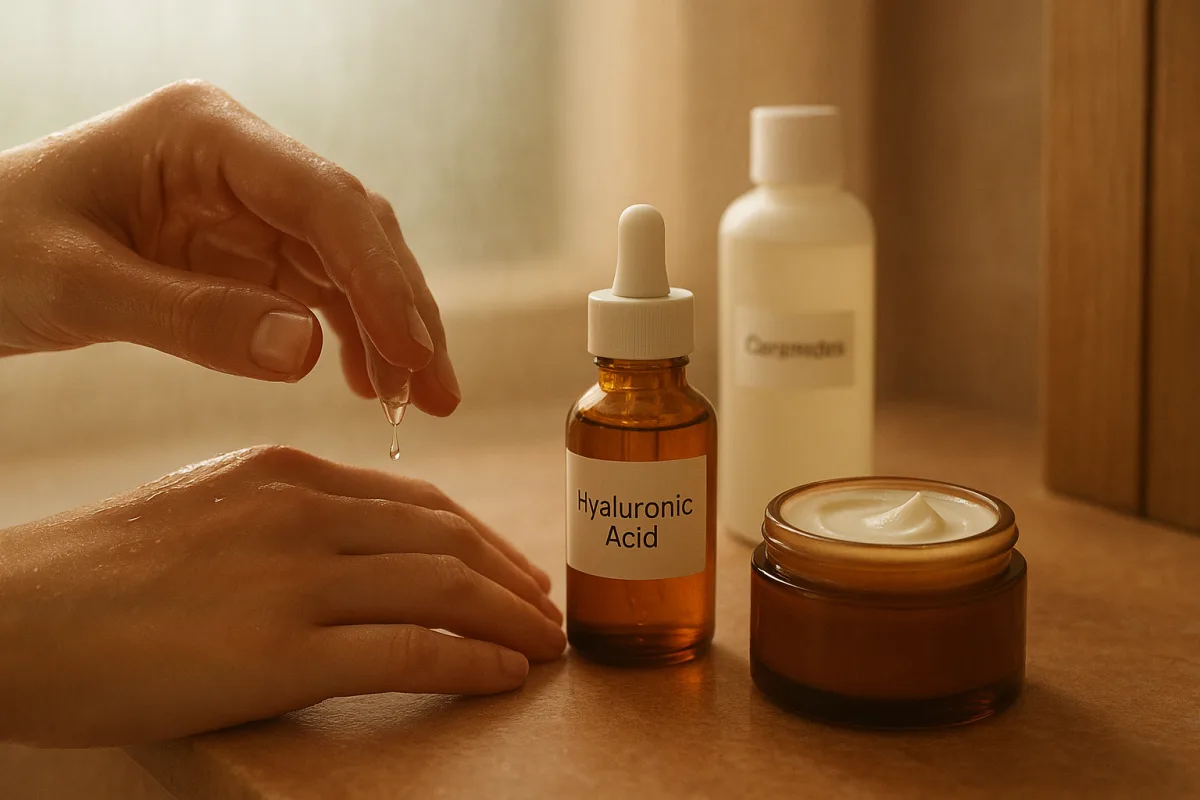
Hyaluronic acid, often listed as sodium hyaluronate, is commonly used at 0.1% to 2%. It is a humectant, so expect surface hydration support rather than dramatic structural change. The immediate plumper appearance people notice is usually cosmetic and temporary. [3][7]
Peptides such as Matrixyl are cited at 3% to 5%, and bakuchiol at 0.5% to 2%. Those figures are only useful when a manufacturer actually discloses the concentration and clearly identifies the ingredient. [4]
The honest answer on timing is less satisfying: an ingredient list cannot tell you when you will see a difference. Results from cosmetic products are usually slow and modest, and no source in this brief supports a universal timetable for any active.
Do not mistake a proprietary blend for a transparent formula
“Proprietary blend,” “complex,” and similar language can make a formula sound exclusive. In practice, trade-secret protections can allow companies to withhold exact amounts, leaving you unable to assess how much of each highlighted ingredient is actually included. [1]
That does not automatically make the product poor. It does mean you cannot compare its active dose with a formula that states “5% niacinamide” or “0.3% retinol,” so price and marketing should not fill the evidence gap.
The sensible response is simple: buy undisclosed blends for texture, scent, or general moisturising if those are your priorities. Do not buy them because you assume their hero ingredients match the concentration used in published ingredient guidance.
Treat “natural” as a sourcing claim, not a sensitivity test
Natural ingredients can be enjoyable to use, but natural does not mean non-irritating, fragrance-free, or suitable for everyone. In a 2022 JAMA Dermatology study cited by NicerSkin, 94% of natural skincare products contained known contact allergens, averaging 4.5 allergens per product. [15]
That finding does not mean every natural product will bother every user. It does mean “natural” cannot replace reading the list, particularly when a product relies on fragrant plant extracts, essential oils, or aroma compounds.
Likewise, “hypoallergenic” is not a substitute for checking ingredients. If fragrance has previously been a problem for you, look for fragrance and named fragrance components rather than assuming a gentle-looking package has excluded them. [16][17]
Pay attention to where fragrance appears, too. A fragrance ingredient near the top suggests a larger share of the formula than one near the end, although the same 1% ordering limitation still applies once the low-concentration portion begins. [16]
Check where the product is sold before comparing labels
Ingredient rules vary by market, which can make apparently similar products look different. Japan uses descending-order listing similar to the US, while requirements elsewhere in Asia vary, so do not assume a label format has the same meaning everywhere.
The European Union is expanding fragrance-allergen disclosure. From July 31, 2026, new cosmetic products must individually label more than 80 fragrance allergens above 0.001% in leave-on products and 0.01% in rinse-off products. [5]
That added detail can help a shopper identify a known trigger, but it does not make every product with an allergen label unsuitable. It means the label gives you more information than a catch-all fragrance declaration alone.
Regulation also affects what may appear in the bottle. Some ingredients restricted or banned in the EU, including certain parabens and formaldehyde releasers, may remain legal in the US, so “available for sale” is not a universal measure of ingredient standards. [6]
Use a five-minute label check before checkout
First, decide whether you are buying hydration, richer moisturising, cleansing, exfoliation, or a single active. Then scan the first ingredients to see whether the formula’s basic structure matches that purpose, rather than chasing the ingredient pictured on the carton.
Second, locate the active and look for a stated percentage. Compare that number with the ranges above, while remembering that a percentage alone cannot predict comfort, stability, or a visible outcome for an individual person.
Third, scan for fragrance, linalool, dyes, and ingredients you already know you avoid. If you are unsure whether a past reaction was irritation, allergy, or something else, that is a dermatology question, not one an ingredient decoder can diagnose.
Finally, resist the urge to introduce several strong products at once. Combining retinoids, AHAs, BHAs, and other active-led formulas can make it impossible to identify what is causing discomfort, and personalised guidance is appropriate for sensitive skin or complex routines. [8][13]
Frequently Asked Questions
What does the order of ingredients on skincare labels mean?
In the US, ingredients present above 1% must be listed in descending order of concentration, meaning those at the top make up more of the formula. However, ingredients at or below 1% can be listed in any order, so their position does not reliably indicate their amount.
How can I tell the concentration of ingredients in skincare products?
Without a stated percentage on the label, it is difficult to know the exact concentration of active ingredients like vitamin C, retinol, or niacinamide. Ingredient lists alone rarely confirm whether these actives are present at effective levels.
Why are some ingredients listed in different orders below 1%?
US regulations allow ingredients present at or below 1% to be listed in any order. This flexibility means that ingredients near the end of the list may still be present but in very small amounts, and their order does not reflect their concentration.
How do preservatives and additives appear in ingredient lists?
Preservatives such as phenoxyethanol and ethylhexylglycerin are commonly listed and are necessary to protect water-containing products from microbial growth. Other additives like emulsifiers, thickeners, and pH adjusters also appear and serve to stabilize and improve the formula rather than provide direct skincare benefits.
What should I look for in the first five ingredients of a skincare product?
The first five ingredients often reveal the product’s basic structure, such as whether it is water-based, silicone-based, or oil-rich. These ingredients give clues about the formula’s primary functions, like hydration or cleansing, but do not guarantee the presence or amount of specific active ingredients.
How we researched this
This article was assembled from 18 cited references.
Nothing here is based on hands-on testing. Where a figure or finding appears, it belongs to the source cited beside it, and the writing says so rather than implying otherwise. Every source is listed below so you can check it.
Sources
- “Trade Secret” Ingredients | FDA
- How do I read a skincare ingredient list? | Skinlogie
- Ingredient Guide | SkinMapped
- Decoding Product Labels Like a Pro - Guide to Skincare Ingredient Analysis
- Cosmetics: expanded fragrance-allergen labelling (26 to 80+ allergens) mandatory on new products (31 July 2026) | EU Deadline Radar
- 6 beauty product ingredients banned in the EU but legal in the US
- What Goes Into Your Beauty Products? Cosmetic Ingredients Guide
- Skincare Ingredient Glossary: What Each One Actually Does
- Skincare Ingredients Guide - Active Ingredients Explained | Skin Intel
- Cosmetic Ingredient Function Finder | GlowBareSkin
- How to Read Skincare Ingredients: The Complete Decoding Guide | BeautyAppeals
- How to Avoid Skin Irritation from Actives | DermResponse
- Combining Niacinamide with Other Actives | Dermatology
- How to Read a Skincare Ingredient List | SORREL & CO
- How to Read Skincare Ingredient Labels: A Complete Guide | NicerSkin
- How to Read a Skincare Ingredient List — 5 Things the First 5 Ingredients Tell You | Meria
- Skin Care Ingredients: How to Read the Label | Allure
- Therapeutic Thresholds: The Percentages That Actually Matter | Skincare Skeptic
Related Articles
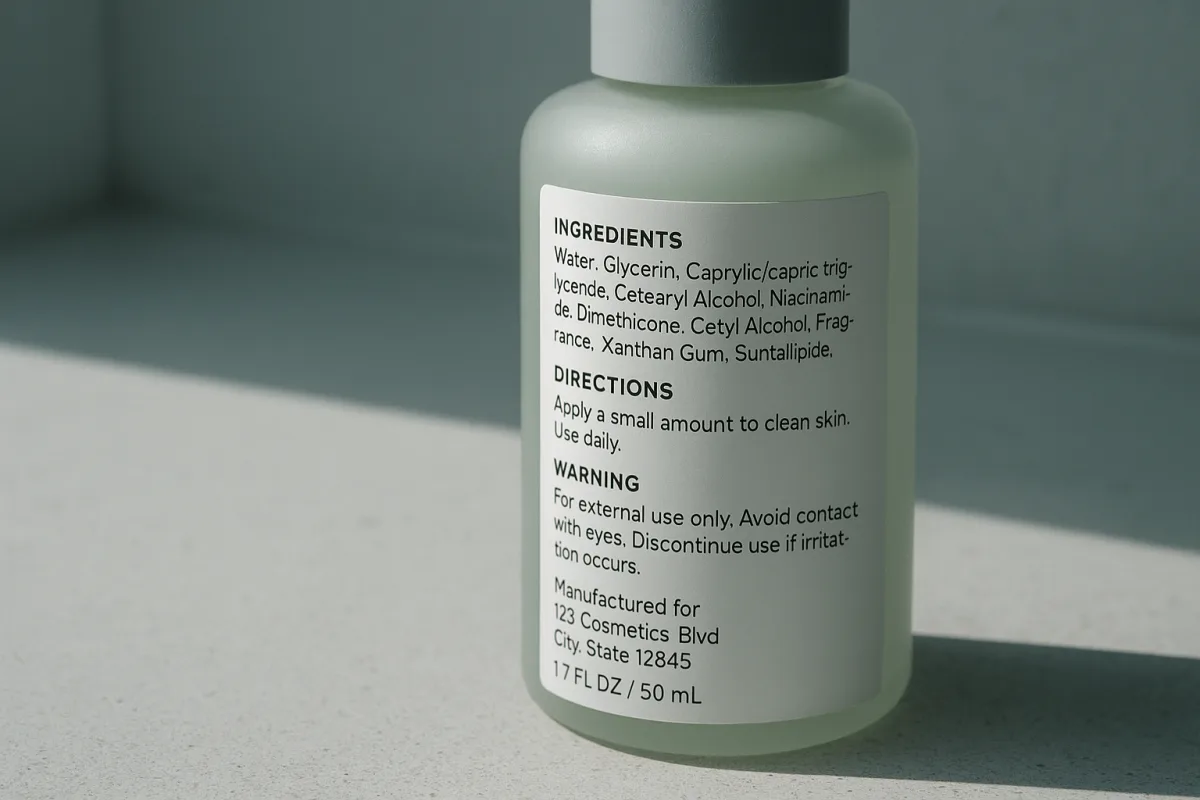
How to Read Skincare Labels: A Clear Ingredient Guide
Learn how to read skincare labels to understand ingredients, claims, and ingredient order for better product choices.
Safe Skincare Ingredients During Pregnancy
Learn which skincare ingredients are safe during pregnancy and how to build a gentle, effective pregnancy skincare routine.
How to Interpret Skin Type Test Results for Skincare
Learn how to interpret skin type test results to understand your skin's needs and choose the right skincare routine.
Best Ingredients for Skin Hydration
Discover the best ingredients for skin hydration, how to use humectants and moisturizers for effective water retention and skin barrier support.