
Under Eye Dark Circles Causes and Treatments Explained
Learn the causes of under eye dark circles and effective treatments including skincare ingredients and when to seek professional help.
Identify what you are seeing
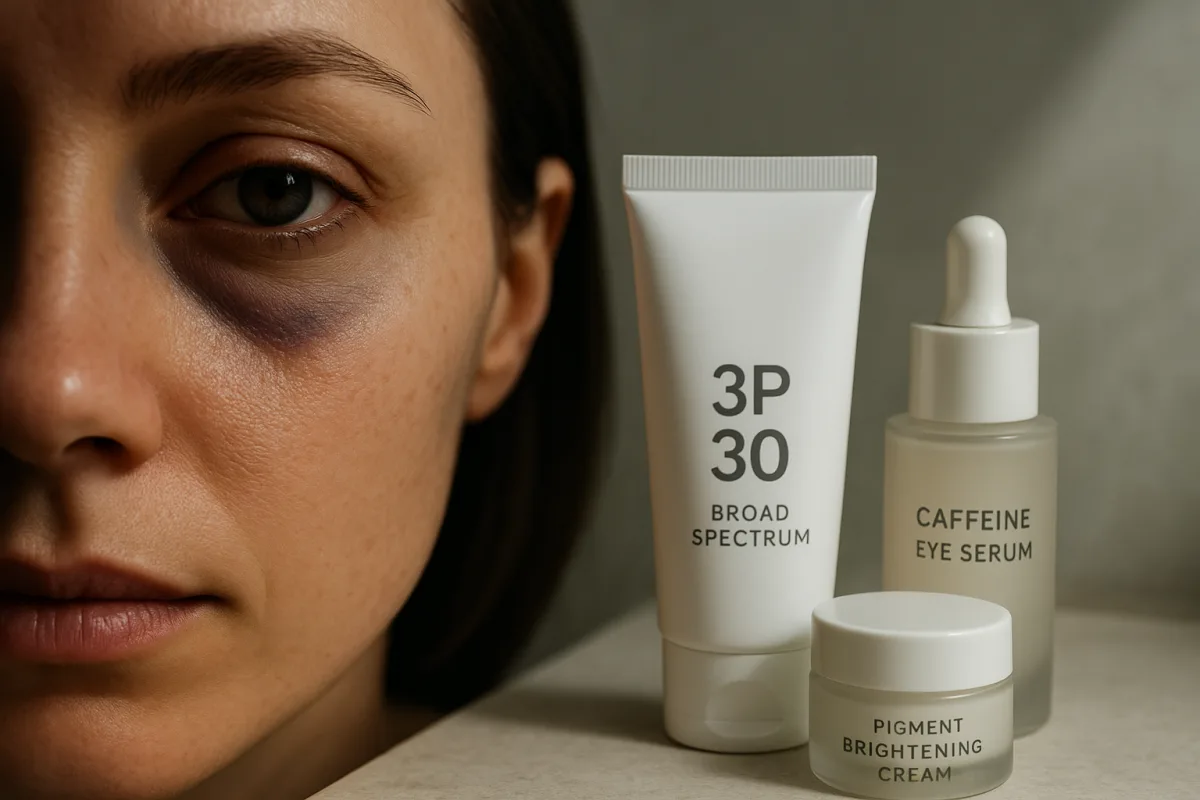
Look at your under-eye area in daylight before buying another eye cream. Brown or gray-brown discoloration points toward pigmentation, while blue, purple, or red tones often reflect visible blood vessels beneath thin skin. [10]
If the area looks shadowed, with a groove running from the inner corner toward the cheek, you may be seeing volume loss and facial structure. Topical products have limited ability to change this kind of hollowing. [3]
Puffiness can create its own shadow, especially in the morning. Once swelling settles, the remaining darkness may look different, which helps you avoid buying a pigment product for a problem caused mainly by bags. [9]
Skin tone affects the pattern you are likely to see. Darker skin tones are more prone to pigment-related under-eye discoloration, while lighter skin may show vascular color more clearly through the under-eye skin. [12]
More than one cause is common. You can have brown pigmentation plus a hollow, or visible vessels plus dehydration-related puffiness, so an ingredient that helps one part may leave the rest unchanged. [10]
Rule out the limits of skincare
Creams and serums can support mild to moderate discoloration, especially pigmentation and some vascular visibility. They do not replace volume beneath the eye, remove prominent fat pads, or tighten excess skin. [3]
We would not spend months layering expensive actives onto a deep tear trough. If the darkness is largely a fixed shadow from hollowing, a professional evaluation is the faster route to understanding your options. [10]
Persistent or severe under-eye changes deserve a dermatologist's assessment, particularly if over-the-counter products have not helped. The under-eye area is thin and reactive, and a clinician can separate cosmetic discoloration from concerns requiring medical attention. [15]
Start with daily sun protection
Use a broad-spectrum sunscreen with SPF 30 or higher around the eye area every morning if your skin tolerates it. UV exposure can worsen pigmentation, including the brown under-eye darkness that often lingers after irritation. [12]
Sunscreen will not fill a hollow or constrict visible vessels. It is still the baseline for pigment-focused routines because fading products work against you if ongoing sun exposure keeps darkening the area. [6]
Choose a formula you can apply consistently without stinging or watering your eyes. If an eye-area sunscreen irritates, move it slightly away from the lash line and use sunglasses and shade as additional protection. [9]
Build a pigment-focused routine
For brown under-eye discoloration, look first for vitamin C at 10% to 20%, niacinamide, azelaic acid, or tranexamic acid. These ingredients are used for pigmentation, though visible changes usually require consistent use for weeks to months. [2]
Vitamin C can fit a morning routine under sunscreen, while niacinamide is often easy to use twice daily. We found no published evidence that combining several pigment ingredients works better than using one tolerable active consistently. [6]
Azelaic acid is another option for pigment-focused care, especially if you want an alternative to hydroquinone. Hydroquinone is potent but restricted in some countries because of potential side effects, and may require a prescription depending on where you live. [3]
Tranexamic acid appears in newer pigmentation formulas, but long-term safety information for under-eye formulations remains limited. We would keep expectations measured and avoid adding it alongside several irritating actives at once. [2]
If you have deeper skin tone, protect the barrier as carefully as you pursue brightness. Irritation can leave additional discoloration, turning an aggressive routine into the thing that keeps the under-eye area looking uneven. [12]
Add exfoliation only if your skin can handle it
Glycolic acid and lactic acid can help fade surface pigmentation, but the under-eye area gives little room for error. Introduce a gentle chemical exfoliant gradually and stop if it burns, flakes, or leaves persistent redness. [2]
Do not use exfoliating acids as a shortcut for a blue or purple circle. Acids do not change vascular anatomy, and irritation may make thin under-eye skin look more obvious in the short term. [10]
Patch test new products before bringing them near your eyes. If you have eczema-prone, very reactive, or easily pigmented skin, a dermatologist can help you avoid an irritation cycle that cosmetics may aggravate. [15]
Use caffeine for temporary puffiness and vascular color
Caffeine is a vasoconstrictor, meaning it can temporarily reduce the look of visible vascular dark circles and puffiness. Its effect generally lasts about four to six hours, so it suits mornings before work or an event. [3]
Think of caffeine as a temporary visual adjustment, not a corrective treatment. If the circles return after lunch, that is expected, and applying more product will not alter the skin thickness or underlying vessel pattern. [3]
A caffeine eye gel can make sense if your circles look worse after waking or alongside mild swelling. We would skip it as your main purchase when the problem is clearly brown pigmentation or a permanent hollow. [10]
Consider retinol for thinning skin
Retinol at 0.025% to 0.05% can support collagen and improve skin thickness, which may reduce the visibility of vessels beneath thin under-eye skin over time. It needs cautious introduction because irritation and photosensitivity are common. [2]
Start slowly according to the product directions, and do not introduce retinol on the same nights as a new acid product. Daily sunscreen becomes especially important because retinol can increase sensitivity to sun exposure. [2]
Peptides are also used to support collagen production and skin elasticity. They may fit a routine aimed at thin, crepey-looking under-eye skin, though they will not replace lost cheek volume or flatten under-eye bags. [3]
Keep the routine small enough to follow
Most eye creams and serums are used twice daily, but your tolerance matters more than an ambitious schedule. A product that stings every night is not building a better routine, particularly around the eyes. [7]
A basic pigment routine could be sunscreen each morning and one pigment-focused serum or cream used as tolerated. A vascular-puffiness routine could pair sunscreen with caffeine in the morning and a bland moisturizer at night. [2]
Do not start vitamin C, retinol, acids, caffeine, and tranexamic acid in the same week. If your skin reacts, you will not know which formula caused it, and you may end up with more visible discoloration. [12]
Under-eye patches are optional, not essential. They are commonly used once or twice weekly for maintenance, or up to three or four times weekly for intensive care, but they mainly offer short-term hydration and a temporary smoother look. [8]
Support the skin without blaming your habits
Poor sleep, dehydration, allergies, cold weather, and UV exposure can make under-eye darkness look worse. Sleep and hydration can affect skin hydration and elasticity, but genetics, skin thickness, and vascular anatomy often have a larger influence. [1]
That means sleeping more may improve how tired you look without changing a genetically visible vessel pattern or a deep tear trough. Treat lifestyle changes as support for your routine, not a promise that the circles will disappear. [1]
During dry or cold periods, prioritize hydration and barrier protection if the area becomes tight or flaky. During sunnier months, keep sunscreen consistent, since there is no detailed evidence for elaborate seasonal under-eye routine changes. [12]
If allergies seem to coincide with puffiness or rubbing, address that with an appropriate clinician. Repeated rubbing can irritate the skin, and irritation is especially unhelpful when you are trying to limit pigment changes. [9]
Spend according to the problem
Under-eye products in 2026 commonly run about $20 to $150 for 0.5 to 1 ounce, or 15 to 30 ml, depending on brand and retailer. Price does not tell you whether a formula suits pigment, puffiness, or hollowing. [5]
We would start at the lower end with one clearly labeled active and give it time. A costly eye cream without a stated active concentration gives you little basis for judging whether it can address your particular concern. [2]
For vitamin C, look for the 10% to 20% range supported for pigmentation-focused use. For retinol, stay within the gentler 0.025% to 0.05% range and prioritize a formula you can use without ongoing irritation. [2]
Know when professional options fit better
Fillers can address volume loss beneath the eyes, where a hollow creates a shadow that skincare cannot fill. They are not a solution for excess skin or prominent fat pads, so the assessment matters before you book. [13]
Laser procedures may be considered when over-the-counter care has not improved persistent dark circles, particularly when pigmentation or vascular visibility is involved. Professional procedures carry risks and should be performed by qualified specialists. [14]
A dermatologist can also discuss whether a prescription pigment ingredient is appropriate for you. We would choose that route before experimenting with strong hydroquinone or stacking irritating actives near the eyes. [3]
Frequently Asked Questions
What causes dark circles under the eyes?
Dark circles can result from several causes including pigmentation, visible blood vessels beneath thin skin, puffiness, thinning skin, and volume loss or hollowing. Environmental factors like UV exposure can worsen pigmentation, while genetics and skin anatomy also play significant roles.
How can I identify the type of dark circles I have?
Look at your under-eye area in daylight. Brown or gray-brown discoloration suggests pigmentation, while blue, purple, or red tones often indicate visible vessels. Shadowing with a groove may point to volume loss, and puffiness usually appears as swelling that changes throughout the day. Skin tone also influences the pattern seen.
Which ingredients are effective for treating under eye dark circles?
For pigmentation, vitamin C (10-20%), niacinamide, azelaic acid, and tranexamic acid are commonly used. Caffeine can temporarily reduce puffiness and vascular dark circles for a few hours. Retinol and peptides may help improve skin thickness and collagen, reducing visibility caused by thinning skin.
What skincare routine helps reduce dark circles under eyes?
Daily use of a broad-spectrum sunscreen with SPF 30 or higher is essential to prevent worsening pigmentation. Consistent application of pigment-targeting ingredients like vitamin C or niacinamide over weeks to months can help fade discoloration. Avoid irritation by choosing gentle formulas and introducing actives gradually.
When should I see a dermatologist for dark circles?
A dermatologist should be consulted if dark circles are persistent, severe, hollow-looking, or do not improve with over-the-counter products. Professional evaluation is important because fillers, laser treatments, or other procedures may be needed for structural causes that topical products cannot address.
How we researched this
This article was assembled from 17 cited references.
Nothing here is based on hands-on testing. Where a figure or finding appears, it belongs to the source cited beside it, and the writing says so rather than implying otherwise. Every source is listed below so you can check it.
Sources
- Physiological and lifestyle factors contributing to risk and severity of peri-orbital dark circles in the Brazilian population.
- How to Lighten Under Eyes: What Actually Works - ScienceInsights
- Dark Circle Treatments | Dermatology
- Trying to Fade Dark Spots? These Are the Only 13 Products Worth Your Attention
- The Best Eye Creams of 2026, Dark Circles, Puffiness and Fine Lines, Ranked Honestly, GlowDex
- Can skincare fade pigmentation, and which ingredients actually work?
- Eye cream for dark circles and the right way to use it - Tata 1mg Capsules
- Under-Eye Patches - Tips for Best Results | Topicals | Journal
- Dark circles under eyes
- Dark circles guide: the three causes and what actually treats each one | MedSpot
- Dark Circles Under Your Eyes: Causes, Treatments, and More
- Dark Circles & Under-Eye Pigmentation Guide | The Derma Co
- Everything You Need to Know About Under-Eye Filler Before Booking an Appointment
- How to Treat Dark Circles, According to Dermatologists | Vogue
- When Should an Under-Eye Concern Be Medically Evaluated? | Med Spa In Encino, CA | A E Skin | Botox, Juvéderm Skincare & More!
- The Best Eye Creams Really Make a Difference, and These 17 Tackle Dark Circles, Puffiness and Fine Lines
- Dark Circles Under The Eyes: Causes & Treatment
Related Articles
How to Fix Dark Circles Under Eyes: Causes and Treatments
Learn how to fix dark circles under eyes with skincare, routines, and lifestyle tips tailored to different causes and skin types.

How to Treat Hyperpigmentation: Safe and Effective Tips
Learn how to treat hyperpigmentation safely with effective ingredients, sun protection, and routines for lasting dark spot fading.
How to Treat Large Pores: Effective Skincare Tips
Learn how to treat large pores with proven skincare tips, key ingredients, and routines to reduce their appearance safely and effectively.

How to Introduce New Skincare Products Safely
Learn how to introduce new skincare products safely with patch testing, gradual use, and tips to avoid irritation and track reactions.