
How to Choose a Sunscreen: SPF, Broad Spectrum & Formulas
Learn how to choose a sunscreen with the right SPF, broad spectrum protection, and formula for your skin type and daily needs.
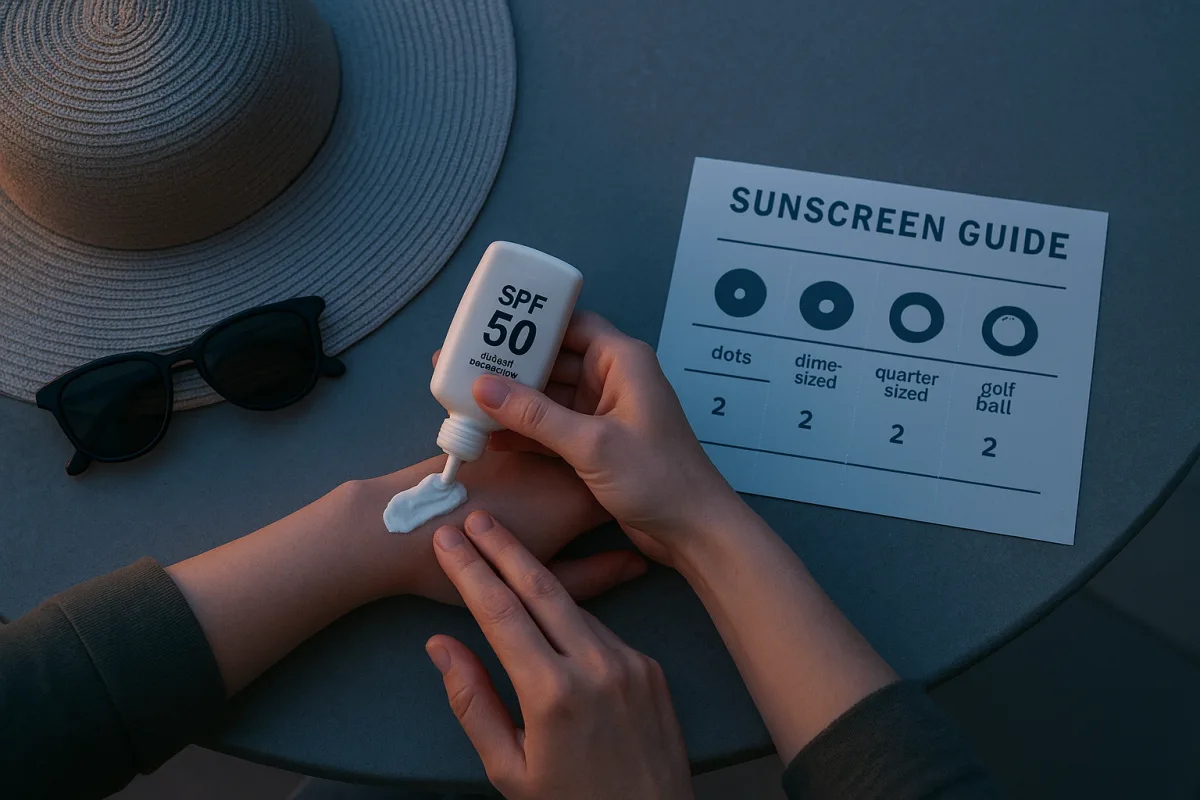
Start with the label, not the front-of-pack claims
The first non-negotiable is “broad spectrum.” That label means the product is designed to protect against both UVB and UVA radiation, rather than UVB alone. [3][10] UVB is the radiation associated with sunburn, while UVA reaches deeper into skin and is relevant to longer-term visible photoaging.
SPF measures protection chiefly against UVB, so it is not a complete shorthand for every kind of sun exposure. A high SPF number without broad-spectrum labeling is not the sunscreen to choose for routine outdoor use. [10][11] The label has to do two jobs.
For daily wear, there is a real difference in official advice. The American Academy of Dermatology recommends broad-spectrum SPF 30 or higher, whereas CDC guidance has used SPF 15 or higher for daily protection. [3][10] That is not a reason to get stuck at the shelf.
SPF 30 is the more practical baseline when you know real-life application will be imperfect, which it usually is. Many people use only 25% to 50% of the amount used in sunscreen testing, and thinner application reduces the protection achieved. [4][12] For a beach day, outdoor sport, hiking, or long stretches outside, both sets of guidance converge on SPF 50 or higher. [3][10]
Do not interpret SPF as a percentage shield, or as a promise that you can stay out indefinitely. SPF 30 filters roughly 97% of UVB rays and SPF 50 about 98%, not 100%. [3][10] The small mathematical difference can still be useful, but it does not compensate for applying too little or skipping reapplication.
Decide whether you want mineral or chemical filters
Once the label clears the broad-spectrum and SPF test, choose the filter type you can apply generously and repeatedly. A sunscreen left in a drawer because it pills, stings, or leaves a conspicuous cast is not a functional choice, however good its marketing sounds.
Chemical, also called organic, sunscreens use filters such as avobenzone and homosalate that absorb UV radiation and convert it to heat. [6][8] They are commonly formulated as lighter lotions, fluids, gels, and clear sprays, which can make them easier to spread across hairlines, beards, and deeper skin tones.
That lighter feel is not a universal advantage. Some people with easily irritated or acne-prone skin find chemical-filter formulas uncomfortable, although the degree of irritation is individual and there is no single filter category that is wrong for every sensitive complexion.
[6][8] If a sunscreen repeatedly burns around the eyes or causes irritation, stop treating it as a routine problem to endure and ask a dermatologist for individual advice.
Mineral sunscreens use zinc oxide, titanium dioxide, or both. These filters sit at the skin’s surface and reflect and scatter radiation, although they also absorb some UV energy. [6][9] They are often the category suggested for sensitive skin because they can be less irritating for some users.
The historic mineral problem is cosmetic, not protective: white cast. Zinc oxide can look grey, lavender, or chalky on deeper skin tones, particularly in thicker water-resistant formulas. Axios reports that newer formulation approaches are trying to improve mineral transparency, while Consumer Reports’ testing also emphasizes that wearability varies significantly by formula. [1][5]
For medium to deep skin tones, look first for tinted mineral sunscreen. Iron oxides and skin-tone pigments can reduce visible cast, though “tinted” does not guarantee an invisible finish on every undertone. [1][5] The only sensible approach is to check the available shade description and return policy before assuming a beige tint will suit you.
There is no evidence-based rule that every person should choose mineral over chemical, or vice versa. The best category is the broad-spectrum option with adequate SPF that you can wear at the correct amount without avoiding your forehead, eye area, neck, or ears. [6][8]
Make water resistance match the day you actually have planned
For a desk day with brief errands, water resistance may not be the deciding factor. For a humid commute, exercise, a pool day, or a beach holiday, it should be. Water-resistant labeling means the sunscreen maintained its stated protection for either 40 or 80 minutes while you are in water or sweating. [3][16]
Neither term means waterproof or sweatproof forever. If the bottle says 40 minutes, treat that as a maximum water-and-sweat interval, not an invitation to wait two hours. If it says 80 minutes, reapply by 80 minutes during swimming or sustained sweating. [3][16]
Towel drying is a reset, regardless of what the label says. Apply again after toweling off, because friction removes product from the surface. [16] Heavy sweating can also warrant reapplication about every hour, rather than relying on a standard two-hour schedule. [12][16]
This is where spray sunscreen can create a false sense of ease. It may be convenient for body reapplication, but you still need enough product to form an even film and should not treat a quick mist as a measured dose. The same amount rules apply, even when the format makes underapplication easier.
Apply enough before you leave the house
A practical face-and-neck target is about 1 teaspoon, or 5 mL. For the body, use about 1 ounce, roughly 30 mL or six teaspoons, to cover exposed skin. [3][4] These amounts sound generous because sunscreen testing uses a far thicker, more even layer than most people routinely apply.
If one teaspoon on the face and neck feels unwearable, split it into two thin layers. Apply the first, let it settle briefly, then apply the second. This is not a way to use less sunscreen, it is simply a tidier way to reach the amount that gives the labeled SPF a chance.
Apply sunscreen 15 to 30 minutes before planned exposure. [12][13] Mineral filters can provide immediate protection once they form an even layer, but applying all sunscreen ahead of time is still the more reliable habit because it allows you to cover missed areas before you are in direct sun. [6][12]
The routinely forgotten sites are predictable: ears, eyelids if the formula is suitable there, neck, upper chest, hairline, backs of hands, feet, and the scalp along a parting. A hat is more useful than trying to spread lotion through dense hair, but exposed scalp still needs attention.
Reapply every two hours during outdoor activity even when you have not swum. [3][16] Put the bottle where the decision happens, in a bag pocket, car door, or beside your water bottle. Sunscreen fails more often through ordinary forgetting than through choosing the technically wrong filter.
Adjust your protection, not your confidence, for intense exposure
Location and surface matter. UV exposure rises closer to the equator and at altitude, with estimates of roughly a 10% to 12% increase for every 1,000 metres gained. [10][13] Snow can reflect an estimated 50% to 88% of UV, while sea foam and sand also increase reflected exposure. [13]
These figures are a reason to take coverage seriously, not a precise formula for moving from SPF 30 to SPF 50 in every location. There is no direct quantitative evidence that tells consumers exactly how altitude, season, or geography should alter their SPF choice or reapplication interval.
In snowy, sandy, or waterside settings, choose broad-spectrum SPF 50 or higher, use water resistance when relevant, and add physical barriers. [3][10] Sunglasses, a wide-brimmed hat, shade, and densely woven clothing cover the gaps sunscreen cannot, including the fact that no sunscreen blocks all UV radiation.
Do not reserve those extra measures for holidays. Sunscreen is one layer of protection, not permission to stay in direct sun for longer than you otherwise would. [3][15] It is especially easy to overestimate protection when the weather feels cool or cloudy.
Know what newer filters and rating systems can, and cannot, tell you
If you shop internationally, you may see UVA information beyond the US broad-spectrum label. Asian products often use a PA rating, while European products may use a UVA circle or star-rating system. [10][11] These can be useful additional signals of UVA protection, but they are not directly interchangeable with one another.
US shoppers may also start seeing bemotrizinol, also called Tinosorb S, in products later in 2026. The FDA approved this broad-spectrum UV filter in June 2026. [10] Its arrival expands formulation options, but a new filter name is not automatically a reason to discard a broad-spectrum sunscreen that already suits your routine.
Read the active ingredient panel if you are trying to avoid a specific filter, including oxybenzone. However, do not assume “reef safe,” “clean,” or “non-toxic” on the front label tells you more than the regulated SPF, broad-spectrum, and water-resistance claims. Those marketing terms are not a substitute for the label information that determines how the product is intended to perform. [11][15]
Finally, check the expiration date. An expired sunscreen is not the place to economize, particularly if it has changed smell, color, or texture. [14][15] Buy a size you can realistically finish, and replace a bottle that has spent months baking in a hot car or beach bag.
Frequently Asked Questions
What SPF level should I choose for daily sunscreen?
For daily use, the American Academy of Dermatology recommends broad-spectrum sunscreen with SPF 30 or higher, while the CDC advises SPF 15 or higher. Both organizations agree on using SPF 50 or higher for extended outdoor exposure. SPF 30 blocks about 97% of UVB rays, and SPF 50 blocks about 98%, assuming proper application.
How do I know if a sunscreen is broad spectrum?
A broad-spectrum sunscreen label means the product protects against both UVA and UVB radiation. This is important because UVB causes sunburn, while UVA penetrates deeper and contributes to photoaging. Choosing a broad-spectrum sunscreen ensures more comprehensive sun protection than one that only blocks UVB.
Should I use mineral or chemical sunscreen for sensitive skin?
Mineral sunscreens, which use zinc oxide or titanium dioxide, may be better suited for sensitive or easily irritated skin because they reflect and scatter UV rays and provide immediate protection. Chemical sunscreens absorb UV radiation and tend to be lighter and easier to wear but may cause irritation in some people with sensitive or acne-prone skin.
How much sunscreen should I apply to my face and body?
Apply about 1 teaspoon (5 ml) of sunscreen to your face and neck, and about 1 ounce (30 ml, roughly 6 teaspoons) to all exposed areas of your body. Most people apply only 25% to 50% of the recommended amount, which reduces the effectiveness of the sunscreen.
How often should I reapply sunscreen when outdoors?
Sunscreen should be reapplied every two hours when outdoors. If you swim, sweat heavily, or towel dry, reapply sooner. Water-resistant sunscreens provide protection for 40 to 80 minutes in water or sweat, but no sunscreen is waterproof.
How we researched this
This article was assembled from 16 cited references.
Nothing here is based on hands-on testing. Where a figure or finding appears, it belongs to the source cited beside it, and the writing says so rather than implying otherwise. Every source is listed below so you can check it.
Sources
- Mineral sunscreen may finally lose its chalky look
- Best Mineral Sunscreen for Daily Use | Safe SPF Guide | All Good – All Good Body Care
- Sunscreen FAQs
- How Much Sunscreen Do You Really Need to Apply Every Day? | Allure
- 6 Best Mineral Sunscreens of 2026, Lab-Tested and Reviewed - Consumer Reports
- Mineral vs. Chemical Sunscreen: What’s the Difference? - ScienceInsights
- Is Chemical or Mineral Sunscreen Better? Our Tests Found a Winner
- Chemical vs. Mineral Sunscreen: Which Is Better? - GoodRx
- Mineral vs. Chemical Sunscreen: What’s the Difference? | SkinCeuticals
- Sunscreen Guide: SPF, UVA/UVB & Bemotrizinol Explained | Tufts Medicine
- Everything You Need to Know About Reading a Sunscreen Label, Per Dermatologists
- How Much Sunscreen to Apply: Face, Body & Reapplication | Suntic
- Sun Protection and Sunscreens: Complete Guide to SPF, Broad-Spectrum Protection, and Safe Use
- Common Sunscreen Mistakes: Are You Applying Sunscreen Correctly? - Cosmetic Dermatologist Miami
- Seven Most Common Mistakes When Applying Sunscreen | Environmental Working Group
- How Often You Should Reapply Sunscreen?
Related Articles
How to Choose a Facial Sunscreen: SPF, Ingredients & Tips
Learn how to choose a facial sunscreen with the right SPF, broad-spectrum protection, and ingredients suited for your skin type and daily needs.
How to Choose a Skincare Routine for Aging Skin
Learn how to choose a skincare routine for aging skin with tips on sunscreen, retinoids, and avoiding irritation for effective anti-aging care.
How to Interpret Skin Type Test Results for Skincare
Learn how to interpret skin type test results to understand your skin's needs and choose the right skincare routine.
How to Choose a Toner for Dry Skin: Key Tips and Ingredients
Learn how to choose a toner for dry skin with expert tips on ingredients, usage, and what to avoid for better hydration and skin comfort.