How to Identify Cruelty-Free Skincare Products
Learn how to identify cruelty-free skincare products using certifications, logos, and tips to avoid misleading claims.
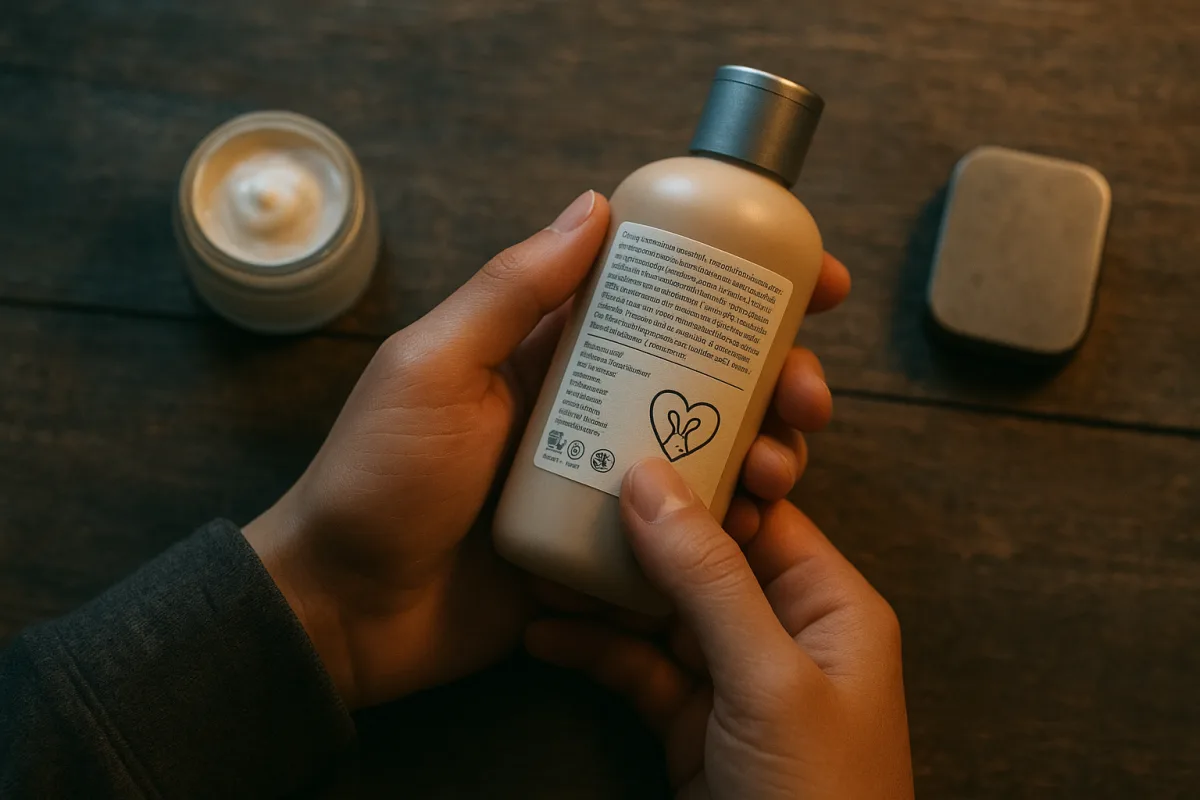
You are standing in front of the shelf and the label says “cruelty-free”
The first problem is that the phrase looks more regulated than it is. In the United States and many other markets, “cruelty-free” has no legal definition, so a brand can use it without independent verification. [2]
That does not mean every unverified claim is false. It means the wording alone cannot tell you whether the finished product, its ingredients, or its suppliers were covered by a no-animal-testing policy.
Start by looking for a recognisable bunny logo or certification name, rather than relying on front-label language such as “kind,” “conscious,” “clean,” “ethical,” or “not tested on animals.” Those phrases can communicate a brand position, but not necessarily a verifiable standard.
A product may also say that the final formula was not tested on animals while leaving a more important gap: whether individual ingredients were tested, commissioned for testing, or bought from suppliers whose policies permit testing. The MSPCA specifically cautions that a finished-product claim does not settle the question of ingredient testing. [12]
Decide what standard you actually mean by cruelty-free
There is no single universal definition, so it helps to choose your own non-negotiables before you fall down a logo-comparison rabbit hole. For many shoppers, the baseline is no animal testing on the finished formula or ingredients by the brand.
A stricter standard also excludes commissioning or paying for testing, requires suppliers to comply, and sets a fixed cut-off date. A cut-off date means a company cannot simply use a newly animal-tested ingredient and still qualify.
Leaping Bunny is the clearest shortcut if you want that stricter approach. Its programme requires no animal testing at any stage, supplier monitoring, fixed cut-off dates and regular independent audits. [4]
That does not make a Leaping Bunny logo a judgement on every environmental or labour issue attached to a product. It answers a defined animal-testing question. For ethical shopping, that precision is useful, not disappointing.
Cruelty Free International is associated with the globally recognised Leaping Bunny mark. If you see the leaping rabbit with this certification context, it is generally a stronger signal than a brand’s own rabbit graphic. [1]
Learn which bunny you are looking at
Not all certification marks ask for the same evidence. This is where otherwise careful shoppers get caught, because a bunny on a carton can look like a single, standardised promise.
PETA’s Beauty Without Bunnies programme relies on a company’s signed assurance. PETA maintains a searchable database, and its logo can be helpful for quickly identifying companies that have made that commitment. [14]
However, PETA certification does not include the independent auditing required by Leaping Bunny. If you want externally checked supplier controls, do not treat those two logos as interchangeable. [4][16]
Choose Cruelty-Free, often shortened to CCF, is an Australian programme that prohibits animal testing and animal-derived ingredients. It requires an application and review, but does not require independent audits or supplier monitoring in the way Leaping Bunny does. [16]
The Vegan Society Vegan Trademark is another useful mark, particularly if your ethical line includes animal-derived ingredients. Ethical Consumer describes it as signalling vegan status and no animal testing, although shoppers should still check the precise product and certification listing. [1]
A practical hierarchy is simple. Choose Leaping Bunny when supplier oversight and independent auditing matter most. Consider PETA or CCF as useful evidence with more limits, and read a standalone brand claim as unverified unless you can corroborate it.
The logo is absent, or you are buying online
Packaging is small, retailer copy is often copied from a brand’s own listing, and marketplaces can retain old descriptions. Verify the brand before you put the product in your basket, especially if the claim drives the purchase.
Bunny Search is useful for this first check because it aggregates information from 10 certification organisations and covers more than 10,000 brands. It also offers barcode scanning, which is more practical than deciphering a tiny label in a shop. [3]
Cruelty-Free Kitty maintains a database of 1,491 verified brands. It is a helpful second check when a brand’s website uses vague language or when a retailer’s listing gives you no certification detail. [9]
PawVerify is another barcode-scanning option. Its app draws on official Leaping Bunny and PETA certification information, so it is best used as a quick verification tool rather than as proof that every ethical concern has been resolved. [15]
EthiCompare goes broader, scoring products on ethics alongside cruelty-free certification. That can suit shoppers who want to compare multiple priorities, but check which certification or evidence underpins any score before treating it as definitive. [10]
If database results and the brand website conflict, pause rather than guessing. Certification status can change, labels can be old, and a brand may make a claim that applies only to selected lines or markets.
Ask the question labels usually avoid: what about ingredients?
“Not tested on animals” is sometimes used narrowly to describe the finished product. That sounds reassuring, but skincare is a supply-chain category. A serum can contain many raw materials purchased from different suppliers.
Look for a policy that explicitly addresses ingredients, suppliers and commissioned testing. Better still, use a certification that makes those points part of its requirements, rather than expecting a consumer to audit an ingredient supply chain from a product page.
Do not confuse this with ingredient safety or product performance. A cruelty-free certification does not tell you whether a moisturiser is rich enough for dry skin, whether a retinoid will irritate you, or whether a sunscreen meets your local regulatory requirements.
It is an ethical sourcing and testing claim, not a clinical result. Read the INCI list separately for fragrance, exfoliating acids, retinoids and other ingredients that may matter to your routine, and seek medical advice for symptoms that could indicate a skin condition.
You want vegan as well as cruelty-free
This is the next common snag. Cruelty-free means a product is not supposed to involve animal testing under its stated policy or certification standard. It does not necessarily mean the formula contains no animal-derived materials. [13]
Beeswax, lanolin, honey and other animal-derived ingredients can appear in a cruelty-free formula. Conversely, a formula marketed as vegan may not provide enough evidence about animal testing unless its certification explicitly covers that issue. [13]
If you want both, look for a cruelty-free certification plus a credible vegan certification, or verify that one programme’s standard covers both. The Vegan Society Vegan Trademark can provide that dual reassurance, according to Ethical Consumer’s certification guide. [1]
Then read the ingredient list anyway. Certifications are useful, but formulas change. That is particularly relevant when buying a reformulated product, a different size, or a version sold in another country.
You are shopping internationally, or the brand sells in China and Europe
Country rules complicate a neat yes-or-no answer. China relaxed mandatory animal-testing requirements for imported general cosmetics in 2021, which opened a route for some imported products to avoid testing. [7]
That is not a blanket exemption. Products making stronger efficacy claims, and products involving new ingredients, can face different requirements. The 2026 changes extended exemptions for certain new-ingredient cosmetics under specified safety conditions, not every product automatically. [7]
The useful consumer action is to avoid broad assumptions such as “sold in China means tested” or “sold in China means exempt.” Check the certification body’s current listing and the brand’s policy for the specific market and product category.
Europe has a different complication. The European Union bans animal testing for cosmetics, but REACH chemical-safety rules can require animal testing for workplace chemical safety. This conflict led PETA to pause Beauty Without Bunnies certification in EU countries from August 2025. [8]
That means an EU “cruelty-free” claim needs more scrutiny, not less. Ask which standard is being applied, whether REACH testing is addressed, and whether the logo reflects a current certification rather than older packaging.
You assume ethical skincare must cost more
The available evidence does not support a clean cruelty-free price premium. The research brief found no reliable 2026 comparison showing that certified cruelty-free skincare consistently costs more or less than conventional skincare.
There are low-cost options, but the supplied price information is category-level rather than product-specific. Milani Cosmetics, e.l.f., NYX, Wet n Wild and Pacifica are listed as cruelty-free budget brands with options under $15. [2]
Those names are most useful for shoppers seeking lower-cost colour cosmetics and broad beauty basics, rather than as a ready-made skincare routine. Individual product prices, formulas and current certification status should still be checked before purchase.
Too Faced, Urban Decay, Tarte, Charlotte Tilbury, Hourglass and Rare Beauty are listed in the mid-range to prestige cruelty-free group. [2] They suit shoppers seeking those price tiers, but the supplied research gives no itemised prices, so any exact price comparison would be made up.
That is worth saying plainly because “ethical” is often used to justify vague price claims. Buy based on your budget, the certification strength and whether the formula suits your needs, not an assumption that a higher price proves better animal-testing standards.
Cruelty-free beauty remains a relatively small segment. Vogue reported that cruelty-free cosmetics represented 2.6 percent of the $557.24 billion beauty market in 2024. [6] Limited shelf visibility is not evidence that ethical options do not exist.
Use a repeatable two-minute checkout check
First, identify the exact brand and product, not just the retailer’s category page. Second, look for Leaping Bunny, PETA, CCF or a Vegan Society mark, and note what that specific logo actually verifies.
Third, search the brand in a current database such as Bunny Search, Cruelty-Free Kitty or PETA’s own directory. A match is more persuasive than packaging alone, while no result should prompt further checking rather than an automatic verdict. [3][9][14]
Fourth, if the product is vegan, verify whether that claim also covers animal testing. Finally, check regional availability and policy language if you are buying imported products or a brand that operates across several regulatory systems.
This process is not glamorous, and it will not make every purchase perfectly simple. It does prevent the most common mistake: treating a loosely used marketing phrase as though it were a fully audited supply-chain guarantee.
Frequently Asked Questions
How can I identify if a skincare product is truly cruelty-free?
Look beyond the label’s wording and search for recognised cruelty-free certifications on the packaging. Verify the certification by checking the certifier’s current database, as many “cruelty-free” claims lack independent verification. Be cautious of claims that only state the finished product was not tested, since ingredient testing or supplier policies might not be covered.
What certifications prove a skincare product is cruelty-free?
The most reliable certification is Leaping Bunny, which requires no animal testing at any stage, supplier monitoring, fixed cut-off dates, and independent audits. PETA’s Beauty Without Bunnies certification is based on company assurance but lacks independent audits. Choose Cruelty-Free (CCF) prohibits animal testing and animal-derived ingredients but does not require supplier monitoring or independent audits.
What does the Leaping Bunny certification mean for skincare?
Leaping Bunny certification signifies that a product and its ingredients have not been tested on animals at any point, with strict supplier oversight, fixed cut-off dates, and regular independent audits. It is considered the gold standard for cruelty-free claims, providing a higher level of assurance than other certifications or unverified brand claims.
How do cruelty-free and vegan skincare labels differ?
“Cruelty-free” means no animal testing was conducted on the product or its ingredients, but it does not guarantee the absence of animal-derived ingredients like beeswax or lanolin. “Vegan” indicates the product contains no animal-derived ingredients but does not automatically mean it is cruelty-free. The two labels address different ethical concerns and are not interchangeable.
Can I trust a product labeled cruelty-free without certification?
No, because “cruelty-free” is not legally defined in many markets and brands can use the term without independent verification. Without a recognised certification and confirmation from the certifier’s database, the claim alone does not guarantee that the product or its ingredients were free from animal testing.
How we researched this
This article was assembled from 16 cited references.
Nothing here is based on hands-on testing. Where a figure or finding appears, it belongs to the source cited beside it, and the writing says so rather than implying otherwise. Every source is listed below so you can check it.
Sources
- A guide to cruelty-free and animal testing certifications | Ethical Consumer
- What Is Cruelty-Free Skincare? Labels vs. Reality - ScienceInsights
- Bunny Search - Let's Find Cruelty Free Brands
- The Leaping Bunny Certification of cruelty-free products | One Planet network
- 84.6% of Top Brands are Animal Testing in 2025 – Statistics
- The truth behind beauty’s ‘cruelty-free’ label | Vogue
- New Regulations in China Allow for Cruelty-Free Cosmetics | PETA
- Peta pausar sitt "cruelty-free" - emblem i EU
- Cruelty-Free Kitty | Cruelty-Free Made Simple
- EthiCompare — Best Ethical, Vegan & Cruelty-Free Products
- 12 Best Cruelty-Free Skincare Brands for Every Bud | Solevere
- Cruelty-Free Labeling - MSPCA-Angell
- Vegan vs Cruelty-Free Skincare: What's the Difference? – Dear, Klairs
- Search for Cruelty-Free Companies, Products, and More | PETA
- PawVerify: Cruelty-Free Scan App - App Store
- Cruelty-Free Complexity: What The Bunny Logo Doesn't Tell You | Skincare Skeptic
Related Articles
How to Determine If a Product Is Cruelty-Free
Learn how to determine if a product is cruelty-free by verifying certifications, understanding supply chains, and spotting authentic logos.
How to Layer Products for Acne-Prone Skin Correctly
Learn how to layer products for acne-prone skin with the right order, timing, and active ingredient use to avoid irritation and maximize results.
How to Prevent Skincare Irritation: Tips for Sensitive Skin
Learn how to prevent skincare irritation by managing total irritation load and introducing products safely for healthier, calmer skin.
How to Layer Skincare Products for Best Results
Learn how to layer skincare products effectively for maximum absorption and efficacy with this comprehensive guide.