
How to Choose a Face Serum for Your Skin Type and Needs
Learn how to choose a face serum based on your skin type, key ingredients, and usage tips for effective skincare results.
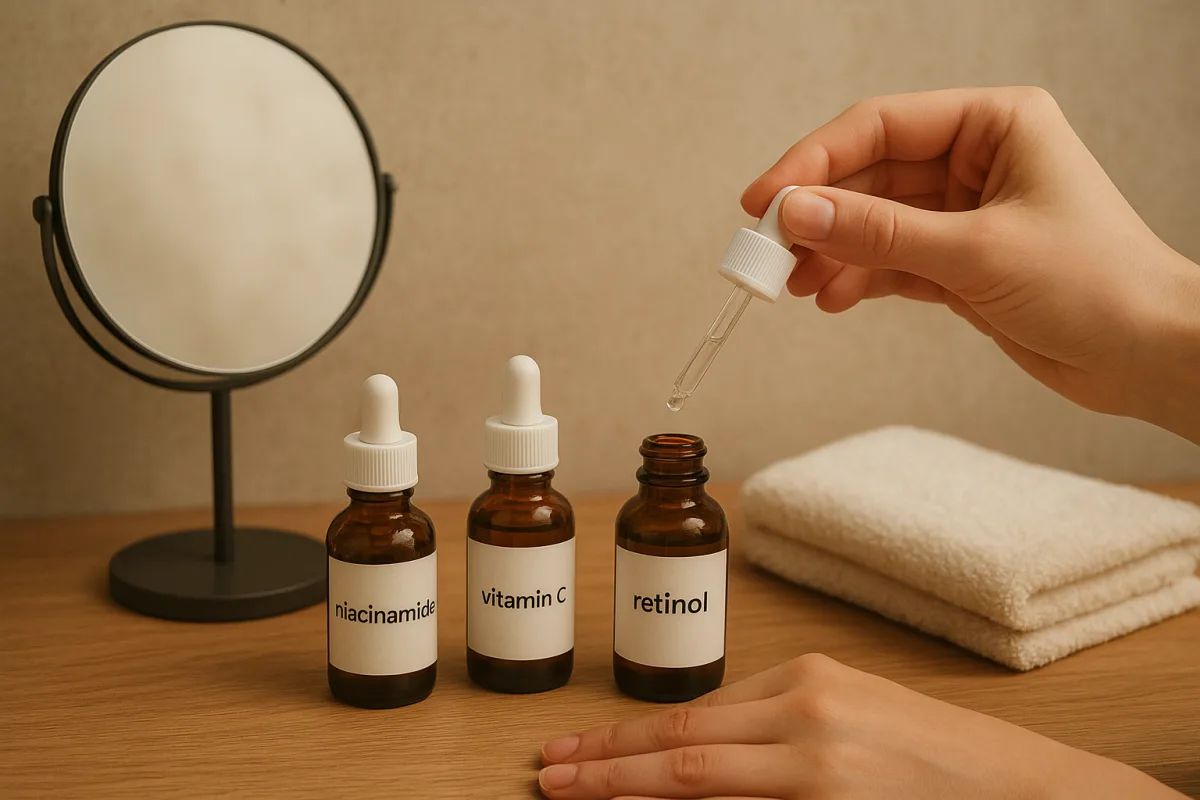
Start with the problem you actually want to address
The first serum-selection mistake happens before you open a retailer’s website: buying for a vague idea of “better skin.” A serum is a delivery format, not a skincare category with one universal job. Decide what needs attention first.
If your main concern is dehydration, choose hydration. If it is shine or congested-looking skin, choose oil-control or exfoliation. If it is uneven-looking tone, choose an antioxidant or pigment-focused active. Do not buy retinol because it is fashionable if dryness is your immediate problem.
This matters because effective ingredients are not interchangeable. Niacinamide, hyaluronic acid, salicylic acid, vitamin C and retinol all have different uses, tolerability profiles and routines. The ingredient guides cited in the research brief consistently pair them with different skin needs. [3][5][9]
Be realistic about the word “effective,” too. Cosmetic serums can support hydration, smoothness, brightness and the appearance of texture over time. They are not a substitute for medical assessment or treatment. Persistent acne, sudden pigmentation changes, a painful rash, eczema-like cracking, or anything that seems like a diagnosis belongs with a dermatologist.
If your skin feels dry, choose water-binding ingredients, then seal them in
For dry or dehydrated skin, look for hyaluronic acid at roughly 0.1 to 2%, plus supporting ingredients such as ceramides and vitamin E. [3][5] Hyaluronic acid is a humectant, meaning it helps bind water in the upper layers of skin.
That can make skin look temporarily plumper and less crepey, particularly when dehydration is making fine lines more obvious. It does not rebuild the skin overnight, and it does not replace moisturiser. The visible effect is usually modest and depends on continued use.
A simple hydrating serum can be used twice daily, which makes it a practical first serum for someone who does not yet know their tolerance for stronger actives. [15][17] Apply two or three drops, or about a pea-sized amount, to slightly damp skin after cleansing.
Then use moisturiser. Skipping this step is a common reason people decide a hydrating serum “does nothing,” because a serum supplies humectants but does not necessarily provide the occlusive ingredients that slow water loss. [25][28]
If you are oily or breakout-prone, do not confuse stronger with better
Oily and acne-prone skin can suit niacinamide at 2 to 5%, salicylic acid at 0.5 to 2%, and formulas containing zinc. [3][5][9] Niacinamide is often the easier starting point because it can fit into a daily routine and is generally used for oil balance and barrier support.
Salicylic acid is a beta hydroxy acid, or BHA, used in leave-on products to exfoliate. It is the more targeted option when clogged pores and rough texture are the concern, but it is also more likely to sting, dry or irritate when overused.
Use an exfoliating serum at night two or three times a week to start, rather than every night because the label says “clarifying.” [15][17] Give the routine several weeks of consistent, non-irritating use before deciding whether it is worthwhile.
A persistently inflamed breakout pattern, deep painful spots or scarring are not serum-shopping problems. A dermatologist can help identify what is happening and discuss options appropriate to your skin, rather than leaving you to cycle through increasingly harsh acids.
If your skin is combination, choose the boringly useful middle ground
Combination skin often prompts people to buy one serum for every zone of their face. That is usually unnecessary. The research brief identifies niacinamide and green tea extract as useful choices where both oil control and a more balanced, comfortable finish are priorities. [3][5]
Niacinamide is therefore a sensible single-serum starting point for a combination routine. A 2 to 5% formula is the relevant range, not a race toward the highest percentage printed in large type. [3][9]
There is limited evidence comparing natural extracts such as green tea or licorice directly with synthetic actives over the long term. Treat them as supporting ingredients, not proof that a serum will outperform a plainly formulated niacinamide product.
If your concern is dullness or uneven-looking tone, vet the vitamin C
For dull-looking skin and uneven tone, vitamin C at 10 to 20%, alpha arbutin and licorice extract are the relevant ingredients to seek out. [3][5][7] Vitamin C is commonly used in a morning routine because it is an antioxidant, while brightening formulas are generally recommended once daily. [15][17]
Do not expect a brightening serum to produce an instant change. Any improvement in the appearance of tone tends to be gradual, measured in weeks of regular use rather than a few applications. The source set supports these ingredient ranges, but it does not provide a reliable deadline for results.
Vitamin C is also one ingredient where storage deserves more attention than marketing often gives it. It degrades with heat and light, so a formula stored in a cool, stable place is more likely to retain its intended performance. [20][23]
In hot climates, a stable vitamin C derivative may be the more practical choice than a formula that rapidly darkens or changes smell in a steamy bathroom. The research brief supports stable derivatives in warm conditions, but does not establish that any packaging format is definitively superior. [20][23]
If visible lines are your priority, introduce retinol cautiously
Retinol, peptides and growth factors are commonly positioned for aging-skin concerns. Retinol appears in an established working range of 0.1 to 1%, while peptide concentrations vary substantially by peptide type. [3][6][9][11]
Start at the low end with retinol, use it at night and build frequency gradually. [15][17] More is not automatically more effective in a real routine, especially if redness, peeling or stinging leads you to stop using it altogether.
Retinol can increase photosensitivity, which is one reason the brief suggests lower strengths in summer or extra caution in high-sun periods. [20] Daily sunscreen is a sensible part of any daytime routine, particularly when using potentially sensitising actives.
Peptide claims need a cooler reading than the packaging usually provides. Matrixyl is cited as active at 0.0003%, and GHK-Cu at 0.01 to 0.1%, but there is no direct evidence in this brief that one peptide type or growth factor is clearly superior for visible aging concerns. [11]
Read the label for the concentration, not just the hero ingredient
A label that says “with vitamin C” tells you less than one that specifies the vitamin C form and concentration. The same applies to niacinamide, retinol and salicylic acid. The useful ranges are not secret, and they are more informative than a front-label buzzword. [3][9][10]
For a first active serum, choose the lower end of the proven range where irritation is plausible. That means 0.1% retinol rather than jumping to 1%, or a modest salicylic acid formula rather than treating daily exfoliation as a shortcut. [3][15]
Be especially wary of a long list of strong actives presented as a complete routine in one bottle. The research brief finds limited evidence for exact multi-serum layering sequences, while irritation from introducing several products together is a well-recognised practical problem. [24][25]
Patch test a new serum, then introduce it on its own. If your skin reacts, you need to know which formula caused the problem. Adding vitamin C, acids, retinol and a peptide serum in the same week makes that impossible to work out.
Buy the size and price that let you be consistent
Most face serums come in 15 to 30 mL bottles. Smaller 5 to 10 mL sizes are common for samples or potent actives, while 50 to 100 mL formats are more typical for hydrating or professional-use products. [12]
Price alone is not a quality test. The 2026 pricing data in the research brief puts many serums around $0.20 to $1.32 per mL, with some lower-cost options near $0.12 per mL. [13] Calculate price per mL before assuming a tiny bottle is a luxury bargain.
A larger bottle is not automatically better value if it contains a heat- and light-sensitive active you will not finish promptly. For vitamin C, consider a size you can use consistently while keeping it away from heat and direct light. [23]
Adjust for the weather, then use it in the right order
Climate changes what feels comfortable on skin. In winter or arid conditions, look for higher humectant content, including glycerin around 3 to 5%, and high-molecular-weight hyaluronic acid. [20]
In humid summers or tropical climates, lighter, non-comedogenic formulas and lower glycerin levels, around 1 to 2%, may be more comfortable. Low-molecular-weight hyaluronic acid is also cited for summer formulations. [20][21]
Use serum after cleansing and before moisturiser. Apply sparingly to slightly damp rather than completely dry skin, then let it settle before your next step. Using too much creates product buildup, not better absorption. [16][19][28]
Finally, give the serum time, but not unlimited benefit of the doubt. Consistent use over weeks is a reasonable test for a well-matched formula. If a product repeatedly irritates, pills under moisturiser or makes your skin feel worse, stop forcing the routine and simplify.
Frequently Asked Questions
How do I choose the right face serum for my skin type?
Start by identifying your main skin concern, such as dehydration, excess oil, uneven tone, or early lines. Choose a serum that targets that specific issue rather than layering multiple actives. For example, use hydrating ingredients like hyaluronic acid for dry skin, niacinamide or salicylic acid for oily or acne-prone skin, and vitamin C for uneven tone.
What ingredients should I look for in a face serum?
Look for active ingredients in effective concentration ranges: niacinamide (2–5%) for oil control, hyaluronic acid (0.1–2%) for hydration, vitamin C (10–20%) for brightening, salicylic acid (0.5–2%) for exfoliation, and retinol (0.1–1%) for anti-aging. Supporting ingredients like ceramides and vitamin E can also help with hydration and skin barrier repair.
Can I use multiple face serums at once?
It is generally advised to choose one serum that addresses your primary concern rather than layering several serums with different active ingredients. Introducing one serum at a time helps you understand your skin’s tolerance and reduces the risk of irritation.
How often should I apply face serum?
Hydrating serums can be applied twice daily on slightly damp skin after cleansing. Antioxidant or brightening serums are typically used once daily in the morning. Anti-aging serums like retinol should be started slowly at night, and exfoliating acids are usually applied 2–3 times per week at night, depending on tolerance.
What is the difference between a serum and a moisturizer?
A serum is a lightweight formulation designed to deliver concentrated active ingredients into the skin, while a moisturizer provides occlusive ingredients that seal in hydration and reduce water loss. Serums are applied after cleansing on slightly damp skin, followed by a moisturizer to lock in moisture.
How we researched this
This article was assembled from 28 cited references.
Nothing here is based on hands-on testing. Where a figure or finding appears, it belongs to the source cited beside it, and the writing says so rather than implying otherwise. Every source is listed below so you can check it.
Sources
- Find the Best Face Serum for Your Skin Goals
- I Asked Derms Which Hydrating Serums Would Quench My Perpetually Dry Skin-Here Are Their Top Picks
- Best Active Ingredients In Skincare In 2026 - Tech TV Hub
- Skincare Ingredients Guide: 10 Actives Explained (2026) | Pimpl
- Ingredient Guide | SkinMapped
- Best Ingredients for Anti-Aging | Insider Beauty
- Can skincare fade pigmentation, and which ingredients actually work?
- Anti-Aging Actives Ranked: What Actually Has Evidence (And What Doesn' – Dermaluci Lab
- Skincare Active Ingredients Guide for Brand Owners
- How to Read Skincare Ingredient Lists Like a Pro | Fewer Serums
- Best Peptide Serums 2026: Ingredient Analysis
- Serum Bottle Sizes: A Practical Buyer’s Guide - Uzone Packaging
- How much does skincare cost? Real prices per ml (2026) · OutletPicks
- Buy Rdassociates Dandelion & Argan Oil Age Reverse Face Serum 30 Ml - Serum for Women 42096562 | Myntra
- How Often to Use Serum on Face: Your Complete Guide – Verde and Well
- What is a face serum? Why and how to use it
- How To Use Face Serum: A Comprehensive Guide
- Should You Use Face Serum Every Day? Read Experts Answer
- How to Apply Face Serum the Right Way | RMS Beauty
- Face serum recipe: adaptation to season and climate | Walker Formulation Academy
- Why Face Serums Fail in Indian Summers (Best Summer Skincare Routine) – Boofootel
- PDRN Seasonal Skincare Guide — Adapt Your Routine for Every Season | PDRN Care
- Cold Storage for Serums: Why Temperature Matters
- Common Mistakes to Avoid When Using Face Serums – Pachouli LUXE
- Serums Explained: What They Do and How to Choose the Right One | NicerSkin
- How to Choose an Anti-Aging Serum for You, According to Experts
- Experts Swear by Face Serums-These Are 20 of the Best for All Skincare Concerns
- Common Skincare Mistakes While Using Face Serum – Dr.Rashel
Related Articles
How to Choose a Face Mask for Oily Skin
Learn how to choose a face mask for oily skin with tips on ingredients, usage, and avoiding irritation for a balanced, shine-free complexion.
How to Choose a Toner for Dry Skin: Key Tips and Ingredients
Learn how to choose a toner for dry skin with expert tips on ingredients, usage, and what to avoid for better hydration and skin comfort.
How to Choose a Gentle Cleanser for Sensitive Skin
Learn how to choose a gentle cleanser with skin-friendly pH and safe ingredients to avoid irritation and support sensitive skin health.
How to Choose a Sunscreen: SPF, Broad Spectrum & Formulas
Learn how to choose a sunscreen with the right SPF, broad spectrum protection, and formula for your skin type and daily needs.