
How to Treat Redness on Face: A Gentle Skincare Guide
Learn how to treat redness on face with gentle cleansing, moisturizing, and key ingredients to calm and restore irritated skin.
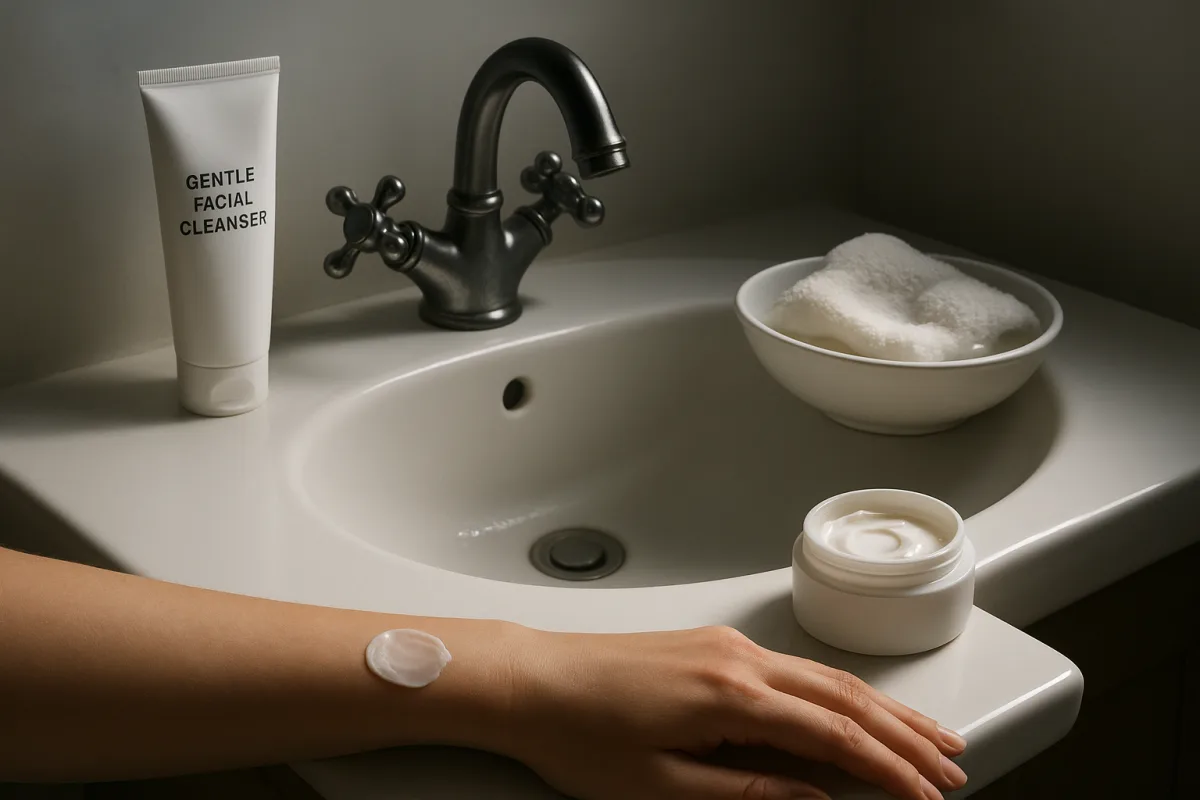
Stop the sting before adding anything
The red patch that appeared after cleansing, the warm cheeks after a new serum, or the tight skin around your nose is the moment to simplify. Do not try to counter an irritated face with three soothing serums and an acid toner.
Pause new products, exfoliants, scrubs, strong acids, retinoid-style actives, and fragranced products. Fragrance, drying alcohols, harsh exfoliants, and over-cleansing are frequent triggers for irritation and visible redness.[7][13]
We would also stop home fixes such as lemon juice. It is an irritant, not a calming step, and applying it to already-reactive skin can make the flare last longer.[6][7]
Your aim for the next several days is boring skin care: remove what may be provoking the reaction, cleanse gently, moisturize, and protect from daylight. That is less exciting than a targeted redness product. It is usually the right place to start.[3][13]
Decide whether you need a dermatologist
Sudden redness after a product is often a sign that your skin does not like something in the formula or the way your routine has been layered. Still, facial redness has several possible causes, and a skin-care routine cannot tell you which one applies.[2][18]
Book a dermatologist appointment if redness persists, repeatedly returns, or seems connected to a broader skin problem. Do the same if you are unsure whether you are dealing with sensitivity, acne-related inflammation, rosacea, or an allergic reaction.
Bring the products you used before the irritation began, including the cleanser, sunscreen, makeup, and any treatment serum. Ingredient lists are often more informative than the front label when you are trying to identify a repeat trigger.
Keep the routine gentle while you wait. Starting a string of new actives can make the picture harder to read and can add another source of irritation.[5][13]
Cut your routine back to three steps
For a sudden flare, use a cleanser, a plain moisturizer, and sunscreen in the morning. At night, use the cleanser and moisturizer. This strips out the usual offenders while giving the skin barrier a chance to recover.[3][8]
Look for fragrance-free products first. Sensitive, redness-prone skin can also react poorly to drying alcohols, aggressive acids, physical exfoliating particles, and heavily fragranced essential-oil blends.[7][14]
“Natural” on the label does not make a formula low-risk for irritated skin. The ingredient list is what counts, especially when your face is already stinging or hot after application.
Do not add a toner because a routine template says you need one. Toner and essence are optional steps, and during a flare, fewer formulas means fewer possible irritants.
Cleanse without extending the flare
Use lukewarm water, not hot water, and keep cleansing brief, no more than about 30 seconds. A mild fragrance-free cleanser is the better fit for visibly irritated skin than a foaming, scrubby, or strongly clarifying wash.[3][8]
Rub with fingertips rather than a washcloth, cleansing brush, or exfoliating pad. Those tools can turn a simple cleansing step into friction on skin that already feels raw.
Pat your face dry instead of dragging a towel across it. Then apply moisturizer while skin is still slightly damp, ideally within three minutes of cleansing, to support hydration and reduce the tight feeling that often follows washing.[16][17]
If you are oily or live in a hot, humid area, do not respond by washing repeatedly. Sweat and excess oil may call for cleansing, but stripping the skin can worsen sensitivity and redness.[12][15]
Rebuild the skin barrier before chasing an active
Choose a moisturizer built around barrier-supporting lipids, especially ceramides. Ceramides help restore the skin barrier, which can reduce sensitivity and the redness that comes with a compromised barrier.[1][8]
Other useful calming ingredients include panthenol, colloidal oatmeal, and Centella asiatica, often called cica. These have anti-inflammatory and soothing properties, though they are support players, not overnight fixes.[1][6]
A richer cream can make sense in winter, when cold air and indoor heating can leave skin drier and more reactive. Use enough to eliminate persistent tightness, but you do not need to pile on five moisturizing layers.[9]
In summer or humid weather, a lighter non-comedogenic moisturizer may feel easier to use consistently. The goal remains the same: hydration and barrier support without a formula that feels heavy enough to make you skip it.[12][15]
Give this basic routine one to two weeks before judging whether irritation has eased. Reduced stinging and less reactive skin can show up in that window, while visible redness often takes longer to settle.[6][13]
Add one redness-focused active at a time
Niacinamide is our first choice once your skin no longer stings with the basic routine. At concentrations up to 5%, it can support barrier function and reduce redness through anti-inflammatory effects.[1][5]
Do not assume a 10% niacinamide serum is better because the number is bigger. The support summarized here is for concentrations up to 5%, and high-strength formulas can be a poor gamble when your face has just reacted.
Azelaic acid is the next ingredient to consider if redness persists and your skin tolerates the simplified routine. Products with up to 10% azelaic acid can reduce redness associated with rosacea or acne, with results commonly taking four to eight weeks.[1][5]
That timeline is the point. If you apply azelaic acid for four nights and see no change, you have learned almost nothing. If it burns, produces escalating irritation, or leaves you redder, stop and return to the barrier routine.
Tranexamic acid has much thinner support for facial redness. One controlled study used a 10% serum twice daily for eight weeks, but that single study is not enough to assume that every tranexamic acid product will calm a sudden flare.[1]
We would not make tranexamic acid your first purchase for acute irritation. It may be a later option for someone whose skin is stable, but niacinamide, azelaic acid, sunscreen, and barrier repair have clearer roles in this routine.
Hypochlorous acid is often positioned as a gentle calming spray. It may suit some people, but it can also cause dryness or allergic reactions, so it is not a universal reset button for irritated skin.[6][13]
Patch-test before your whole face pays for it
Patch-test every new product before putting it across your cheeks, nose, and forehead. Apply a small amount to a limited area and watch for stinging, itching, or worsening redness before moving forward.[5][14]
A patch test lowers the chance of an immediate full-face reaction, but it cannot guarantee that a product will work in your everyday routine. Your face may react differently when the formula is layered with sunscreen, makeup, sweat, or another active.
Introduce one new active one or two times per week, then increase only if your skin stays comfortable. This gradual approach is based on irritation reduction, not a standardized schedule that fits every product or every person.[5][14]
Keep the rest of the routine unchanged while you test it. If you add niacinamide, azelaic acid, a new moisturizer, and an exfoliant in the same week, you will not know what caused the next flare.
Layer products in the least irritating order
After cleansing, apply any optional toner or essence, then serum, moisturizer, and facial oil if you use one. In the morning, sunscreen is the final skin-care layer before makeup.[16]
For suddenly irritated skin, skip optional layers until you know your face is calm. A serum with a good ingredient list can still be one more formula, one more preservative system, and one more chance to sting.
Apply moisturizer to damp skin, then let it settle before sunscreen. Rubbing several layers in quickly can create friction, especially around the nose and cheeks where redness often shows first.[16][17]
Put sunscreen back on every morning
Use broad-spectrum SPF 30 or higher every day, including on overcast days. UV exposure can worsen visible redness and can contribute to lingering pigmentation after the initial irritation fades.[3][8]
Choose a sunscreen you can wear consistently without stinging. If your current formula burns around the eyes or leaves your face feeling hot, it may be part of the problem, even if its SPF number is adequate.
Do not use sunscreen as an excuse to restart exfoliation while your skin remains reactive. Sun protection limits one ongoing trigger. It does not cancel out a routine that is still over-cleansing or over-treating.
Adjust for the weather you are in
Cold, dry weather often calls for less cleansing, more moisturizer, and a stronger focus on barrier repair. Winter redness can be tied to dry air and environmental exposure, so a light gel may no longer be enough.[9]
Hot, humid weather changes the texture you may tolerate, not the need for gentleness. Use a lighter moisturizer if needed, cleanse away sweat and excess oil without stripping, and keep sunscreen in place.[12][15]
Climate advice is broad, not a formula for ingredient performance. There is no precise evidence here saying that a particular humidity level changes how much niacinamide or azelaic acid works, so adjust based on how your skin feels.
If seasonal changes bring repeated redness, simplify first instead of buying a completely new multi-step routine. A different moisturizer texture may solve more than another active serum.
Give the routine enough time, then reassess
Expect the earliest improvement to be less stinging, less tightness, and fewer immediate reactions after cleansing. That can take one to two weeks with a gentle, barrier-focused routine.[6][13]
Noticeable reduction in redness often takes four to eight weeks, particularly when you have added niacinamide or azelaic acid gradually. Significant improvement in skin resilience may take three to six months of consistent, non-irritating care.[1][6]
Take a photo in the same location and similar light every couple of weeks if you want a reality check. Bathroom lighting can make a mild flush look dramatic one day and invisible the next.
If your face remains reactive after simplifying, do not keep escalating products. Return to the dermatologist question, because ongoing facial redness may need an assessment that an ingredient list cannot provide.
Frequently Asked Questions
What is the best skincare routine to treat redness on face?
A simple, barrier-focused routine is best for treating redness. Use a mild, fragrance-free cleanser with lukewarm water, followed by a ceramide-rich moisturizer, and apply broad-spectrum SPF 30 or higher daily. Avoid exfoliants, fragranced products, and new active ingredients until the skin calms, then gradually reintroduce actives one or two times a week.
Which ingredients help reduce facial redness?
Niacinamide (up to 5%) and azelaic acid (up to 10%) have strong support for reducing facial redness, with visible improvements often seen after four to eight weeks. Ceramides and other barrier-repair lipids help restore the skin barrier and reduce sensitivity. Soothing ingredients like Centella Asiatica, panthenol, and colloidal oatmeal also help calm redness.
How can I calm sudden redness and irritation on my face?
Stop using exfoliants, fragranced products, and new actives immediately. Switch to a gentle, fragrance-free cleanser and a plain, ceramide-rich moisturizer, and protect your skin with sunscreen. Keep the routine simple for one to two weeks to allow the skin barrier to recover before introducing any targeted treatments.
When should I see a dermatologist for facial redness?
See a dermatologist if redness persists, repeatedly returns, or is linked to a broader skin problem. It is also advisable to consult a professional if you are unsure whether the redness is due to sensitivity, acne-related inflammation, rosacea, or an allergic reaction. Bring all products used before the irritation began to help identify potential triggers.
How do I cleanse and moisturize skin that is red and sensitive?
Use a mild, fragrance-free cleanser with lukewarm water and cleanse gently for no more than 30 seconds. Follow with a ceramide-rich, fragrance-free moisturizer to support barrier repair. Avoid drying alcohols, harsh exfoliants, and fragranced products that can worsen redness and irritation.
How we researched this
This article was assembled from 18 cited references.
Nothing here is based on hands-on testing. Where a figure or finding appears, it belongs to the source cited beside it, and the writing says so rather than implying otherwise. Every source is listed below so you can check it.
Sources
- What Ingredients Reduce Redness on Your Face? - ScienceInsights
- Facial Redness: Causes, Calming Care and Treatment
- A Gentle Skincare Routine for Redness-Prone Skin (AM/PM), The Rosacea Guide
- How to Build a Rosacea Skincare Routine That Works
- How to Build a Routine That Targets Redness Safely - acneadvocate.com
- How to Shrink Redness: A Complete Step-by-Step Guide to Calming Inflamed Skin | HealthBeautify
- Common Skincare Irritants: How to Spot Triggers | Skintrig
- How to Reduce Facial Redness: A Dermatology-Style Routine for Sensitive Skin
- How to Calm Winter Redness on Sensitive Skin | DermStreet
- Skin Redness: How to Reduce & Calm Red Skin
- I've Spoken to the Experts-These 7 Skincare Trends Will Define 2026
- Beachwood, OH Seasonal Skincare Guide for Changing Weather, Advanced Clinics, Rejuvenation Aesthetics Salama MD
- Why Your Skincare Stings & How to Reset | Scenic Dermatology
- Sensitive Skin Routine | Dermatology
- Skincare Routine for Sensitive Skin: Simple Guide | HorizonDesk
- Skincare layering order guide: how to sequence products correctly | MedSpot
- Skincare for Sensitive Skin: Gentle Daily Routine | L’Oréal Paris
- What Causes Skin Inflammation? A Consultant Dermatologist Reveals The Triggers And The Treatments
Related Articles
How to Treat Large Pores: Effective Skincare Tips
Learn how to treat large pores with proven skincare tips, key ingredients, and routines to reduce their appearance safely and effectively.
How to Fix Dark Circles Under Eyes: Causes and Treatments
Learn how to fix dark circles under eyes with skincare, routines, and lifestyle tips tailored to different causes and skin types.
How to Fix Dull Skin
Learn how to fix dull skin with proven skincare tips, key ingredients, and routines for brighter, more radiant skin.
How to Treat Uneven Skin Texture: Effective Skincare Tips
Learn how to treat uneven skin texture with targeted actives, routines, and product tips for smoother, healthier skin.